
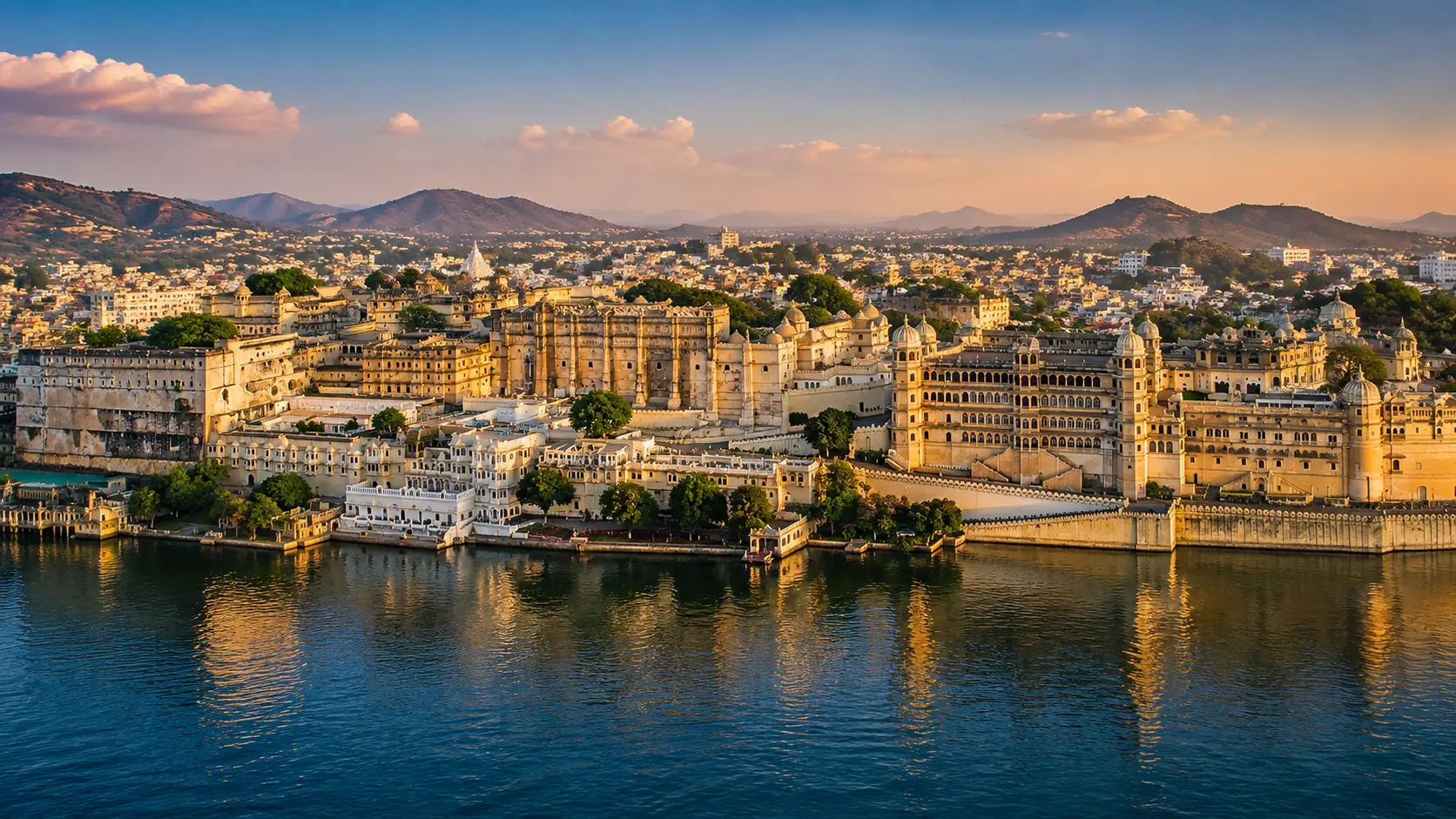
Royal Heritage in Udaipur
Explore the palaces, havelis, temples and historic places that reveal the royal heritage of Udaipur and the legacy of Mewar.
Discover Udaipur’s Royal Heritage
Udaipur is often remembered for its lakes, sunsets and beautiful palaces, but there is much more to its royal character than the postcard views. The city’s streets, old havelis, temples, gardens and hilltop landmarks all carry traces of the Mewar legacy.
This guide brings together some of the most important places to experience that history, from the grand City Palace and Bagore Ki Haveli to Jag Mandir, Monsoon Palace and the royal cenotaphs at Ahar. Along the way, you’ll find practical ideas on how to explore them, when to go and how to put the main heritage sights together in a sensible route.
Historic Places to Explore
From grand palace complexes and lakeside landmarks to historic havelis and royal cenotaphs, these places offer a closer look at Udaipur’s royal past and the heritage of Mewar.
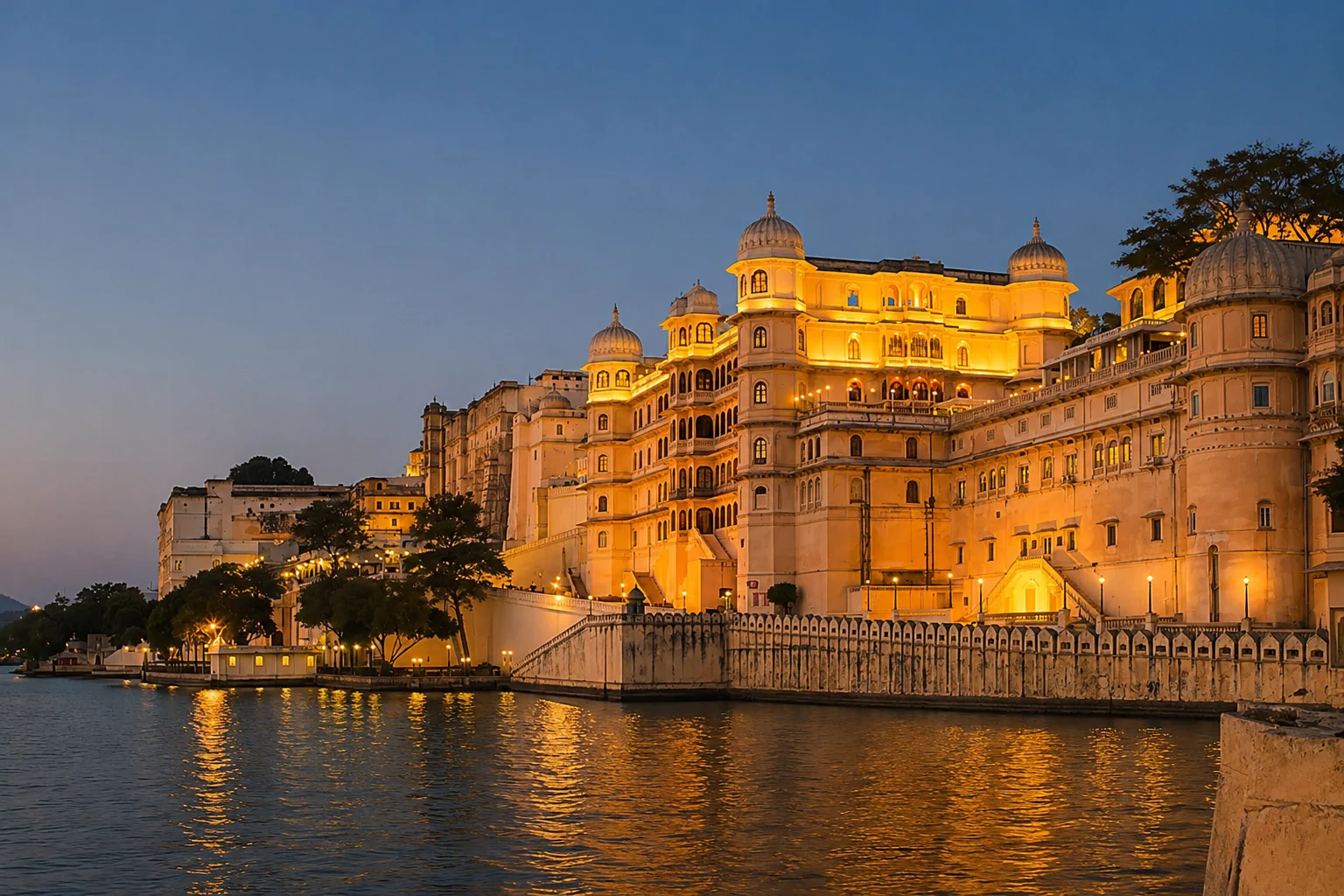
City Palace
Udaipur’s grandest royal complex, overlooking Lake Pichola and filled with courtyards, balconies, galleries and centuries of Mewar history.
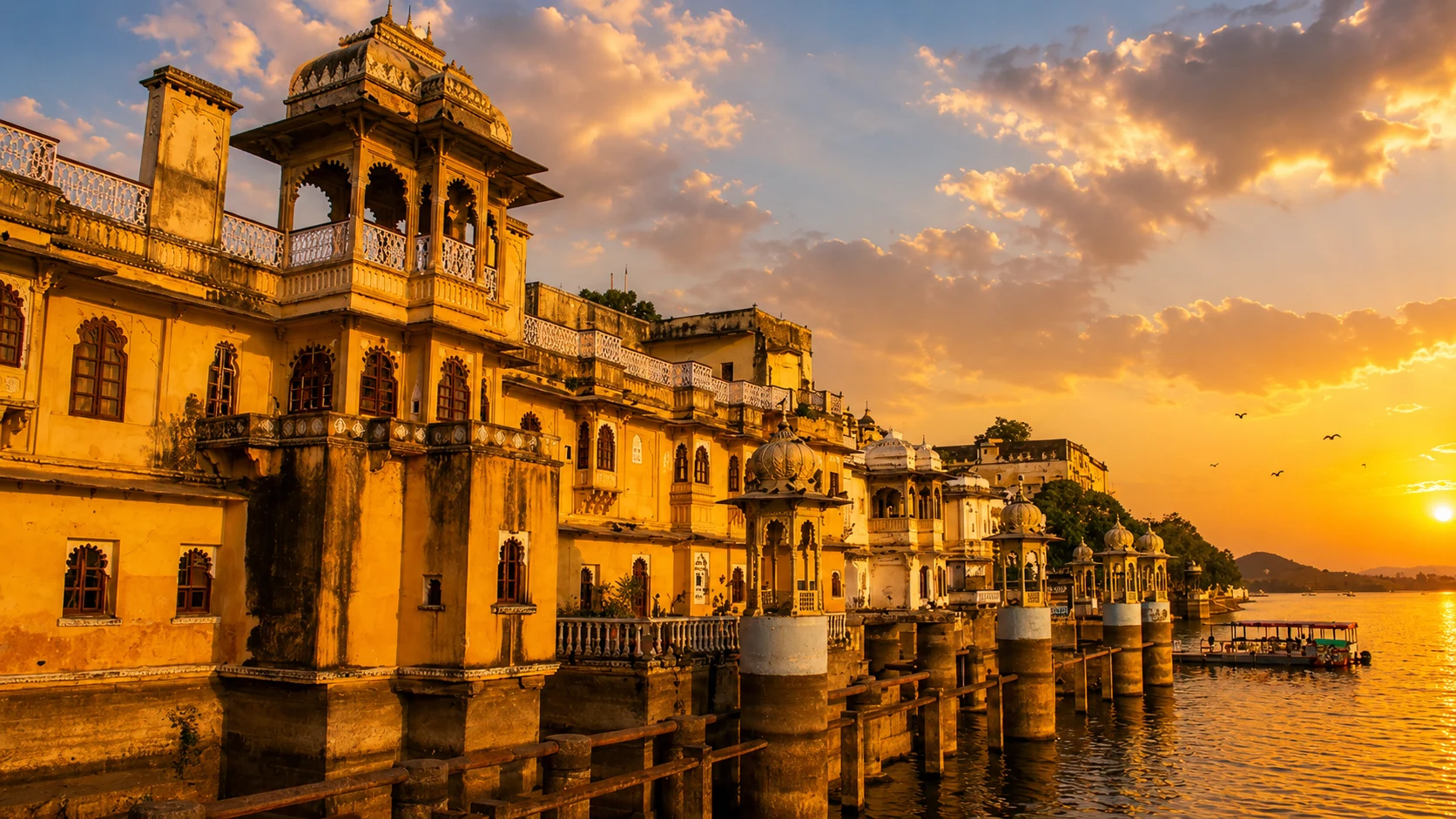
Bagore Ki Haveli
A beautifully preserved lakeside haveli where ornate architecture, traditional interiors and Mewar-era cultural stories come together.
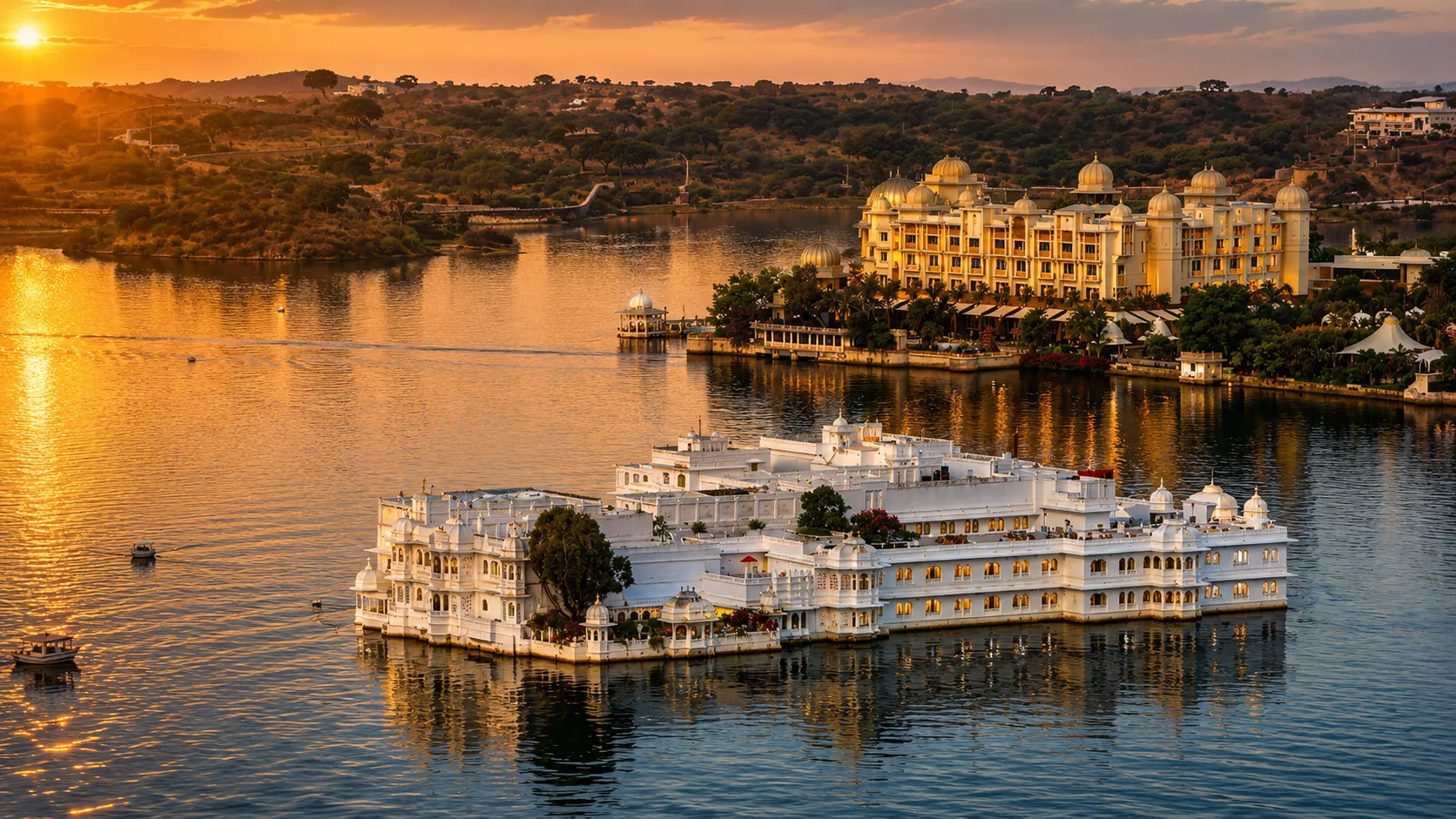
Lake Palace
The iconic white marble palace rising from Lake Pichola, known for its elegant architecture and unforgettable lakeside setting.
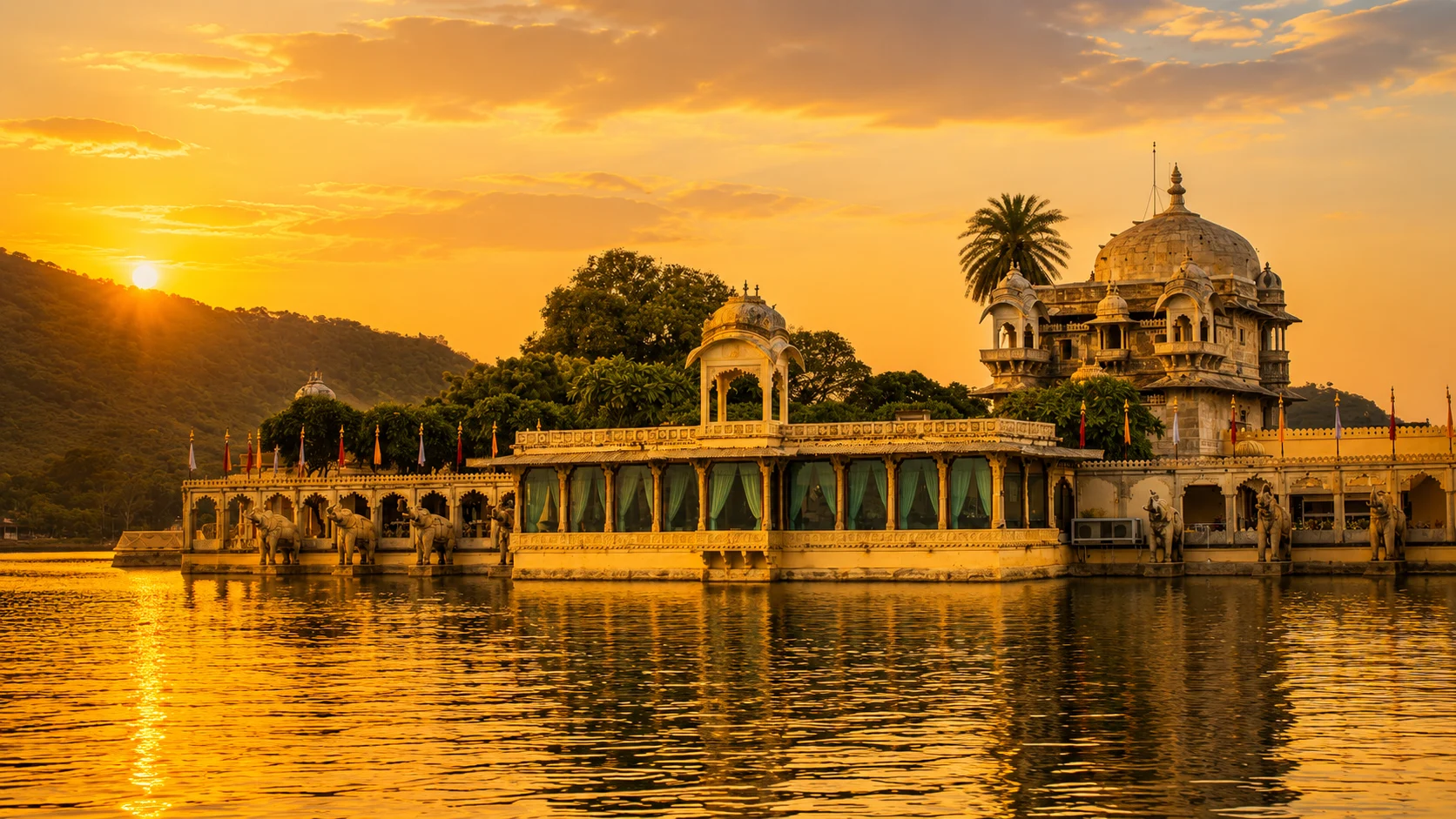
Jag Mandir
A historic island palace on Lake Pichola, surrounded by water and known for its marble pavilions, gardens and distinctive lakeside character.
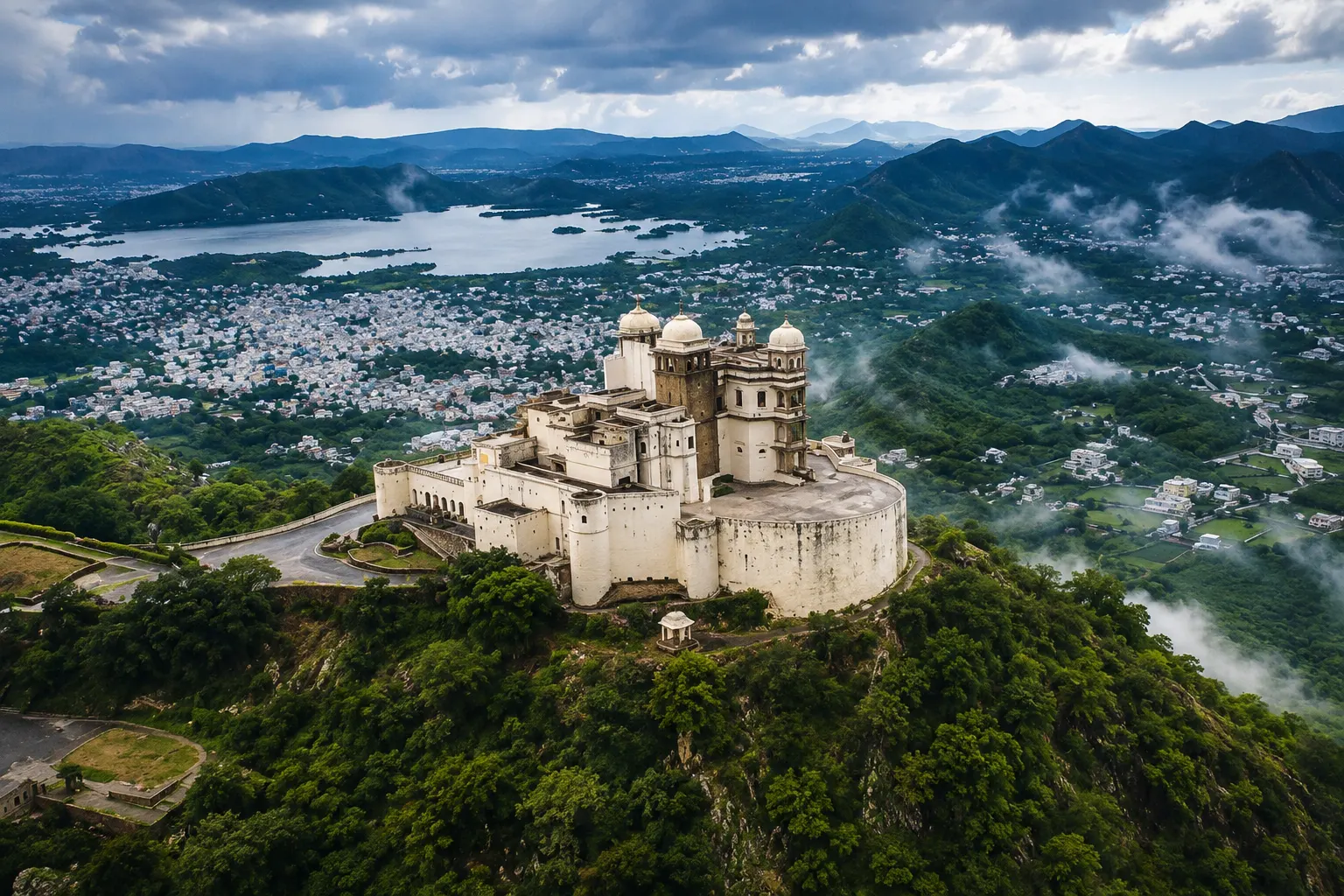
Monsoon Palace
Perched high above Udaipur, this hilltop palace offers sweeping views across the city, lakes and surrounding Aravalli landscape.
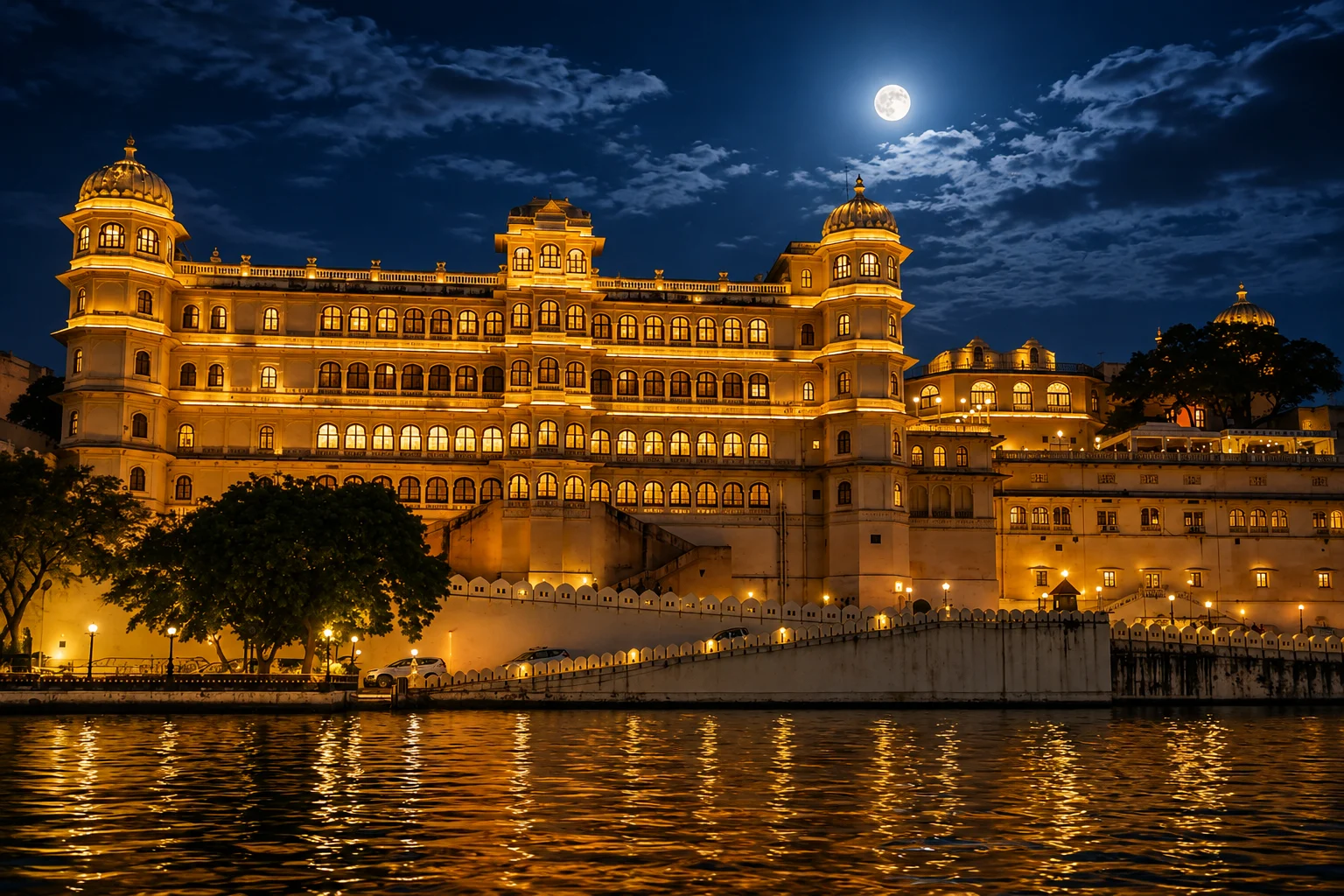
Fateh Prakash Palace
A grand palace overlooking Lake Pichola, recognised for its royal interiors, historic character and elegant Mewar-era architecture.
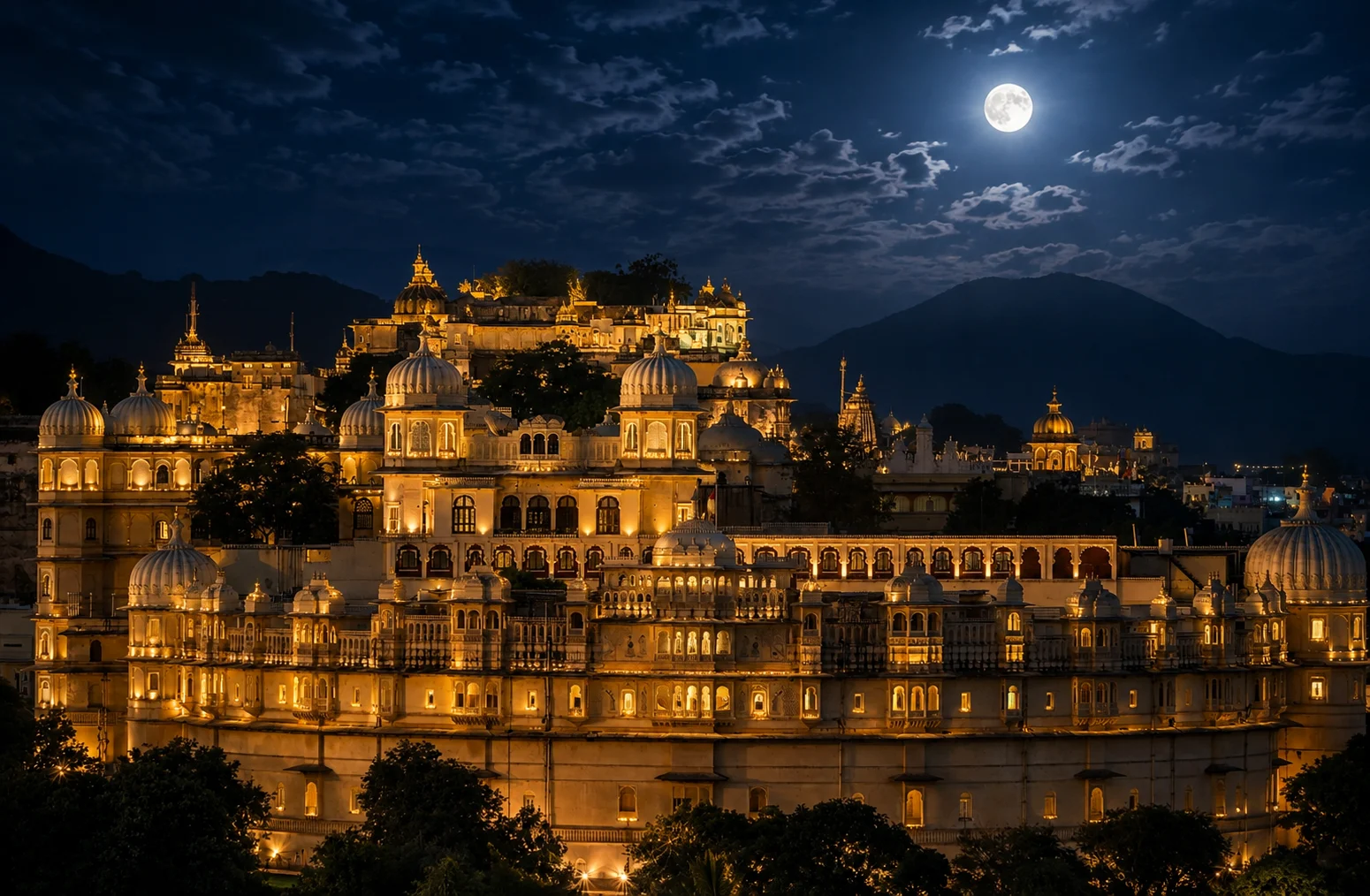
Shiv Niwas Palace
A historic crescent-shaped palace within the City Palace complex, known for its distinctive architecture and royal atmosphere.
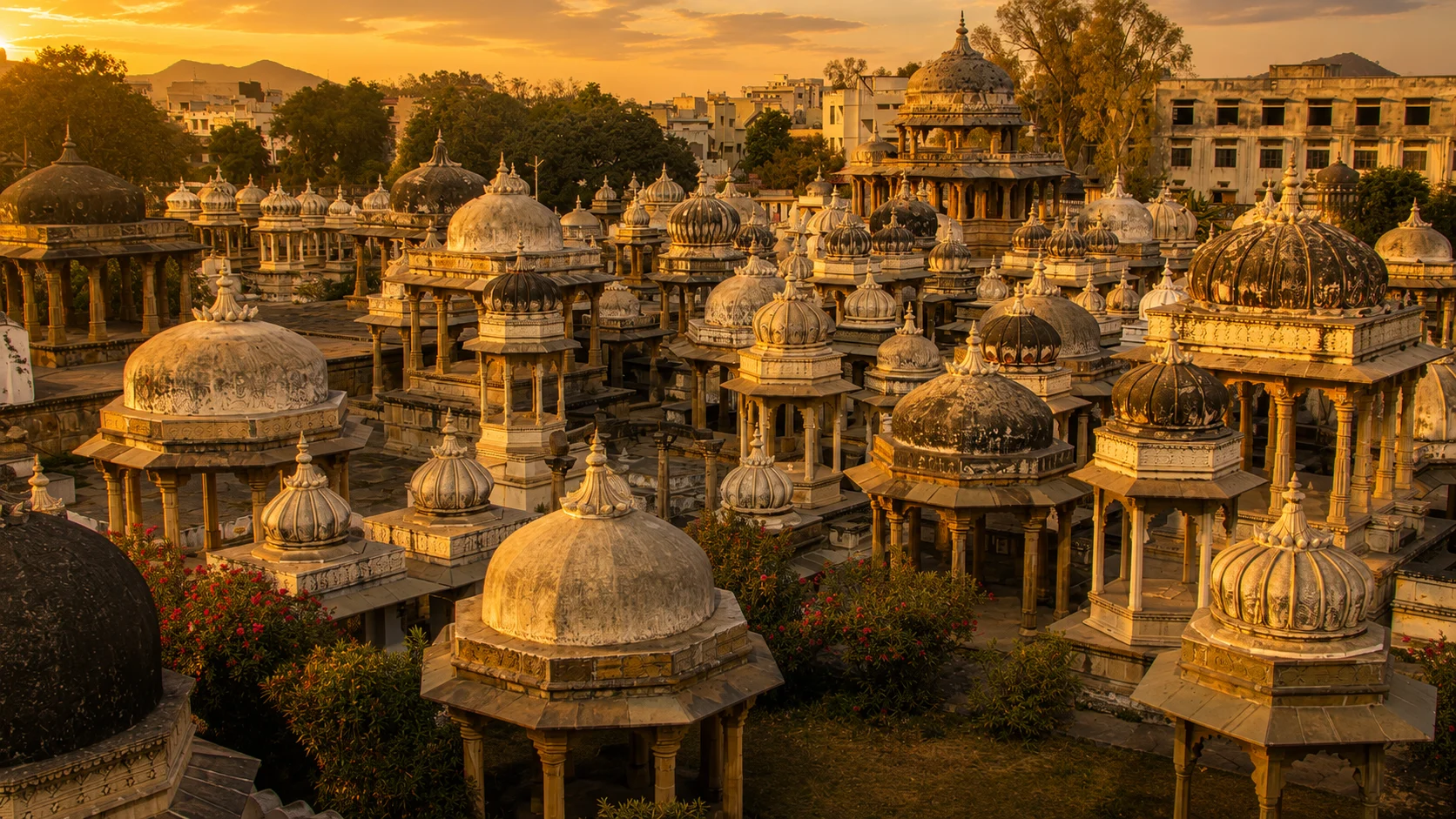
Ahar Royal Cenotaphs
An atmospheric complex of ornate chhatris and stone cenotaphs that preserves an important part of Mewar’s royal history and architectural tradition.
What Makes Udaipur Royal?
Udaipur’s royal character is not limited to its grand palaces. It comes from the wider legacy of Mewar, reflected in the city’s architecture, lakeside landmarks, historic temples and places that preserve stories from generations of the past.
The Legacy of Mewar
Udaipur’s identity is closely connected with the history of Mewar. Its palaces, old neighbourhoods and historic landmarks offer glimpses into the region’s long royal tradition.
Palaces Around the Lakes
Lakes are part of what makes Udaipur’s royal landscape so distinctive. Palace complexes and island landmarks sit naturally within the setting of Lake Pichola and the surrounding hills.
Architecture That Tells a Story
Look closely at the jharokhas, courtyards, chhatris, domes, balconies and carved stonework. These details give Udaipur’s historic buildings much of their distinctive character.
Heritage Beyond the Palaces
The royal story extends beyond palace walls. Havelis, temples, cenotaphs, gardens and cultural spaces add different layers to Udaipur’s heritage and make the city worth exploring beyond its most famous landmarks.
Understanding Udaipur’s Royal Palaces
Udaipur’s royal architecture is not defined by a single palace. It is a collection of grand complexes, lakeside retreats and royal residences, each with its own character and place in the city’s historic landscape.
The City Palace Complex
The City Palace is best understood as a large royal complex rather than a single building. Its courtyards, gateways, terraces, balconies and connected palace spaces developed over generations of Mewar rule. The complex also includes important architectural features such as Badi Mahal, giving visitors a sense of how different royal spaces came together within one sprawling residence. Its position above Lake Pichola also makes the palace an important part of Udaipur’s wider cityscape.
Palaces on the Water
Lake Pichola is an important part of Udaipur’s royal identity, and some of the city’s most recognisable landmarks are closely connected with its waters. Lake Palace and Jag Mandir stand apart from the busy streets on island settings, creating a very different experience from the main City Palace. Their pale stone architecture, terraces and domes appear especially striking from the lake, where the relationship between royal buildings and the surrounding landscape becomes easy to appreciate.
Royal Residences & Palace Hotels
Not every royal building in Udaipur serves the same purpose today. Fateh Prakash Palace and Shiv Niwas Palace are associated with the City Palace’s wider royal setting and are also known for their heritage hospitality. Their architecture offers another way to understand Udaipur’s royal spaces, where historic residences, formal interiors and modern visitor experiences exist alongside one another. They add another layer to the story of the city’s palace tradition.
The Hilltop Palace
Monsoon Palace, also known as Sajjangarh, has a very different setting from Udaipur’s lakeside palaces. Positioned high in the Aravalli hills, it looks across the city, lakes and surrounding countryside rather than directly into the old city streets. The elevated location is a major part of its appeal, particularly when clouds, greenery and changing light transform the landscape. It gives visitors a broader view of the royal city and its natural setting.
How to Explore Udaipur’s Royal Palaces
The best palace itinerary depends on how much time you have. Rather than trying to cover every landmark in one day, give the major palaces enough time to appreciate their architecture, setting and history.
Half-Day Palace Plan
If you have only half a day, keep the plan simple and focus on City Palace. The complex has enough courtyards, galleries, balconies, architectural details and views to make it worth taking your time rather than rushing through several different attractions. Start with a comfortable pace, allow time to explore the main palace areas and leave some room to pause at viewpoints and interesting architectural details.
Full-Day Palace Plan
With a full day available, begin in the morning at Monsoon Palace, or Sajjangarh, when the hilltop setting gives you a broad perspective over Udaipur and the surrounding landscape. Return towards the city and keep the main part of the day for City Palace. The palace complex deserves unhurried attention, and a proper visit can easily take up much of the afternoon before the day moves towards evening.
Palace & Lake Experience
If you want to experience Udaipur’s royal architecture together with its famous lake setting, combine your palace visit with views around Lake Pichola. City Palace gives you the grand architectural experience from the old city, while the lake offers a different perspective of Udaipur’s palace landscape. This approach works particularly well when you want photographs and a slower evening rather than another packed sightseeing stop.
Take a Slower Approach
Palace visits are more enjoyable when you leave some breathing room in the itinerary. If architecture, photography or history is your main interest, there is little benefit in ticking off multiple palaces simply for the sake of a list. Spend more time observing the courtyards, stonework, balconies and changing views, and let the setting become part of the experience. Udaipur’s royal heritage is better explored at a relaxed pace.
Best Time to Explore Udaipur’s Royal Palaces
Udaipur’s palaces can be explored throughout the year, but the experience changes noticeably with the season and time of day. Weather, outdoor walking and the kind of views you want to see are worth considering before planning your palace visit.
Winter & Pleasant Months
The cooler part of the year is generally the most comfortable time for exploring Udaipur’s royal heritage. Walking through large palace complexes, moving between courtyards and spending time outdoors is easier when temperatures are more pleasant. Clear days can also make the surrounding lake and hill views especially enjoyable. If your main goal is to explore several royal landmarks without dealing with intense heat, the cooler months are a sensible choice.
Monsoon Season
The rainy season gives Udaipur a completely different character. The Aravalli hills become greener, clouds gather around the higher viewpoints and the landscape can look particularly dramatic from Monsoon Palace. Rain can also make outdoor plans less predictable, so it is worth keeping some flexibility in your schedule. For visitors who enjoy changing skies, greenery and atmospheric views, monsoon can be one of the most rewarding times to see the city’s royal landscape.
Summer & Hot Days
Summer requires a little more planning, particularly when your itinerary includes outdoor areas and the hilltop setting of Monsoon Palace. Earlier parts of the day are generally more comfortable for outdoor sightseeing, while the stronger afternoon heat can make long walks less enjoyable. Carry water, plan breaks and avoid packing too many outdoor stops into one stretch. The palace interiors can provide a useful change of pace during a hot day.
Morning, Afternoon or Evening?
The best time depends on what you want from the visit. Morning works well for outdoor and hilltop exploration, making it a natural time to consider Monsoon Palace. The main City Palace experience can then take up a good part of the afternoon. As the day moves towards evening, the lakes and palace façades take on a different character, making the later hours better suited to relaxed views and photography around the lakefront.
Royal Palace Photography & Visitor Tips
A little planning can make a palace visit much more enjoyable. Udaipur’s royal buildings are as much about small architectural details and changing views as they are about the monuments themselves.
Take Your Time With Photography
Look beyond the obvious wide shots. Palace courtyards, carved stonework, arches, balconies, jharokhas and smaller architectural details often make some of the most interesting photographs. Lake-facing viewpoints can also give you a different perspective of Udaipur’s royal architecture. Early and later parts of the day can offer softer light, while changing clouds during the monsoon can add atmosphere to outdoor views.
Wear Comfortable & Carry Light
Palace visits involve walking, stairs and time spent moving between different sections, so comfortable footwear is more useful than dressing only for the photographs. Carry drinking water and basic sun protection, especially outside the cooler months. If you are visiting during the rainy season, a compact rain layer can be useful for outdoor plans and the hilltop route to Monsoon Palace.
Give the Main Palace Enough Time
City Palace is not the kind of place that needs to be squeezed into a short sightseeing window just so you can add another attraction. The complex has multiple spaces and plenty of architectural details worth noticing. If history, architecture or photography is your main interest, allow yourself enough time to move through it without constantly watching the clock. A relaxed visit will usually be more memorable than ticking off several places in a hurry.
Check Before You Go
Palace timings, ticket arrangements, photography rules and access conditions can change, so check the latest official information before setting out. This is particularly useful when planning Monsoon Palace during unsettled weather. If rain, road conditions or other temporary restrictions affect your plans, keeping some flexibility in the day’s itinerary can save you from having to rush or rearrange everything at the last minute.
Udaipur Royal Palace FAQ
Planning a visit to Udaipur’s royal palaces? Here are some common questions to help you plan your palace experience.
City Palace is the best starting point for most visitors because it offers the broadest introduction to Udaipur’s royal architecture and Mewar heritage. Its large complex, historic courtyards and elevated position above Lake Pichola make it a natural first stop for understanding the city’s royal character.
It is better to allow a substantial part of your day rather than trying to rush through City Palace. The complex has multiple sections, courtyards, galleries and architectural details, so the time needed depends on how deeply you want to explore it. History and architecture enthusiasts should leave more room for a relaxed visit.
Yes. A practical full-day plan is to visit Monsoon Palace in the morning and then return towards the city for City Palace. Keeping Monsoon Palace earlier in the day leaves the larger part of the day for exploring the City Palace complex without trying to squeeze both experiences into a short window.
Both are historic island landmarks on Lake Pichola, but they are distinct places with different histories and present-day roles. Lake Palace is known today primarily as a luxury heritage hotel, while Jag Mandir is a historic island palace that forms part of Udaipur’s distinctive lakeside royal landscape.
Both are closely associated with the wider City Palace royal setting and are important parts of Udaipur’s palace heritage. Today, both are also associated with heritage hospitality, giving visitors another perspective on the city’s former royal residences and palace architecture.
The rainy season can give Monsoon Palace a particularly atmospheric setting, with greener hills, dramatic clouds and changing views across Udaipur. However, weather can also affect visibility and road conditions, so it is sensible to check the conditions before setting out and keep some flexibility in your itinerary.
Morning is a good choice for outdoor and hilltop visits such as Monsoon Palace, while City Palace can comfortably take up much of the afternoon. Later in the day, the lake and palace façades can offer attractive conditions for relaxed views and photography. The ideal timing ultimately depends on the season and the type of experience you want.
Not necessarily. If you want to appreciate the architecture and history rather than simply collect sightseeing stops, it is better to give the major palaces enough time. For a one-day itinerary, Monsoon Palace in the morning followed by City Palace is a more realistic approach than trying to rush through every royal landmark.
More Royal Heritage Guides
Want to explore Udaipur’s royal heritage in more detail? Continue with our individual guides to some of the city’s most important palaces and historic royal landmarks.
City Palace Guide
Explore the grand City Palace complex, its architecture, historic spaces, lake views and everything worth knowing before your visit.
Read Guide
Bagore Ki Haveli Guide
Discover the historic lakeside haveli, its traditional architecture, cultural character and what makes it worth adding to a Udaipur heritage itinerary.
Read Guide
Monsoon Palace Guide
Plan a visit to Sajjangarh, the hilltop palace known for its sweeping views of Udaipur, Aravalli hills and dramatic monsoon landscapes.
Read Guide
Jag Mandir Guide
Learn about the historic island palace on Lake Pichola, its distinctive architecture, setting and how to include it in your royal Udaipur experience.
Read Guide