
City Palace Udaipur
Explore the historic palace complex of Mewar overlooking Lake Pichola, from its grand courtyards and royal architecture to its museum collections and unforgettable views across the city.
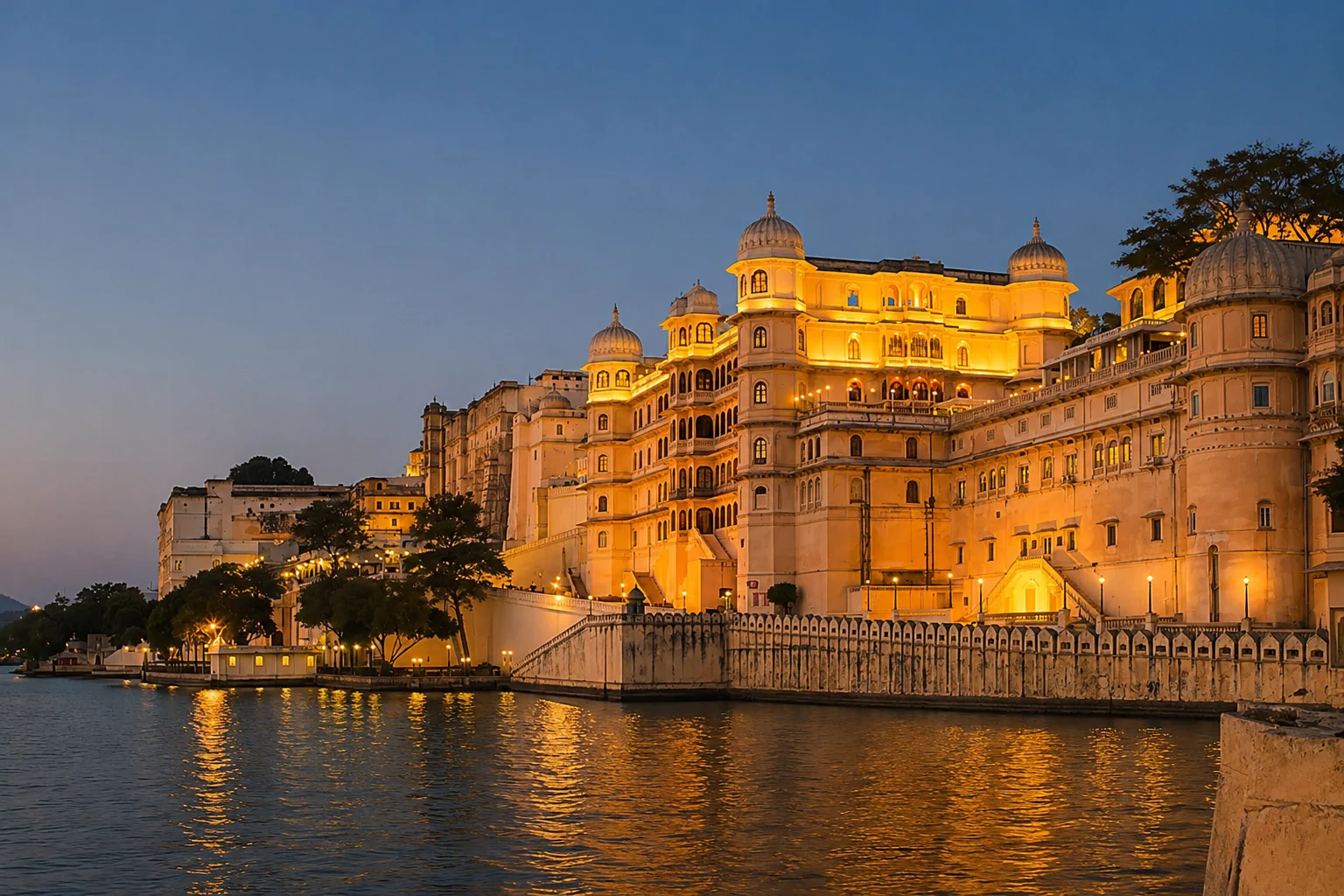
Inside Udaipur’s City Palace
Seen from across Lake Pichola, City Palace has the kind of presence that makes you want to walk closer. Its pale stone walls, balconies and layered rooftops rise above the old city, but the real character of the palace only begins to appear once you pass through its gates.
What looks like one enormous palace is actually a collection of courtyards, passages, terraces and royal spaces built and expanded over generations of Mewar’s history. Some corners feel grand and ceremonial, while others are surprisingly intimate, with carved details, coloured glass, painted surfaces and views that keep opening towards the lake and the hills beyond.
A visit here is less about seeing one famous building and more about slowly making your way through a piece of Udaipur’s royal past. The architecture changes as you move, and small details often become more memorable than the largest rooms.
This guide takes you beyond the usual postcard view. We will look at the story behind the palace, understand how the complex is laid out, explore the spaces worth noticing, and then get into the practical side of visiting — the route, entry information, timings, facilities, photography and how much time to keep for the experience.
City Palace Udaipur at a Glance
A quick overview of the location, heritage and visitor experience before you begin exploring the palace complex.
Location
City Palace stands in Udaipur’s historic old city, on the eastern shore of Lake Pichola.
Royal Heritage
The palace is closely associated with the Mewar dynasty and the long royal history of Udaipur.
Palace Complex
City Palace is a large complex of courtyards, gateways, terraces, royal rooms and interconnected historic spaces rather than a single building.
Museum
Parts of the palace complex are open to visitors as a museum, presenting royal collections and historic objects associated with Mewar.
Lake Pichola Views
Several parts of the palace offer views across Lake Pichola towards Udaipur’s waterfront and surrounding hills.
Time to Explore
Keep several hours if you want to explore the palace at a comfortable pace rather than rushing through its courtyards, galleries and viewpoints.
History of City Palace
City Palace was not built in a single phase. What stands above Lake Pichola today is the result of centuries of additions, changes and royal ambition, shaped by the rulers of Mewar and the changing story of Udaipur itself.
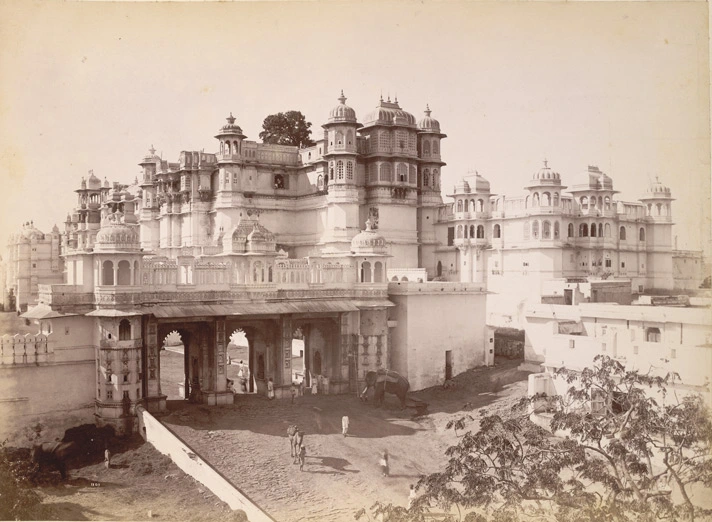
From Mewar’s New Capital to a Royal Palace
The story of City Palace begins with the founding of Udaipur in the 16th century. After Chittorgarh became increasingly difficult to defend, Maharana Udai Singh II established a new capital in the valley around Lake Pichola. The first royal structures were raised here, setting the foundation for what would eventually become one of Rajasthan’s largest palace complexes.
The palace grew gradually rather than following one fixed architectural plan. Successive rulers added courtyards, residences, gateways and ceremonial spaces, each leaving something of their own period behind. That is one reason City Palace feels so layered when you walk through it today.
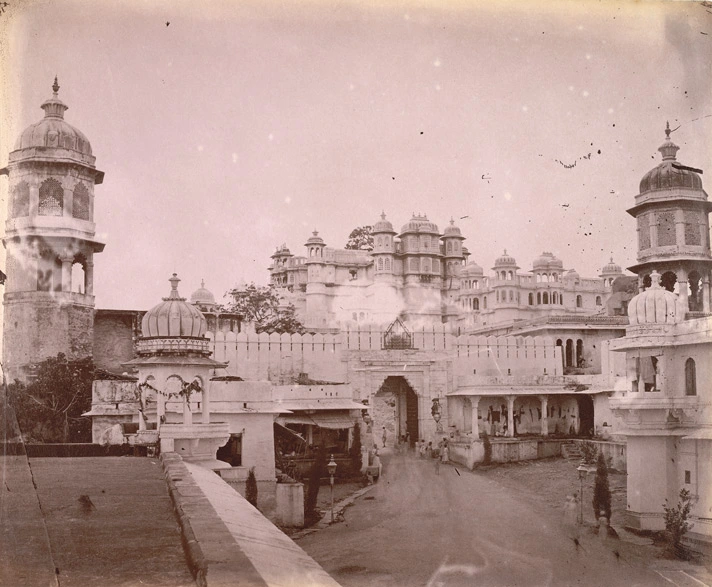
Generations of Mewar Shaped the Complex
Over the generations, the palace became much more than a royal residence. It developed into a connected world of private quarters, audience spaces, courtyards and ceremonial areas. Different sections reflect different periods of Mewar’s architectural taste, which is why the experience changes from one courtyard to the next.
The location also played an important part in its identity. From the palace terraces, Lake Pichola, the old city and the surrounding Aravalli hills became part of the royal setting. Architecture here was not simply about making a grand building; it was also about making the most of the landscape around it.
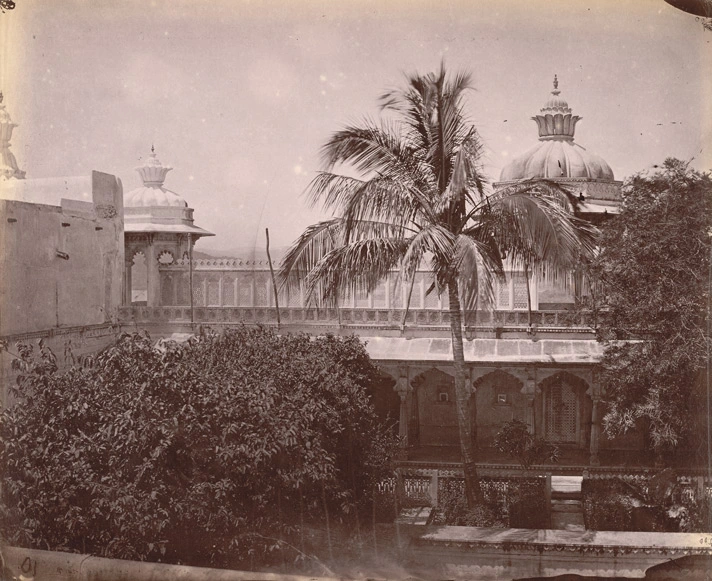
A Royal Complex in a Changing Udaipur
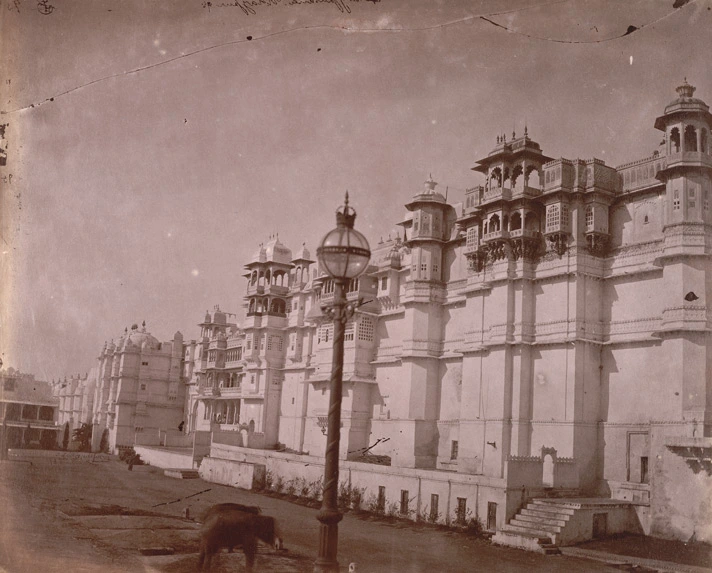
By the 19th century, City Palace had become an established centre of royal life in Udaipur. Historical photographs from this period give a fascinating glimpse of how the palace and its gateways appeared before the modern city developed around them.
The old photographs also help explain something that can be easy to miss during a modern visit: City Palace was never isolated from Udaipur. Its gates, terraces and courtyards were closely connected with the movement of people, ceremonies and everyday life in the old city.
The Palace Today
The role of the palace changed with the end of princely rule, but the complex remained an important part of Udaipur’s identity. Today, visitors can enter parts of the historic palace complex and experience its rooms, courtyards, galleries and collections while still seeing the architectural layers left by generations of Mewar rulers.
This is what makes the history of City Palace especially interesting when you visit in person. The story is not confined to dates and names. It is built into the walls, the gateways, the changing views and the spaces you pass through as you move deeper into the complex.
Understanding the City Palace Udaipur Complex
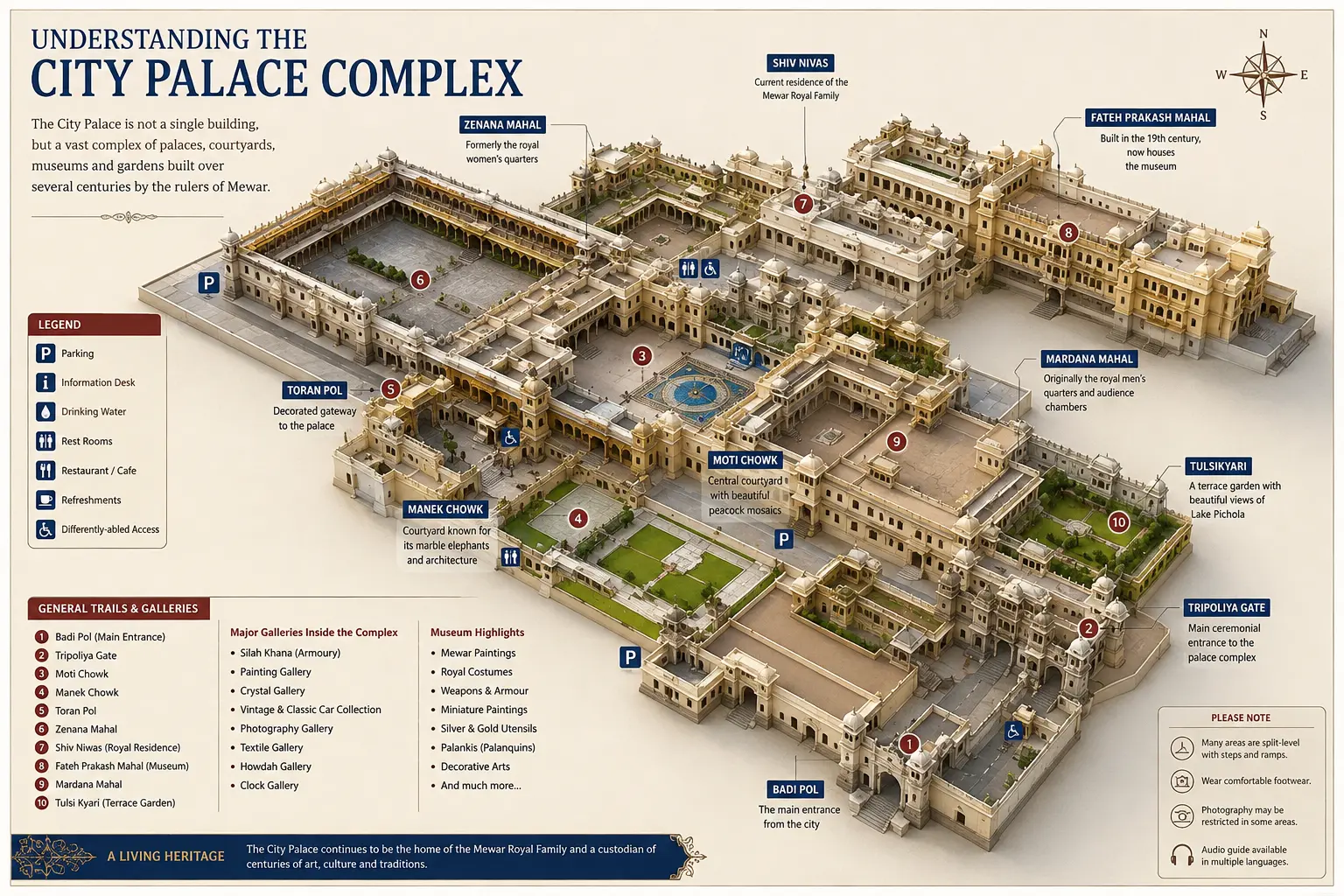
City Palace is easier to explore once you stop thinking of it as one enormous building. It is a connected collection of courtyards, palace sections, gateways, galleries and visitor spaces, built up over generations around the royal heart of Udaipur.
A Palace Built in Layers
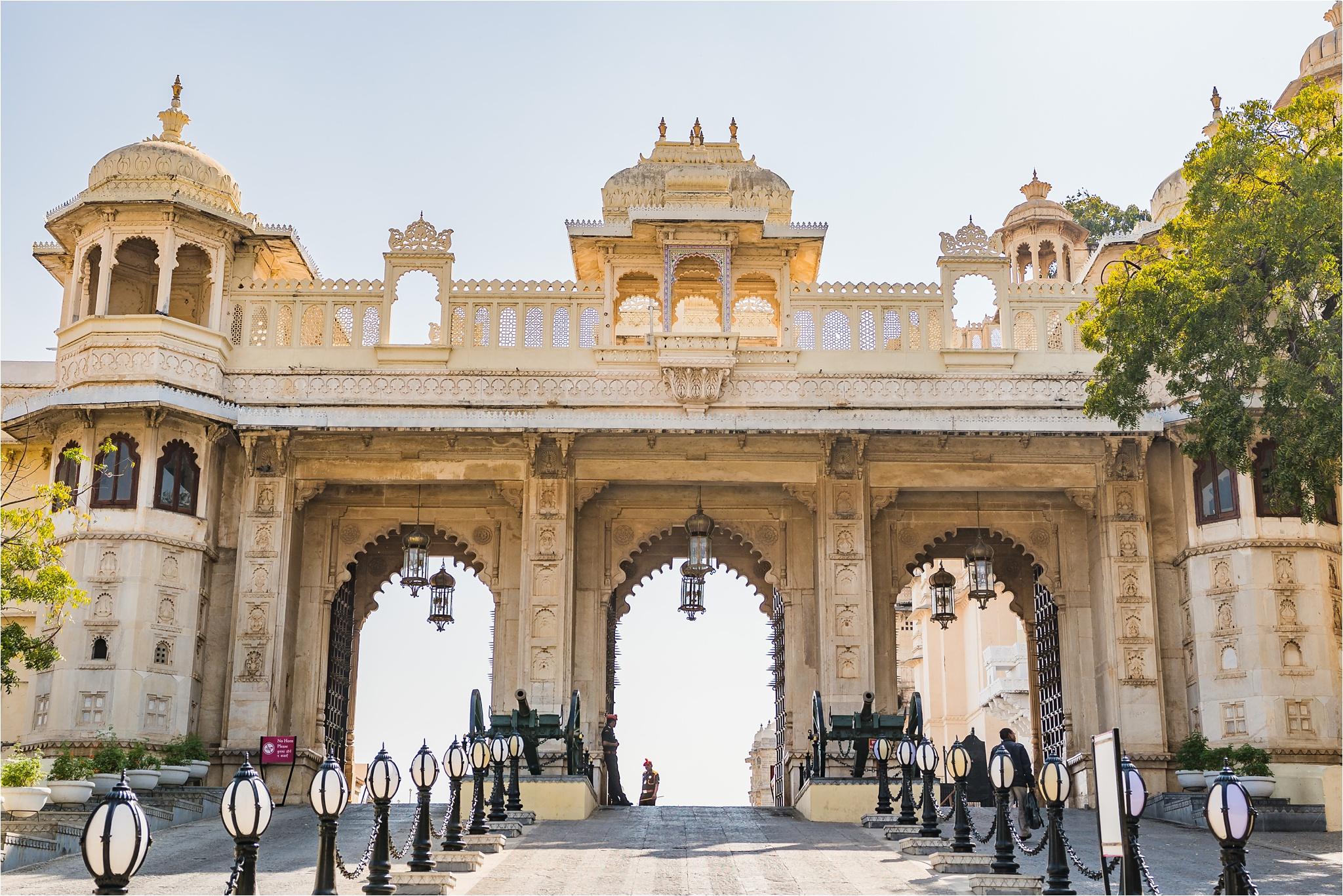
The first thing to notice on the map is how much is packed into the complex. Badi Pol marks one of the important approaches, while Tripolia leads further into the palace area. From there, the spaces open into courtyards and different sections rather than following the layout of a modern building with one straight corridor.
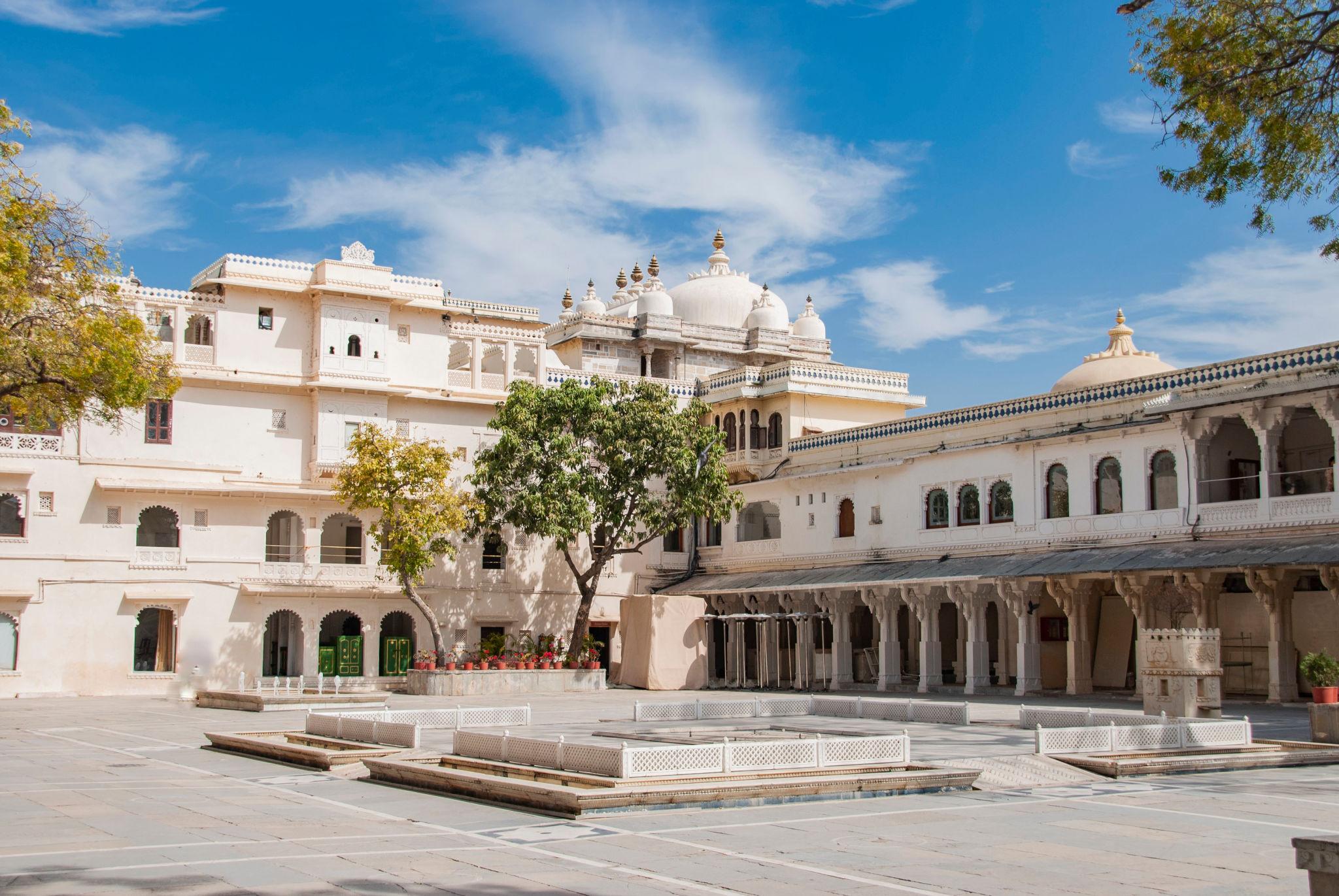
Manek Chowk and Moti Chowk are useful points to keep in mind while finding your way around. They help give the complex a sense of scale, because the palace gradually unfolds from one open space into another.
Courtyards, Palaces & Connecting Spaces
As you move deeper into the complex, the map begins to make more sense. Areas such as Zenana Mahal and Mardana Mahal represent different parts of the larger palace arrangement, while the courtyards and connecting passages bring them together.
The scale can be slightly deceptive when you first look at the map. Two sections that appear close together may feel quite different once you are actually walking between them. That is why it is worth taking a moment to understand the layout before starting the visit rather than trying to remember every room and courtyard at once.
Shiv Niwas & Fateh Prakash
The wider City Palace setting also includes the historic Shiv Niwas Palace and Fateh Prakash Palace areas. These are important parts of the larger royal complex, but they should not be confused with every section included in the museum visitor route.
For a first visit, the easiest approach is to use the map as your reference point and follow the route applicable to your ticket or planned experience. This keeps the visit straightforward and helps you understand which spaces you are actually exploring.

How the Visitor Route Works
Think of the map as a guide rather than something you need to memorise. Start by locating your entry point, identify the main courtyard or gateway ahead of you, and then let the palace reveal itself step by step.
The most useful thing to remember is that City Palace is an experience of movement. You will pass through gateways, open courtyards, narrower passages and larger royal spaces, with the character of the architecture changing along the way.
We will break down the places worth seeing next, so you can use this map together with the individual sections of the guide instead of trying to take in the entire complex in one glance.
What to See Inside City Palace
The best part of exploring the palace is that the experience keeps changing as you move from one courtyard to another. Some spaces are grand and open, while others draw you in with paintings, glasswork, carved details and quieter corners.
Rai Angan
Rai Angan is one of the most important places to understand before moving deeper into the complex. The museum describes this courtyard as the oldest portion of the palace, with its foundations associated with Maharana Udai Singh’s establishment of Udaipur as the capital of Mewar.
It is not necessarily the most dramatic space at first glance, but knowing what happened here changes the way you look at the surrounding architecture. This is where the palace story feels closest to its beginnings.
Manek Chowk
Manek Chowk is one of the spaces that helps you understand the scale of the palace. The open courtyard gives you a welcome break from the narrower passages and creates a strong sense of how the royal complex connected with the wider city around it.
Take a moment here instead of simply walking through. Look back towards the palace façades, notice the different levels and keep an eye on the gateways that lead you further into the complex.
Moti Chowk
Moti Chowk is another useful landmark while following the palace route. It brings together the movement between several sections of the complex and is also an important visitor point, with facilities and access to the museum experience nearby.
This is one of those places where it helps to slow down. The details around the courtyard can easily be missed if you are focused only on reaching the next gallery.
Mor Chowk
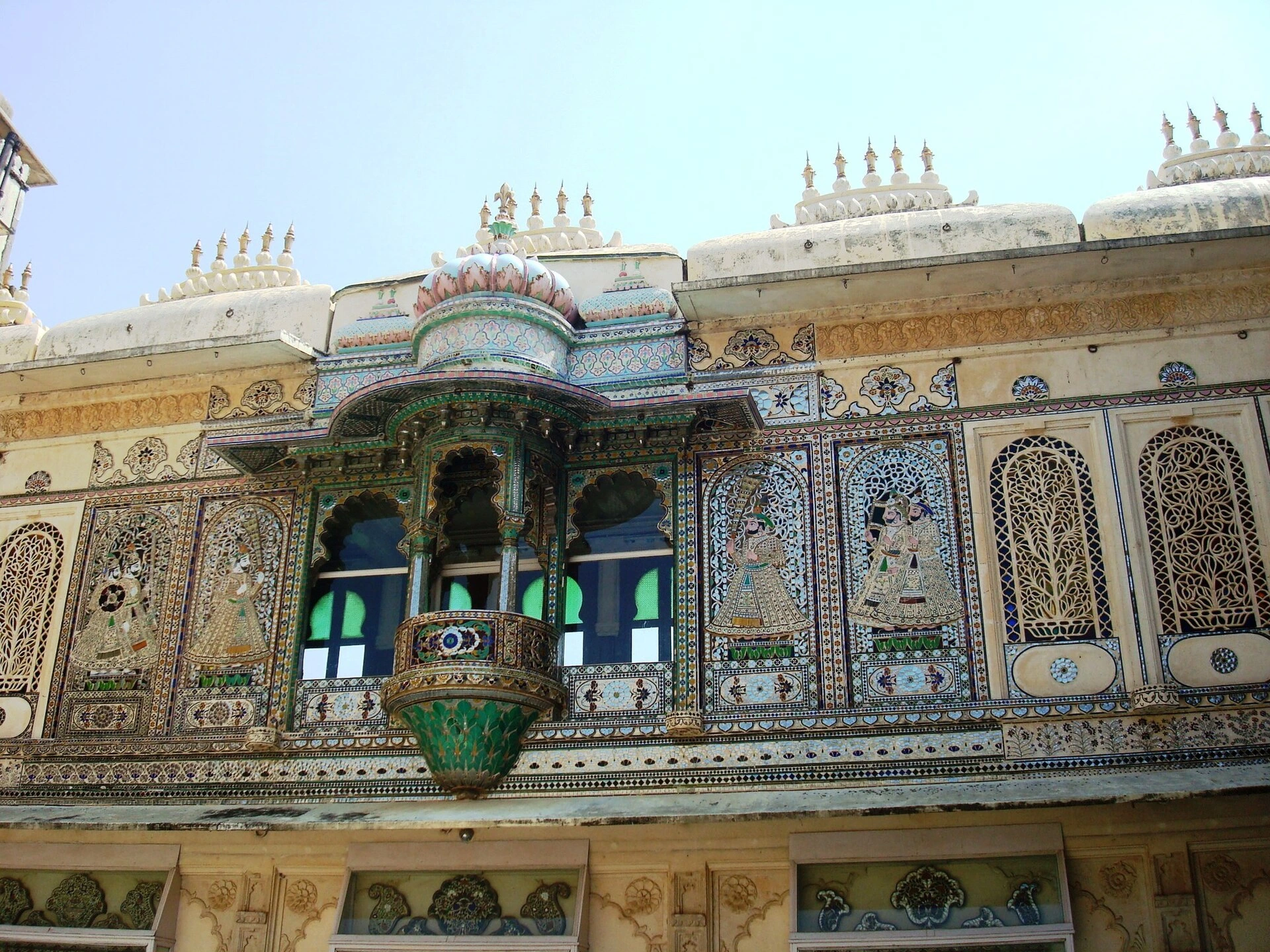
If there is one place where the decorative side of the palace really demands your attention, it is Mor Chowk. The three peacocks created with intricate glass inlay are its most recognisable feature, but they are only part of what makes the courtyard special.
Look closely at the colours, small pieces of glass and surrounding decorative work rather than viewing the peacocks from a distance and moving on. The City Palace Museum itself describes Mor Chowk as a jewel of the collection and highlights the craftsmanship of Mewar behind its glasswork.
Kanch Ki Burj
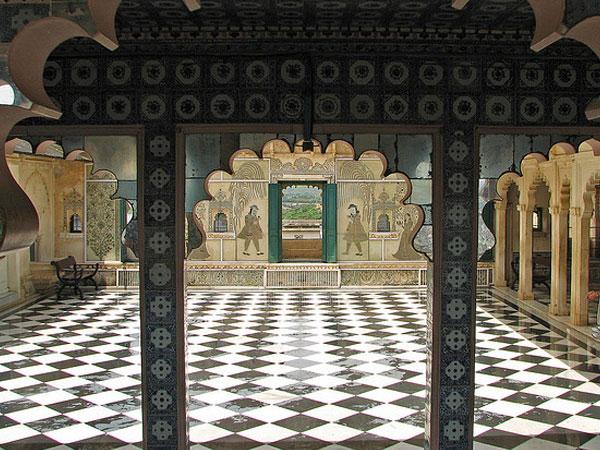
Kanch Ki Burj is a good reminder that the palace’s richness is not limited to its larger courtyards. Its glass and mirror decoration creates a very different atmosphere, with colour and reflective surfaces becoming part of the architecture itself.
The museum notes that the room was once used as a winter bedroom by the Maharanas and features glass inlay in colours associated with Mewar.
Badi Mahal
Badi Mahal feels different from the enclosed rooms and galleries below. Set at the topmost level of the palace, it combines an open garden setting with marble-finished architectural details and views across the surrounding city.
The space was used by the royal family for occasions including religious recitations, celebrations and family gatherings. Today, it offers a quieter change of pace during the visit.
Zenana Mahal
Zenana Mahal takes the story of the palace into a more private side of royal life. The space was associated with the royal women of the Mewar household, and its rooms have since been adapted into museum galleries.
It is worth paying attention to the smaller architectural details here. Windows, screens, courtyards and changes in scale tell a quieter story than the grand ceremonial spaces elsewhere in the complex.
Amar Mahal
Amar Mahal adds another layer to the palace experience, with its position within the interconnected royal spaces and its relationship to the museum route. Rather than treating it as an isolated attraction, look at how it fits into the larger sequence of courtyards, galleries and passageways.
By this point, the palace begins to make more sense as a collection of spaces shaped over many generations rather than a single monument built at one time.
City Palace Udaipur Architecture
The architecture of City Palace Udaipur is best understood slowly. Instead of one uniform style, the complex brings together courtyards, gateways, balconies, domes, carved surfaces and richly decorated interiors that were shaped over many generations of Mewar’s royal history.
A Palace Built Across Generations
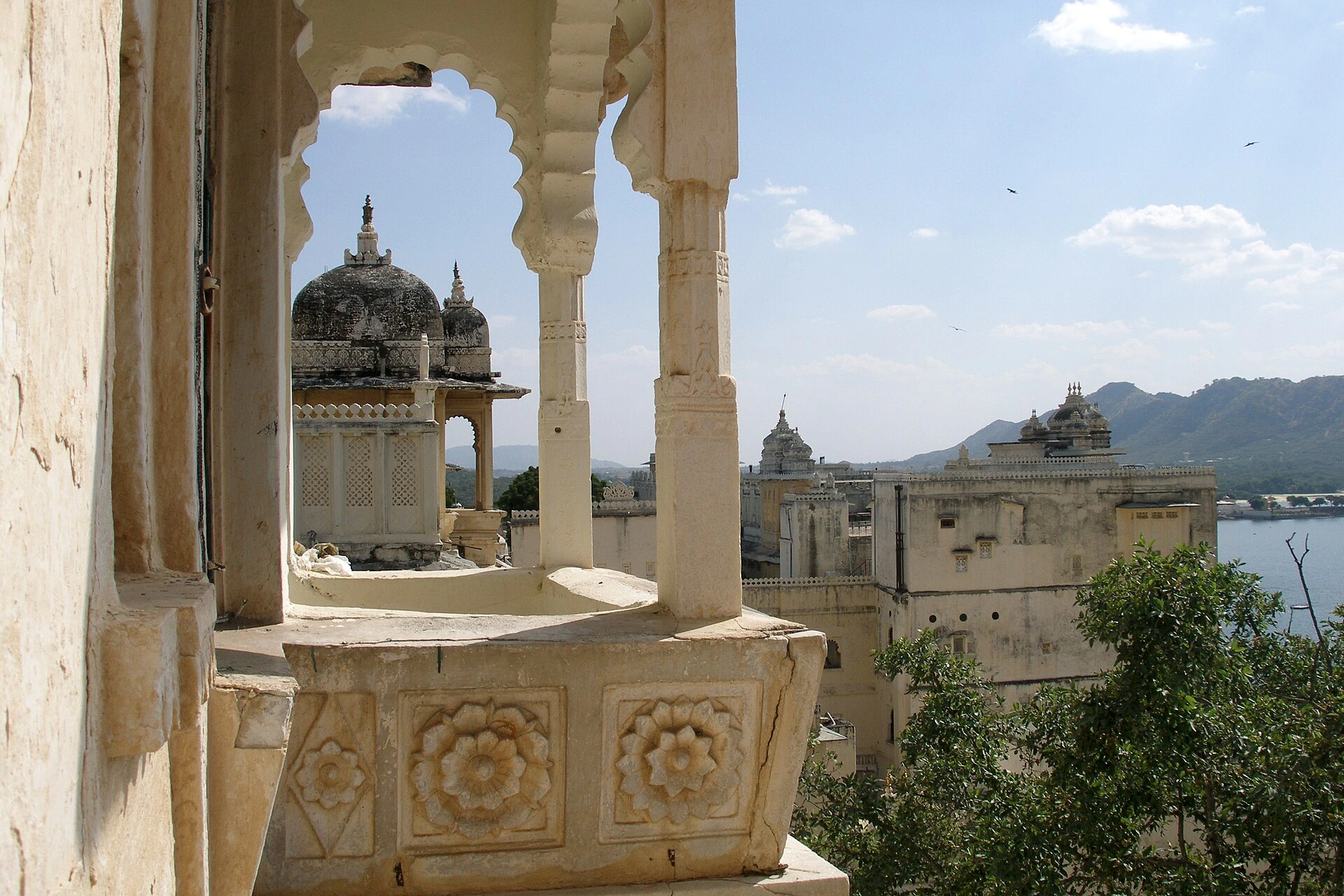
From a distance, City Palace Udaipur looks like one enormous royal residence rising above the old city. Up close, however, the façade starts revealing how much has been added and changed over time. Different heights, projecting balconies, arched openings and rooftop structures come together without making the complex feel like a single repeated design.
That layered appearance is one of the most interesting things about the palace. Rather than trying to identify one particular architectural style, look at how the different elements work together to create the character of the Mewar royal complex.
Jharokhas, Balconies & Openings
One of the easiest details to notice around City Palace Udaipur is the variety of balconies and projecting windows. These jharokha-like elements break up the large stone façades and create smaller moments within the otherwise imposing architecture.
Walk through the courtyards and look back towards the upper levels. You will notice that balconies, windows and shaded openings are rarely placed randomly. They create depth across the façade while also giving the palace different views over its courtyards and the landscape beyond.
Glass, Tiles & Decorative Surfaces
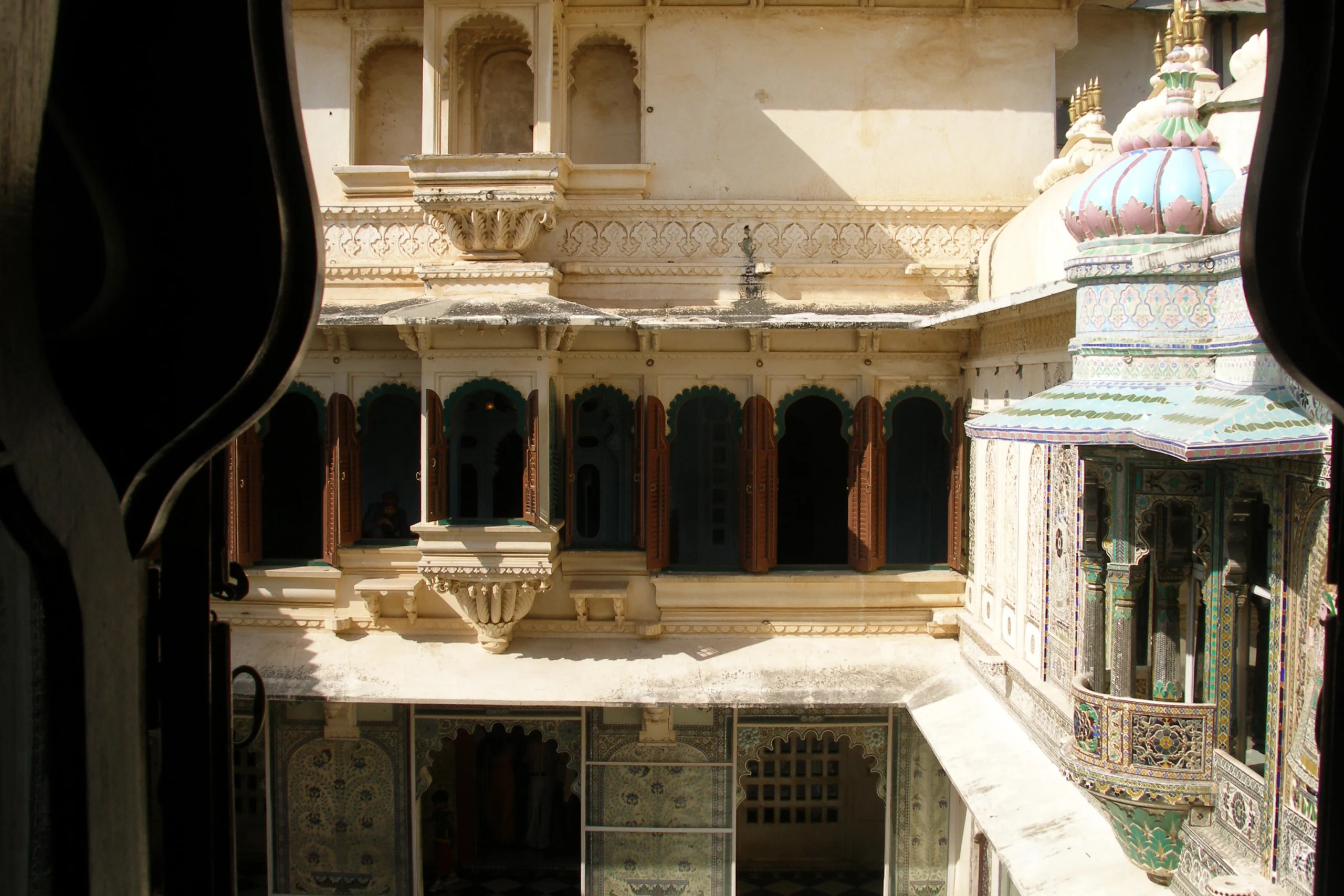
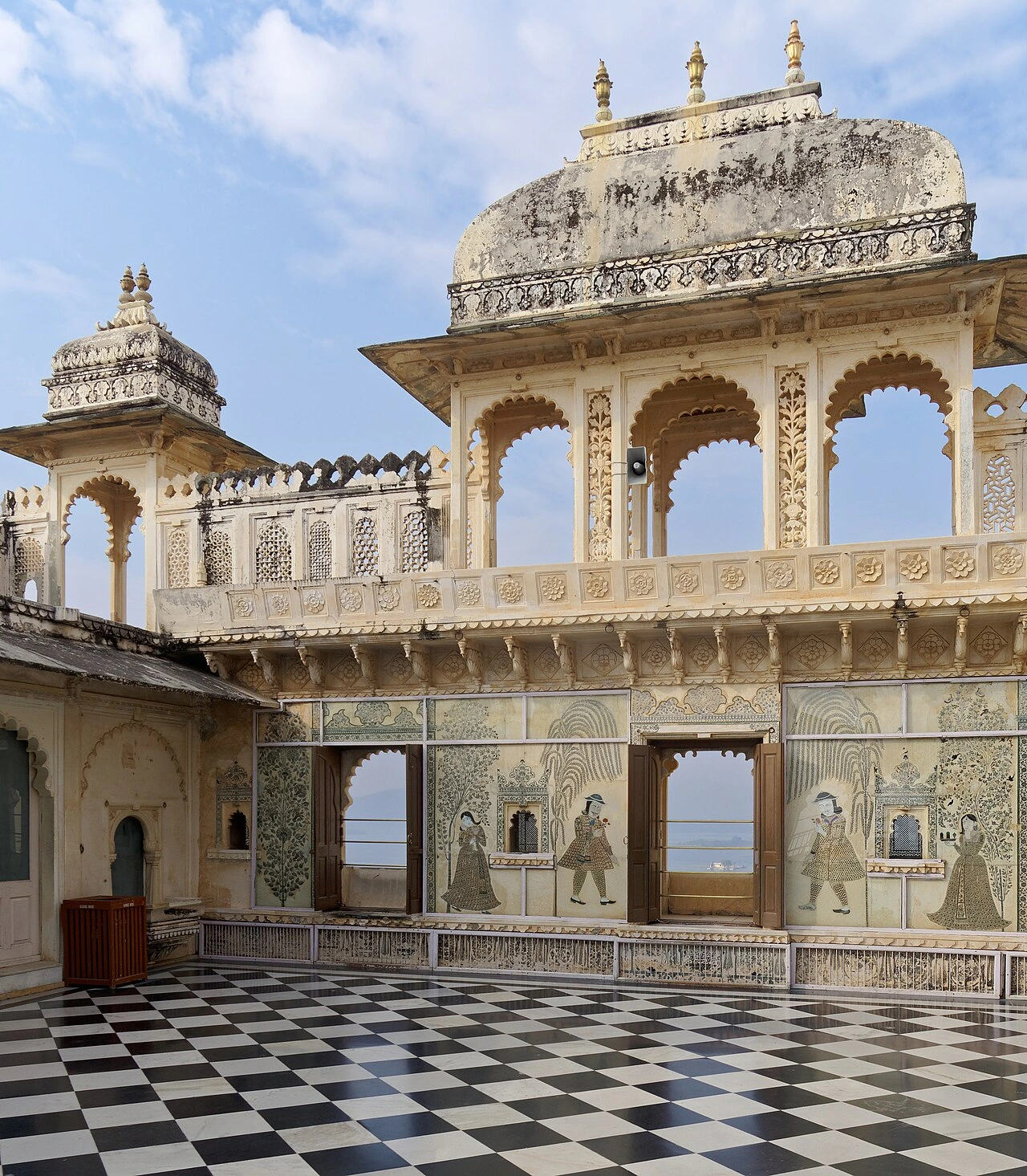
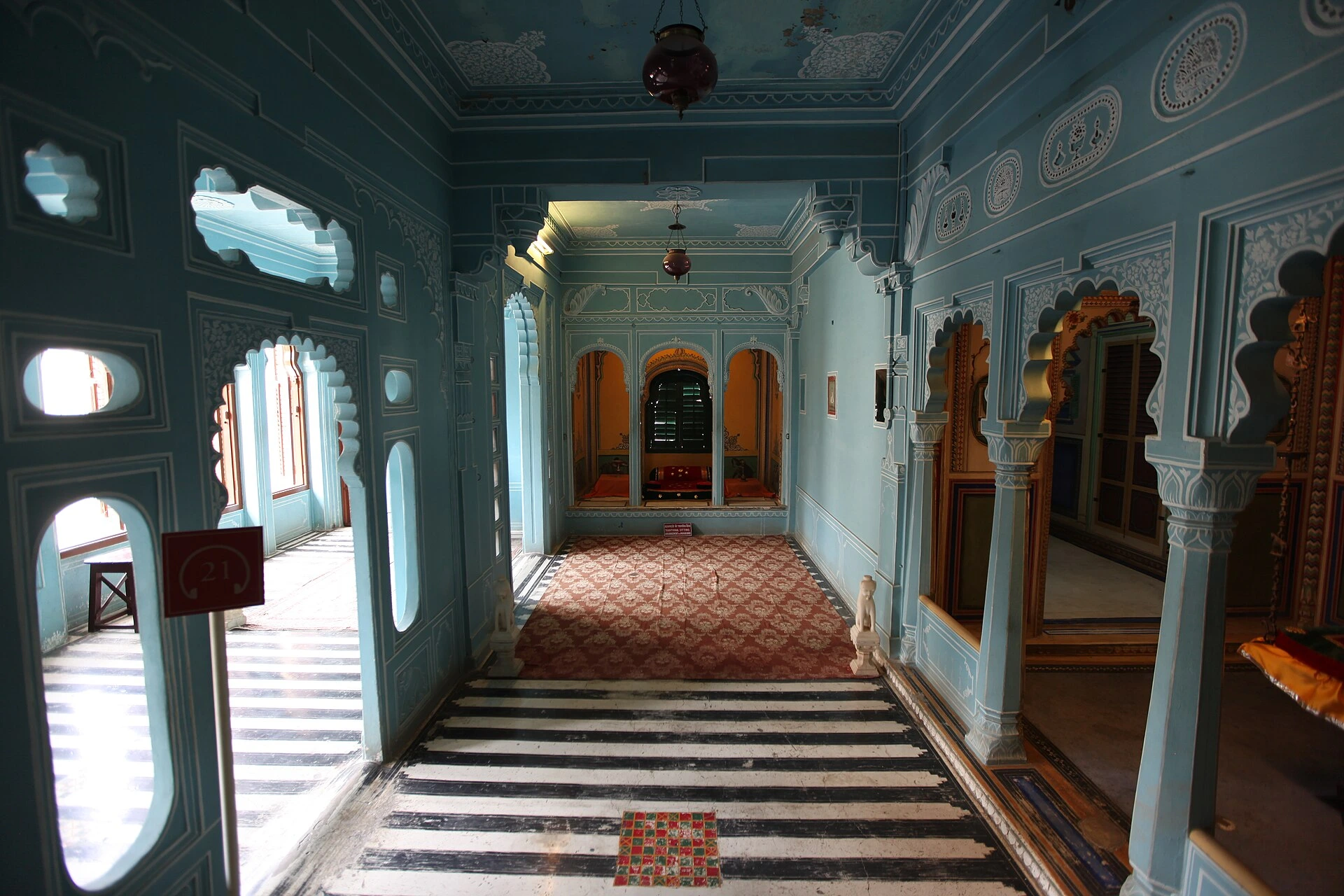
The architecture becomes much more intimate once you move indoors. Areas such as Chini Chitrashala show how colour and decorative surfaces were used alongside the stone architecture to create interiors that feel very different from the exterior walls.
This is where it pays to slow down. Instead of looking at an entire room in one glance, notice the individual patterns, borders and small decorative details. They are part of what gives Udaipur City Palace its visual richness and makes the interiors feel more personal than the huge exterior suggests.
Courtyards, Arches & Changing Spaces
There is no single experience of walking through City Palace Udaipur. One moment you may be in an open courtyard; a few steps later the space becomes narrower, darker and more detailed. Arches, passages and changes in ceiling height create a natural rhythm as you move through the complex.
The courtyards are especially important because they bring light and air into a palace made up of many interconnected rooms. They also give you a chance to stop and understand the relationship between the surrounding buildings instead of seeing each room in isolation.
An Architecture That Has Evolved
Historical photographs make it easier to appreciate just how long the architectural story of City Palace Udaipur has been. The palace seen in an old photograph may look familiar, yet the surrounding city, streetscape and everyday setting have changed considerably.
That continuity is part of the charm of the complex. You are not looking at a monument frozen at one particular moment. You are walking through a living architectural record, where different generations have left their mark while the larger identity of the palace has remained recognisable.
City Palace Museum
A visit to City Palace Udaipur is not only about the building itself. Inside the museum, historic rooms, royal collections and everyday objects help bring the story of the Mewar household closer to the visitor.
What You Will Find Inside
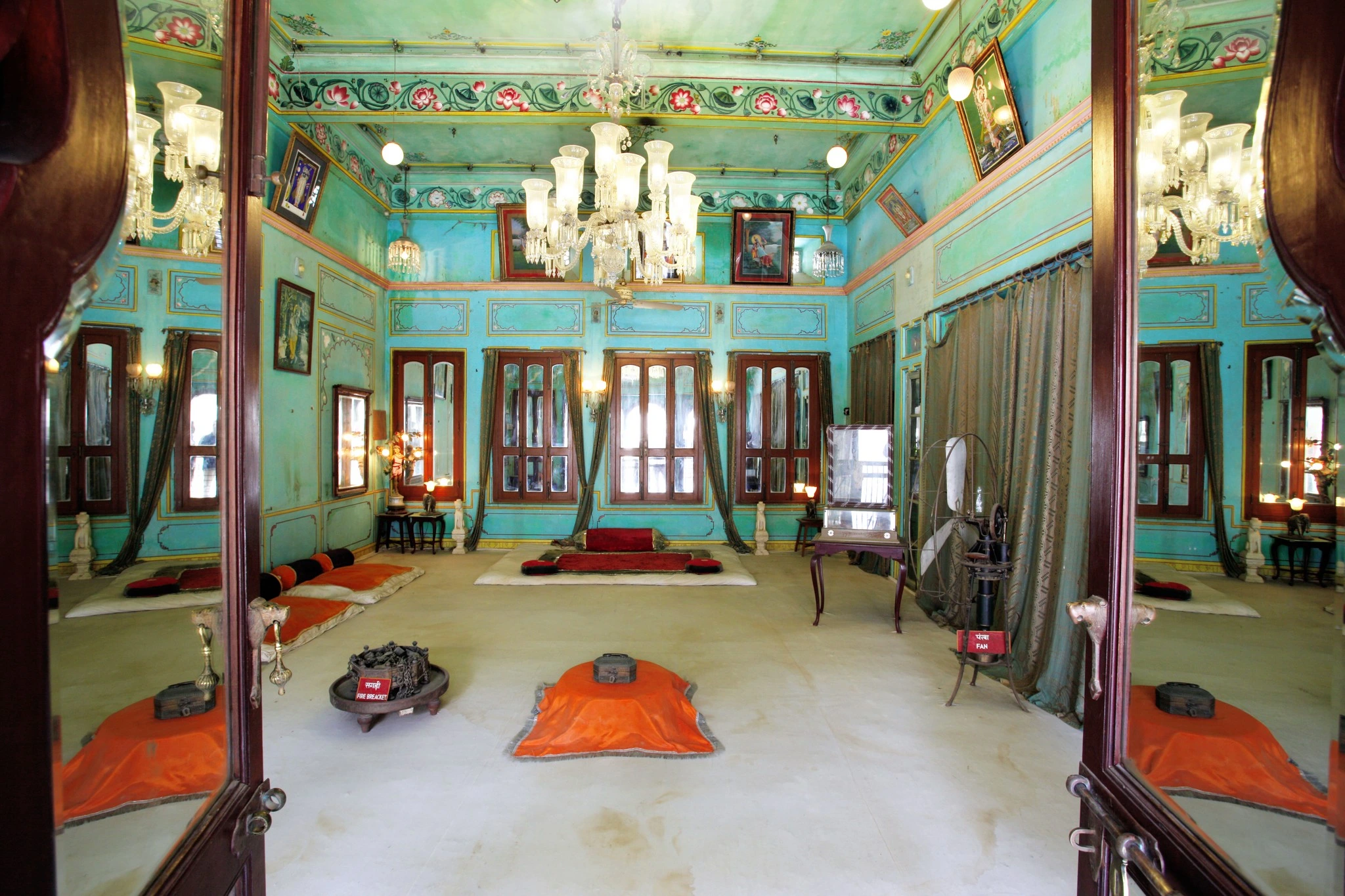
The museum takes you through a different side of City Palace Udaipur. Instead of simply looking at walls and courtyards, you begin to see how the palace was actually used. Historic rooms, paintings, furnishings, decorative objects and royal possessions give the spaces a more personal character.
Some rooms are memorable because of their decoration, while others are interesting for what they tell you about court life and the people who once lived and worked within the palace. It is worth taking your time here rather than treating the museum as something to pass through quickly on the way to the next courtyard.
The museum experience also helps connect the different parts of the palace you have already seen. Details that may seem purely decorative outside often make more sense when you see them alongside the objects, interiors and stories preserved inside.
If this is your first visit to City Palace Udaipur, allow enough time for the museum rather than planning your visit around only the most photographed courtyards. The rooms and collections are an important part of understanding why this palace feels like a complete royal world rather than simply another historic monument.
The Museum Is Part of the Palace Story
The most rewarding way to explore the City Palace Museum is to connect what you see inside with the architecture around you. After walking through a decorated courtyard or royal passage, the preserved interiors give you another way to understand the people and traditions behind the building.
That combination is what makes the museum worth including in a complete City Palace visit. You are not just looking at a collection kept inside an old palace; you are seeing historic rooms and objects within the setting they belong to.
Plan Your Visit to City Palace Udaipur
City Palace Udaipur sits in the heart of the old city beside Lake Pichola, so getting there is fairly straightforward. The bigger question is how you want to plan the visit once you arrive. A little preparation helps you avoid rushing through a complex that deserves more than a quick walk-through.
How to Reach City Palace Udaipur
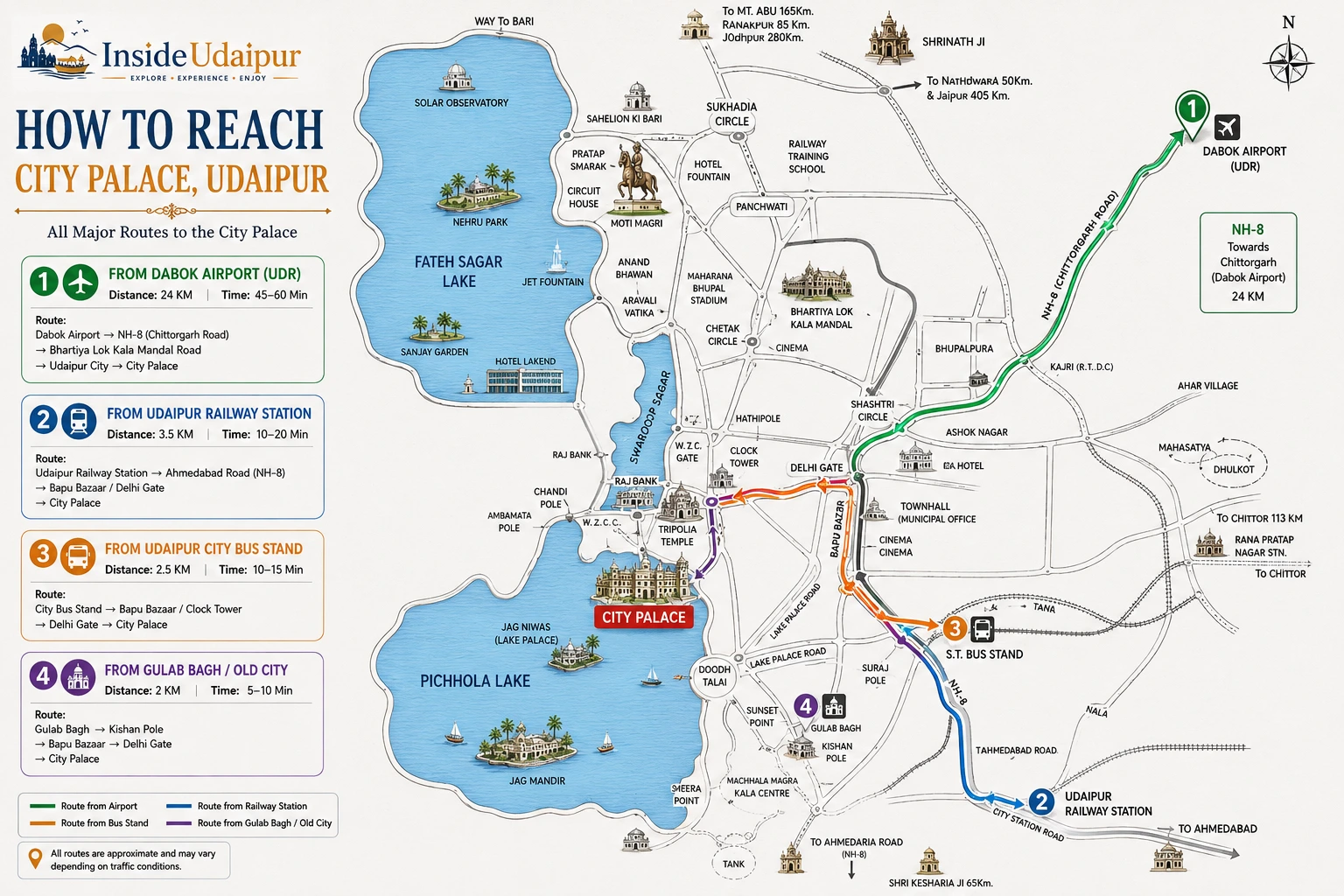
City Palace is located on the eastern side of Lake Pichola in Udaipur’s historic centre. If you are arriving from outside the city, the three most useful starting points are Maharana Pratap Airport, Udaipur Railway Station and the city’s bus network.
From Maharana Pratap Airport at Dabok, the journey takes you towards Udaipur through the main road network before continuing into the old city. The airport is around 20 km from the city centre according to the City Palace Museum’s visitor information.
If you arrive by train, Udaipur Railway Station connects the city with destinations including Delhi, Ahmedabad, Jaipur and Mumbai. From the station, a taxi or auto-rickshaw is the easiest option for reaching the old-city area around City Palace.
Local buses, autos and taxis also connect City Palace with different parts of Udaipur. If you are already exploring the old city, landmarks such as Gulab Bagh, Bapu Bazaar, Delhi Gate and Jagdish Temple are useful points for understanding your position before continuing towards the palace.
Entry Fees & Tickets
One thing worth clearing up before visiting City Palace Udaipur is that the general City Palace complex entry and the City Palace Museum ticket are listed separately.
The currently listed general entry fee is ₹30 for adults and ₹15 for children. A still camera is listed at ₹200, while the listed video camera fee is ₹500.
The City Palace Museum has a separate ticket. The listed museum admission is ₹400 for adults above 18 years and ₹150 for children aged 5–18 years. Children below 5 years are listed as free.
Because ticket categories and prices can change, it is sensible to confirm the current rate before travelling. The museum also provides online ticket booking through its official visitor page.
City Palace Udaipur Timings
City Palace and the City Palace Museum are currently listed as open from 9:00 AM to 9:00 PM, every day of the week.
The long opening window gives you flexibility, but that does not mean a late arrival is ideal. If you want to explore the courtyards, museum rooms and architectural details without feeling hurried, it is better to arrive with several hours still available.
For photography and a more relaxed experience, an earlier visit can also be more comfortable, particularly during the warmer months. Always check the latest official information on the day of your visit if timings are important to your itinerary.
How Much Time Should You Keep?
If you only want a quick look, you can see the main parts in a relatively short visit. But for a proper first experience of City Palace Udaipur, keeping around 2 to 3 hours is a much better idea.
That gives you time to move through the palace at a comfortable pace, stop at the major courtyards, spend time inside the museum and appreciate the smaller details instead of simply ticking landmarks off a list.
The museum itself is worth allowing at least an hour for, according to the City Palace Museum’s visitor information. If you are interested in architecture, history or photography, keeping additional time is worthwhile.
Best Time to Visit City Palace Udaipur
For the most comfortable sightseeing experience, the cooler months from October to March are generally considered the best period to visit Udaipur. The city’s winter weather makes it easier to spend several hours walking through the palace and surrounding old city.
During the hotter months, a morning visit is a sensible choice if you want to avoid the strongest afternoon heat. The palace’s evening opening hours can also give you another option, although the experience and light will be different from a morning visit.
Monsoon can bring a different atmosphere around Lake Pichola and the surrounding hills, but weather conditions can change quickly, so allow some flexibility if you are planning outdoor sightseeing as well.
Guides & Audio Guide
If you prefer having someone explain the palace as you walk, guides are available at the City Palace complex. The current Udaipur Tourism listing puts a Hindi-speaking guide at around ₹300, while guides at the museum are listed at around ₹200.
Audio guides are also available. Since guide and audio guide charges can change, confirm the current option and price at the time of booking or at the visitor desk rather than treating an older online price as fixed.
Facilities & Accessibility
The City Palace Museum provides visitor facilities including an information desk, drinking water, washrooms and other basic services. The museum also lists accessibility provisions including ramps, wheelchairs, an accessible lift and an accessible toilet.
Visitors who need accessibility support should speak with the museum team when they arrive so they can understand the most suitable route through the historic complex. The palace has many older architectural spaces and changes in level, so planning a little extra time can make the visit more comfortable.
City Palace Udaipur FAQ
A few useful answers before you plan your visit to City Palace Udaipur.
Yes. City Palace Udaipur is one of the city’s most important historic attractions. The complex brings together royal architecture, courtyards, decorated interiors, museum collections and views towards Lake Pichola, making it worth allowing several hours rather than treating it as a quick sightseeing stop.
For a first visit, around two to three hours is a comfortable amount of time. This gives you enough room to explore the main palace areas and museum without rushing. Visitors interested in history, architecture or photography may want to keep additional time.
Some of the highlights include Manek Chowk, Moti Chowk, Mor Chowk, Kanch Ki Burj, Badi Mahal, Zenana Mahal and the City Palace Museum. The complex also contains many smaller courtyards, rooms and decorative details that are easy to miss if you move through too quickly.
Yes. City Palace stands along the eastern side of Lake Pichola in Udaipur’s historic centre. Several parts of the palace also offer views across the lake and towards the surrounding hills.
Photography is possible in many parts of the complex, but restrictions can apply in particular museum areas and around protected collections. Follow the signs and instructions given by museum staff during your visit.
The cooler months are generally more comfortable for exploring Udaipur. During the hotter part of the year, an earlier visit can make walking around the palace and old city more pleasant.
Yes. The palace offers a mix of history, architecture, museum displays and open courtyards, so there is plenty for different age groups to explore. Families should allow enough time and expect some walking through the historic complex.
Yes. City Palace is located in the old city and works well as part of a wider Udaipur sightseeing day. Jagdish Temple, Lake Pichola and several other attractions around the historic centre can be combined with the palace depending on how much time you have.