
Jagdish Temple Udaipur
A historic Hindu temple in the heart of Udaipur’s Old City, known for its towering architecture, intricate stone carvings and enduring place in the city’s spiritual life.
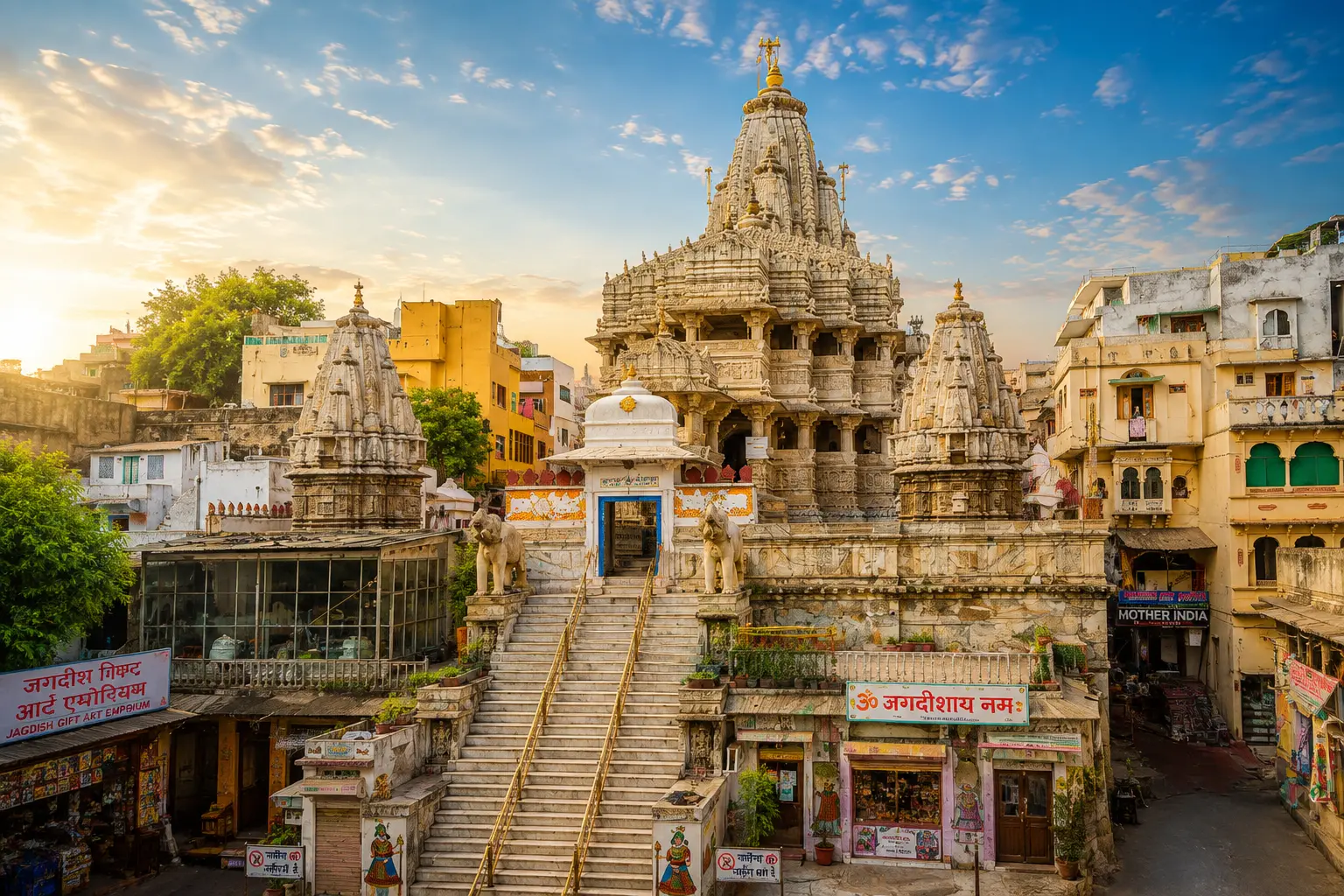
Jagdish Temple Udaipur: A Living Landmark in the Heart of Udaipur
Rising above the narrow streets of Udaipur’s Old City, Jagdish Temple is one of those places where the city’s history does not feel distant. The sound of temple bells, the steady movement of worshippers and the richly carved stonework all come together in one of Udaipur’s most recognisable landmarks.
Located just a short walk from the City Palace, the temple is easy to include in a day spent exploring the historic centre of Udaipur. Its imposing staircase and towering architecture make an immediate impression, but the details become even more interesting once you take time to look closely at the carvings, pillars and sculptures.
What makes Jagdish Temple particularly worth visiting is that it is not simply a heritage building. It remains an active place of worship, so a visit offers a glimpse into the living religious and cultural character of the old city alongside its architectural heritage.
Why Jagdish Temple Is Worth a Visit
The real appeal of Jagdish Temple is the combination of architecture and atmosphere. You can admire the craftsmanship, understand its place in Udaipur’s history and still see the temple functioning as a living place of worship. It also makes a natural stop alongside the City Palace, Bagore Ki Haveli and the lakefront sights of the old city.
In this guide, we’ll look at the temple’s history, architecture, religious significance, timings, the best time to visit and the practical details that will help you plan your stop at Jagdish Temple.
What Is Jagdish Temple?
Jagdish Temple is one of the best-known Hindu temples in Udaipur’s Old City. Dedicated to Lord Vishnu, worshipped here as Jagannath, the temple has been part of the city’s religious life for centuries.
What you notice first is the scale. From the street, a long flight of marble steps rises towards the main entrance, with carved stone elephants standing on either side. Above them, the temple’s tall shikhara dominates the surrounding old-city buildings.
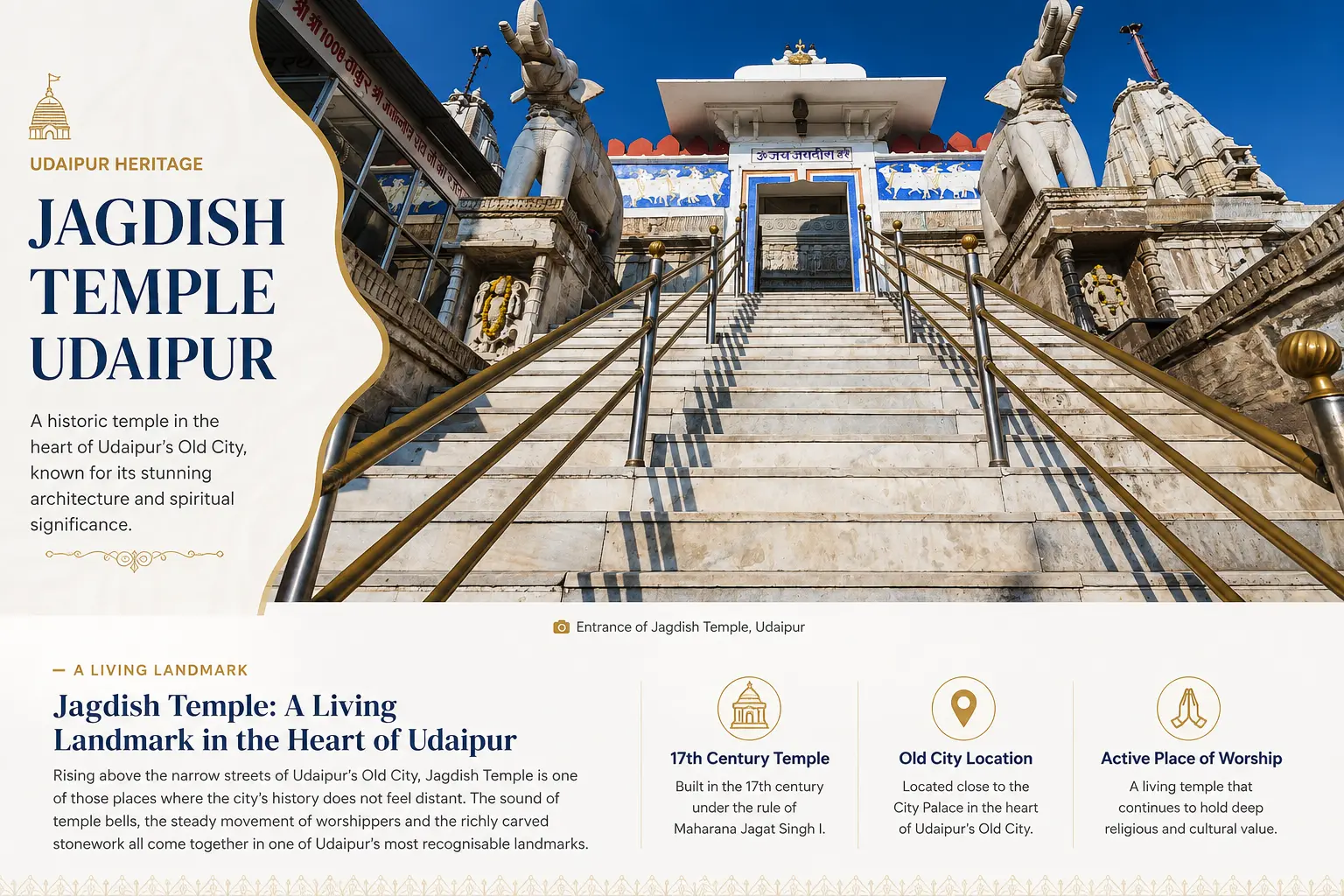
The temple is also interesting because it does not feel like a monument that has been separated from the city around it. People still come here to pray, attend worship and take part in daily religious routines. For a visitor, that makes the experience quite different from simply walking through an old palace or museum.
Its location is another reason it appears on almost every first-time Udaipur itinerary. Jagdish Temple is close to the City Palace, and it is easy to continue from here into the old lanes, towards Gangaur Ghat and the Lake Pichola waterfront.
The History of Jagdish Temple Udaipur
Jagdish Temple Udaipur has been part of Udaipur’s Old City for more than three centuries. Its story is closely tied to the Mewar rulers and to a period when Udaipur was growing not only as a political centre, but also as a place of art, architecture and religious life.
The temple was commissioned by Maharana Jagat Singh I and was completed in 1651. Built in the heart of the royal city, it was dedicated to Lord Vishnu, worshipped here as Jagannath.
Built Under Maharana Jagat Singh I
Maharana Jagat Singh I ruled Mewar from 1628 to 1652, during a period when Udaipur continued to develop as the centre of the kingdom. The construction of Jagdish Temple reflected the importance given to religious architecture within the city.
Rather than being placed away from the centre of the city, the temple was established close to the royal palace complex. Its position meant that it became closely woven into the daily life of the Old City and the wider religious landscape of Udaipur.
A Temple Dedicated to Lord Vishnu
The principal deity of Jagdish Temple is Lord Vishnu, represented here as Jagannath. The main shrine became the spiritual heart of the complex, while smaller shrines within the temple precinct added to its religious character.
This is also why the temple should be understood as more than an architectural landmark. Centuries after its construction, worship continues here and the temple remains part of the religious life of Udaipur.
Jagdish Temple Udaipur Through the Years
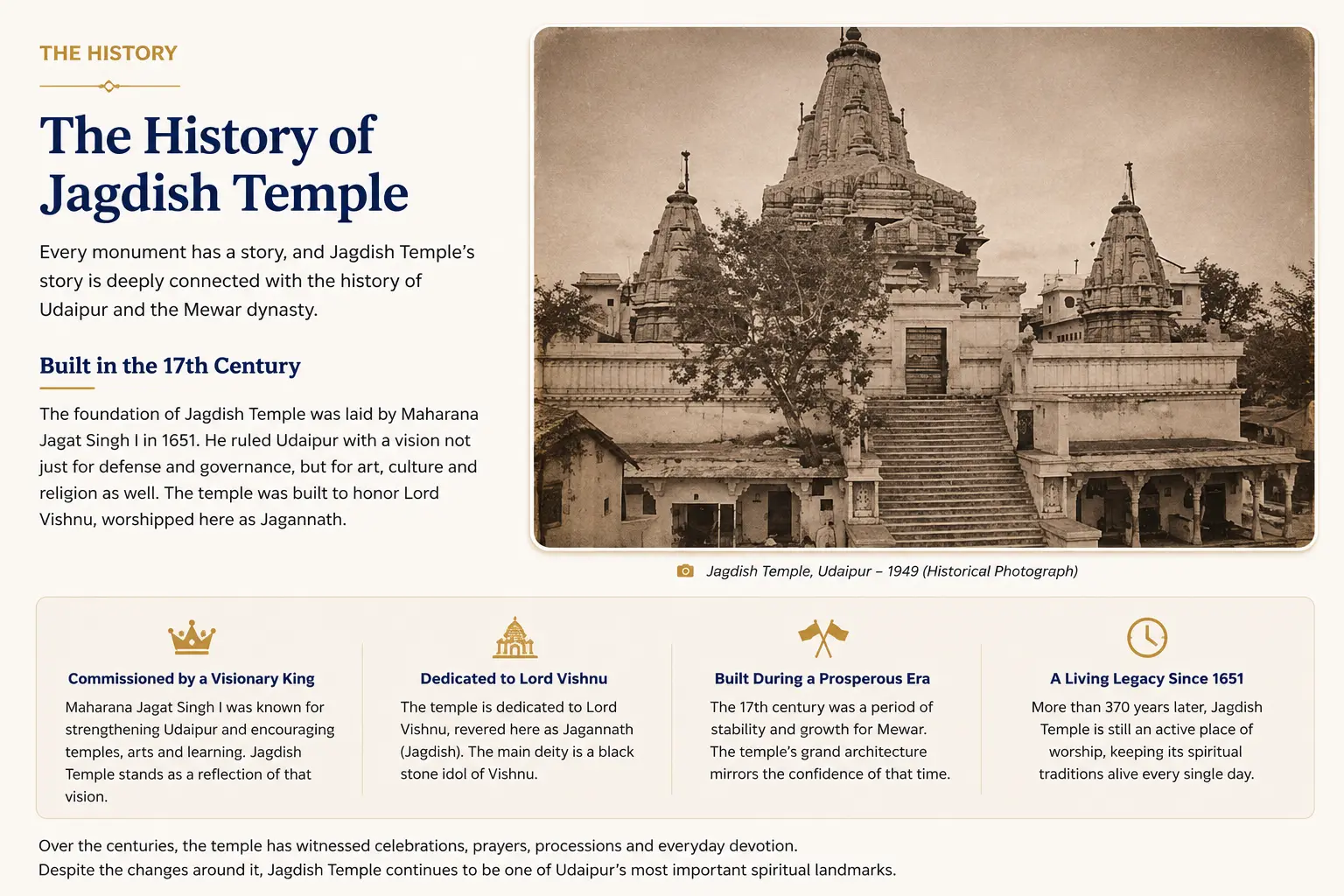
The city around the temple has changed considerably since the 17th century, but Jagdish Temple has remained a familiar presence in the Old City. The historic photograph above offers a glimpse of how the temple looked decades ago, while its distinctive staircase, shrines and towering central structure remain recognisable today.
Its continued use as a place of worship is an important part of its heritage. Visitors today experience the same temple not simply as a preserved monument, but as a living part of Udaipur’s cultural landscape.
The Architecture of Jagdish Temple Udaipur
Jagdish Temple Udaipur is one of those places where the architecture becomes more impressive the closer you look. From its towering shikhara to the finely carved stone figures, almost every part of the temple adds something to the character of this historic landmark in Udaipur’s Old City.
The Grand Shikhara of Jagdish Temple
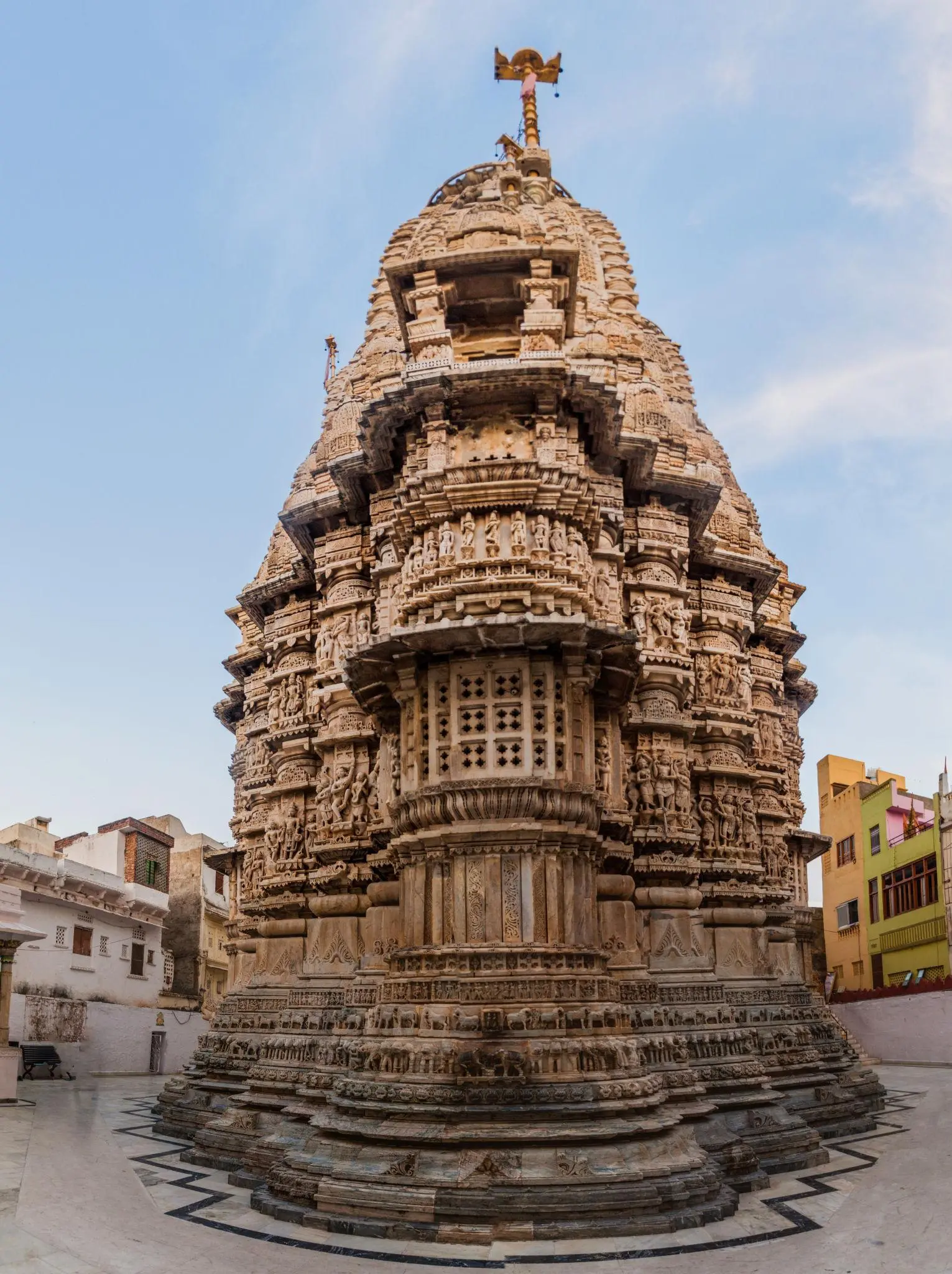
The first thing that catches your attention at Jagdish Temple Udaipur is the tall central shikhara. Rising above the surrounding buildings, it gives the temple much of its distinctive character and makes it easy to spot while walking through the old city.
Look closely and the tower is far from plain. Its surface is covered with layers of carved figures, decorative bands and architectural details. The closer you get, the more small details begin to appear across the stonework.
Standing in the temple courtyard and looking upwards gives you a much better sense of the scale of the shikhara. It is also one of the best angles for appreciating the craftsmanship that went into Jagdish Temple Udaipur.
Intricate Stone Carvings & Sculptures
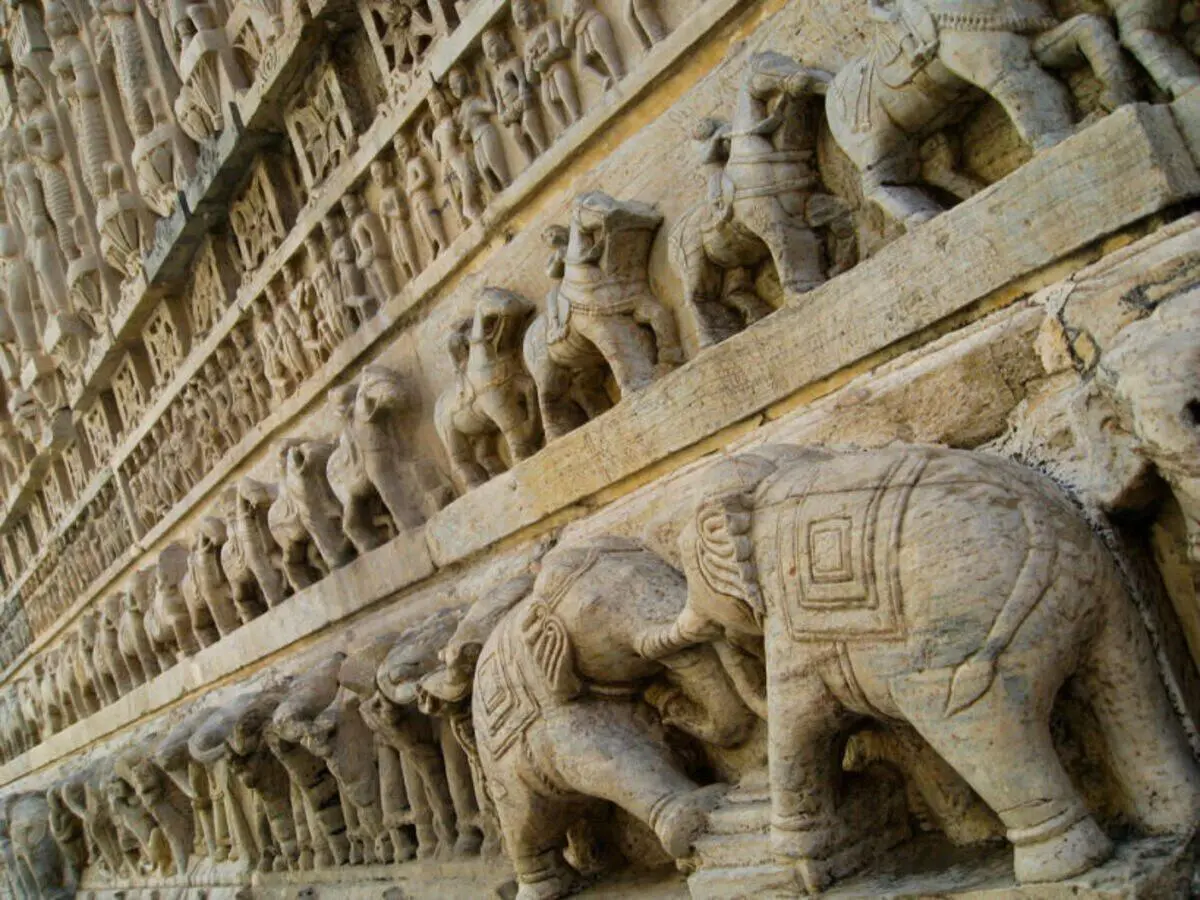
The real charm of Jagdish Temple Udaipur is in the details. Along the exterior walls, you will find rows of carved figures, animals, ornamental patterns and sculptural panels that give the building a remarkable sense of depth.
The stone elephants are particularly easy to notice, but they are only one part of the larger decorative scheme. Take a little time to look beyond the main entrance and you will start spotting smaller figures and patterns that are easy to miss when the temple is busy.
If you enjoy historic architecture or photography, this is a place where it is worth slowing down rather than simply taking a quick look around. The carved surfaces of Jagdish Temple Udaipur reward a closer look, especially when the light falls across the stone.
Religious Significance of Jagdish Temple Udaipur
Jagdish Temple Udaipur is not simply an old building in the middle of Udaipur’s Old City. It remains an active place of worship, and that living religious character is an important part of what makes a visit here different from visiting a historic monument or palace.
Lord Vishnu as Jagannath
The main shrine at Jagdish Temple is dedicated to Lord Vishnu, worshipped here in the form of Jagannath. The principal image is the spiritual focus of the temple and gives the complex its religious identity.
For visitors, this is worth keeping in mind while exploring the architecture. The carvings and grand shikhara may immediately attract attention, but the temple was built first and foremost as a place for worship.
Jagdish Temple continues to function as a place of Hindu worship, rather than existing only as a historical attraction.
Daily Worship and Temple Rituals
Worship continues at Jagdish Temple as part of the everyday religious life of the Old City. Devotees visit the shrine for prayer and darshan, while regular temple rituals continue through the day.
This gives the temple a different atmosphere from many heritage sites in Udaipur. You may see visitors photographing the carvings and architecture, but alongside them are local devotees who have come for completely different reasons.
If you visit during a prayer or worship period, it is worth being mindful of the people using the temple for religious purposes and following any instructions given by the temple authorities.
Treat Jagdish Temple as a place of worship first. Dress respectfully, keep your voice low and follow any photography or entry instructions in force during your visit.
Why Jagdish Temple Is Still a Living Temple
More than three centuries after its construction, Jagdish Temple remains connected to the religious life of Udaipur. That continuity is one of the reasons the temple feels different when you step inside its precincts.
The combination of an active shrine, daily worship and historic architecture makes Jagdish Temple a particularly interesting stop in the Old City. You are not only looking at a piece of Mewar’s past; you are seeing a place that still has a role in the present.
That is perhaps the best way to experience Jagdish Temple Udaipur: take time to appreciate the architecture, but also respect the spiritual purpose that has kept the temple at the heart of the city for generations.
Jagdish Temple Timings, Entry & Visitor Information
Jagdish Temple is one of the easiest heritage stops to include in an Udaipur Old City itinerary. Before you go, it helps to know how much time to allow, what to expect at the entrance and how to reach the temple comfortably.
Jagdish Temple Timings
Jagdish Temple follows daily worship routines, so the experience can vary depending on the time of day and religious activities taking place inside the temple.
Because published timings can change around festivals, special पूजा and temple schedules, it is better to confirm the current opening hours locally before planning your visit around an exact time.
Jagdish Temple is an active place of worship. If you arrive during a prayer or ritual, allow the temple activities to continue rather than treating the visit like a regular sightseeing stop.
Entry Fee & Tickets
Jagdish Temple is a functioning Hindu temple rather than a ticketed palace or museum complex. The official Rajasthan Tourism listing describes it as a famous temple and architectural landmark, but does not publish a current visitor ticket price.
If any special arrangements, donations or restrictions apply during your visit, check with the temple authorities on arrival rather than relying on an old ticket price found online.
Temple Rules & Things to Know Before Visiting
Since Jagdish Temple is still used for worship, visitors should approach it with the same respect they would show at any active place of prayer.
Dress reasonably and respectfully, keep your voice low inside the temple and follow instructions from temple staff or priests. Photography should also be avoided wherever it is restricted.
The long staircase at the entrance is an important part of the visit, so comfortable footwear is useful, particularly if you are combining Jagdish Temple with a longer walk through the Old City.
Give worshippers space, avoid disturbing rituals and always follow any temporary instructions displayed at the temple.
How Much Time Do You Need at Jagdish Temple?
For most visitors, Jagdish Temple does not need a separate half-day itinerary. Around 30 to 60 minutes is a comfortable amount of time to climb the entrance steps, see the main shrine, appreciate the carvings and spend a little time in the temple surroundings.
If you enjoy architecture or photography, you may want to stay longer. The details around the shikhara, pillars and exterior carvings are easy to rush past if you are trying to see the temple in only a few minutes.
How to Reach Jagdish Temple
Jagdish Temple is in Udaipur’s historic Old City, close to the City Palace. This central location makes it particularly easy to combine with other nearby heritage sights rather than making a separate trip across the city.
If you are already visiting the City Palace, one of the simplest options is to continue on foot towards Jagdish Temple through the Old City streets. Auto- rickshaws and taxis can also drop you in the nearby area, although the final approach may involve walking through the busy heritage lanes.
For visitors arriving in Udaipur from outside the city, Rajasthan Tourism notes that the city is well connected by road and rail, while Maharana Pratap Airport at Dabok is about 25 km from the city centre.
City Palace → Jagdish Temple → Old City lanes → Gangaur Ghat is a natural walking sequence if you want to explore this part of Udaipur without constantly getting back into a vehicle.
Places to Visit Near Jagdish Temple
Jagdish Temple is right in the heart of Udaipur’s Old City, so several of the city’s best-known heritage sights and waterfront spots can easily be combined with your visit.
City Palace Udaipur
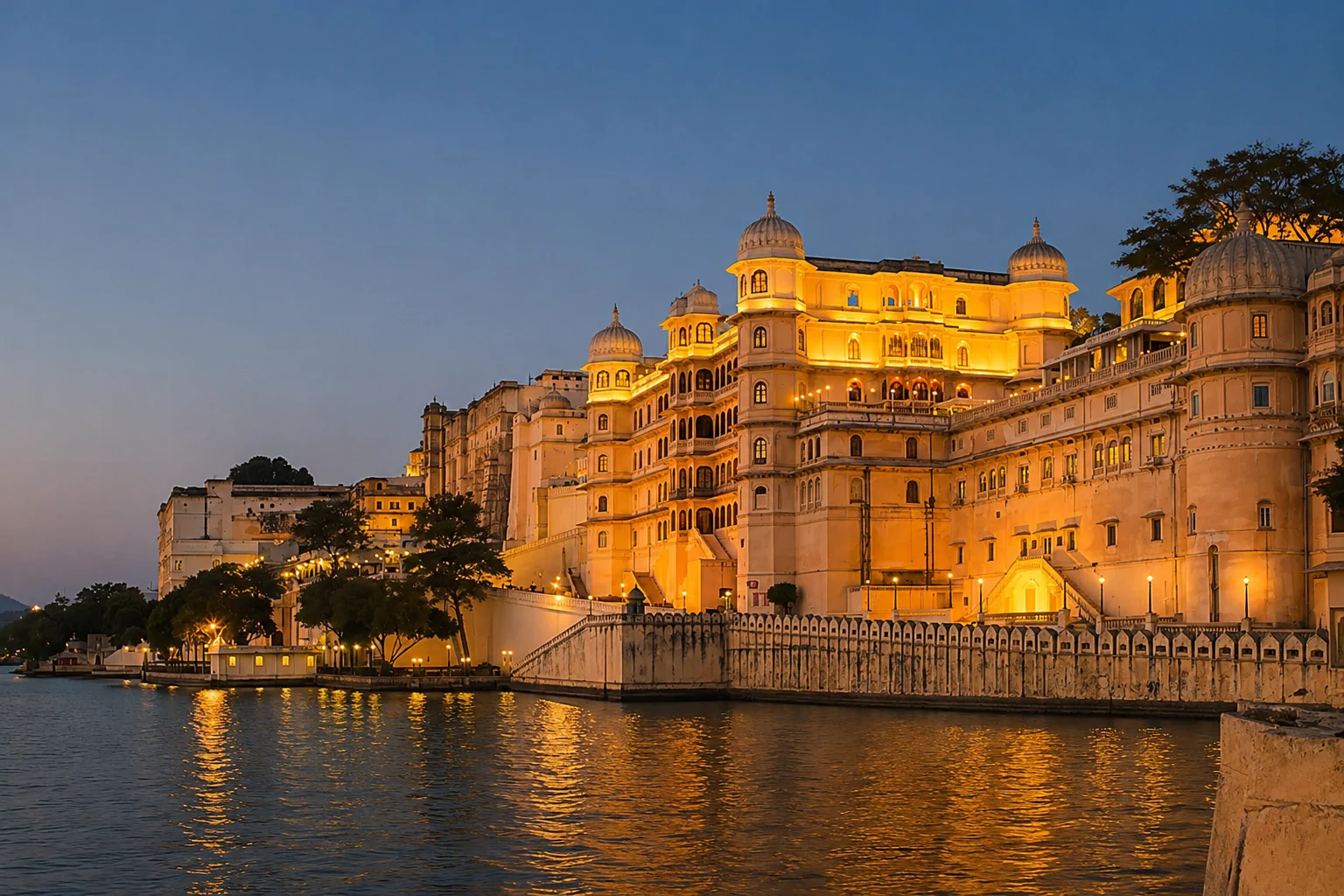
City Palace is one of the easiest places to combine with Jagdish Temple. The grand palace complex, courtyards and royal interiors offer a deeper look into the history of Mewar and Udaipur’s royal past.
Bagore Ki Haveli
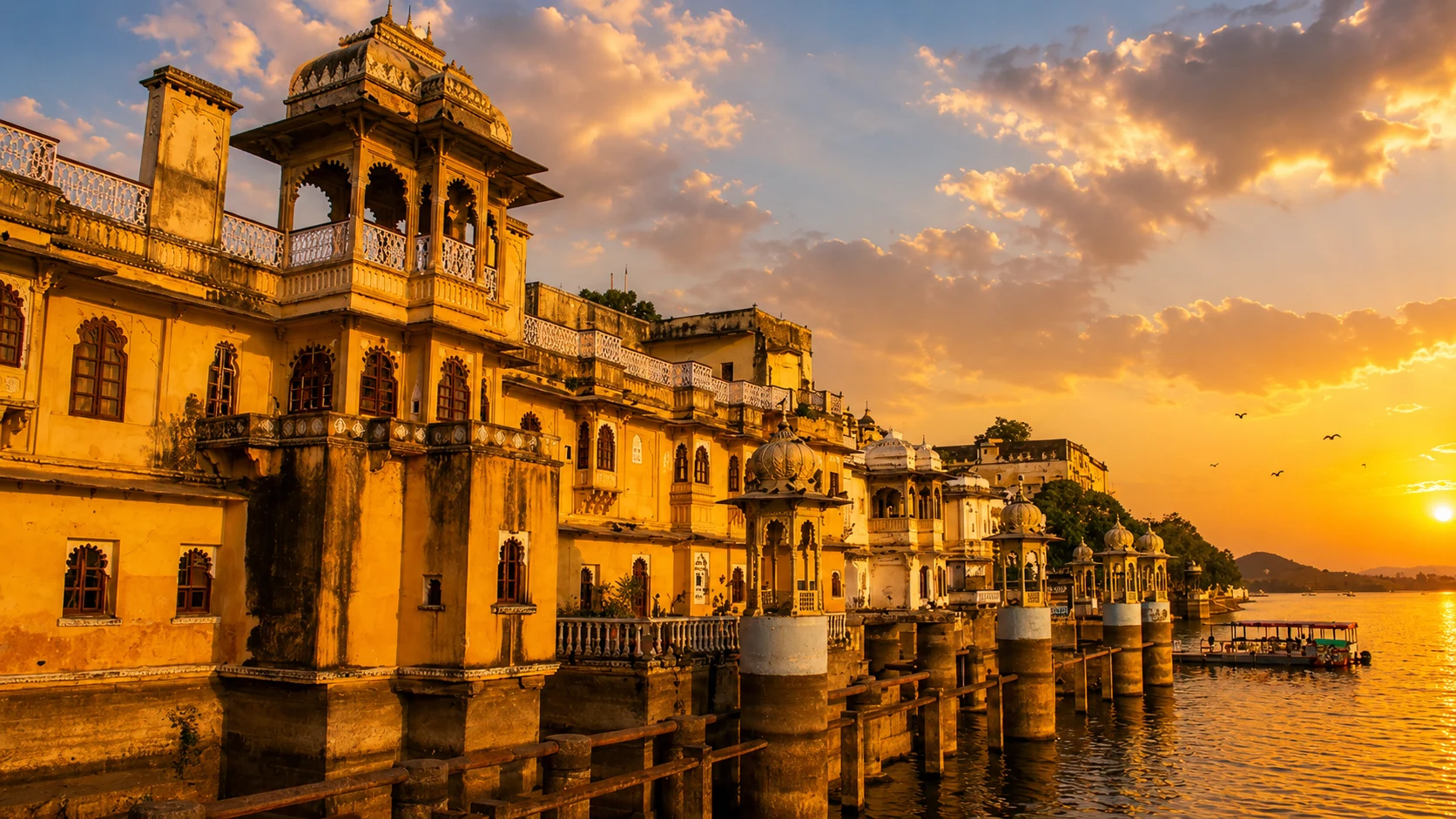
Bagore Ki Haveli stands beside Gangaur Ghat and is an easy addition to an Old City walking route. Its historic rooms, museum collections and cultural atmosphere give you another side of Udaipur’s heritage.
Gangaur Ghat
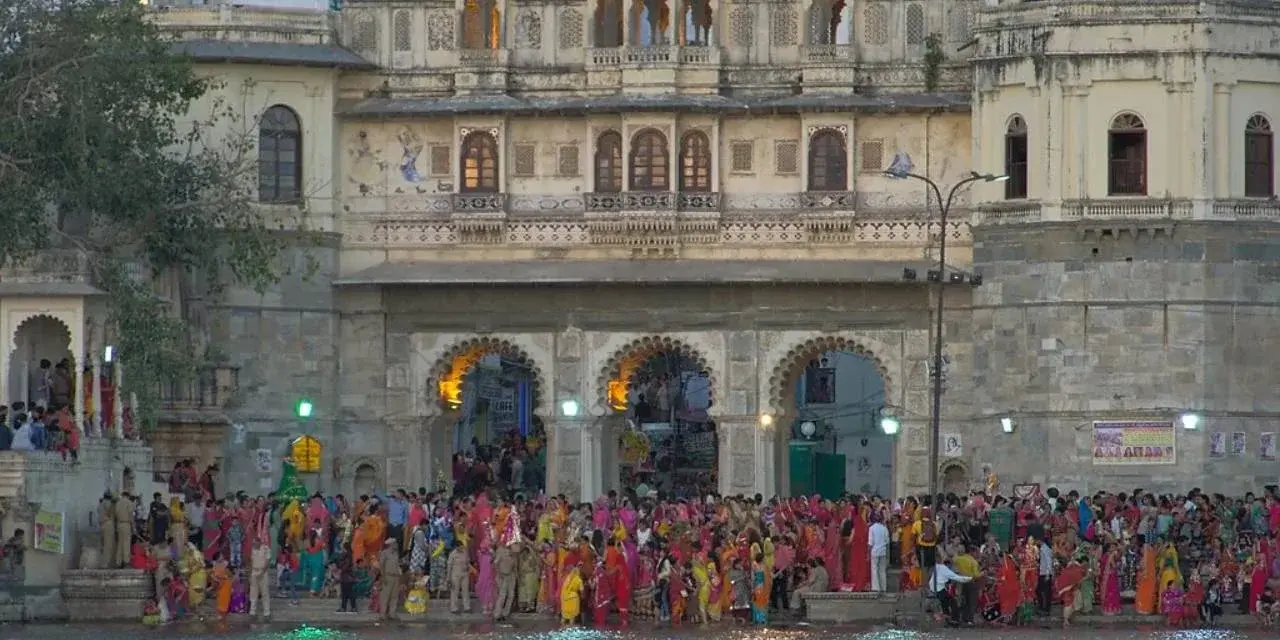
Gangaur Ghat is one of Udaipur’s most atmospheric waterfront spots. After visiting Jagdish Temple, you can continue through the Old City towards the ghat for views across Lake Pichola and the historic buildings along its edge.
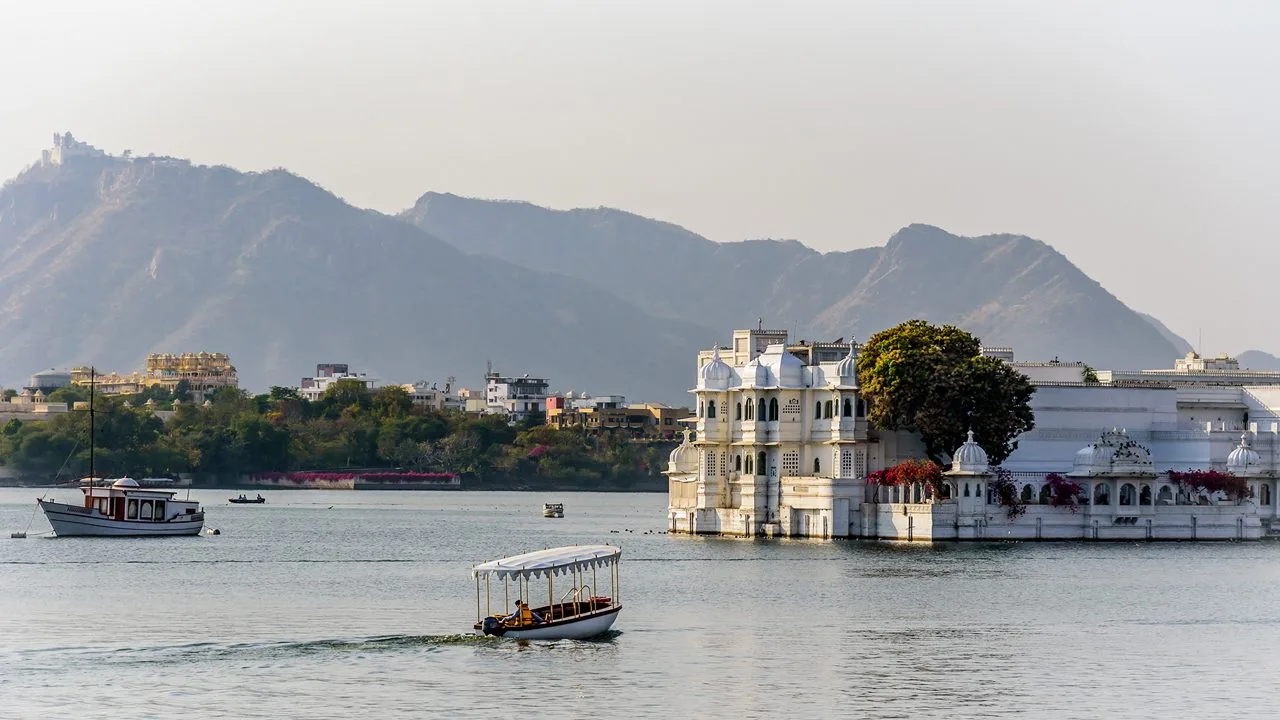
Lake Pichola
Lake Pichola is a natural continuation of an Old City sightseeing day. From the waterfront, you can enjoy views of Udaipur’s palaces, ghats, surrounding hills and the lake itself.
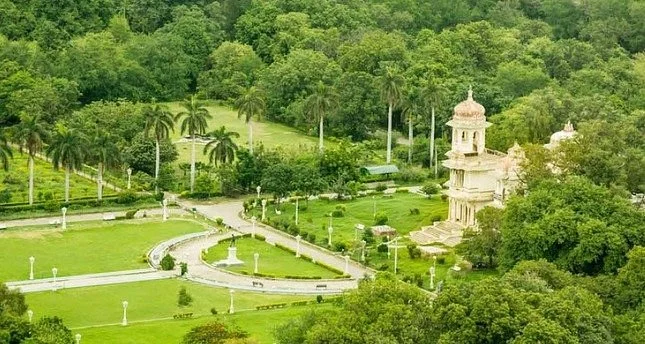
Gulab Bagh
Gulab Bagh is farther from Jagdish Temple than the main Old City sights, but it can fit into a longer sightseeing day. Its large historic garden offers a quieter change of pace after exploring the busy heritage streets.
Frequently Asked Questions About Jagdish Temple Udaipur
A few practical questions visitors commonly have before visiting Jagdish Temple Udaipur.
Jagdish Temple Udaipur is best known for its impressive 17th-century architecture, towering shikhara, detailed stone carvings and its continued role as an active Hindu temple in the heart of the Old City.
Jagdish Temple was commissioned by Maharana Jagat Singh I and completed in 1651 during his reign over Mewar.
No. There is no regular entry ticket for visiting Jagdish Temple. It is an active place of worship rather than a ticketed museum or palace attraction.
Jagdish Temple is located in Udaipur’s Old City, close to the City Palace. Its central location makes it easy to combine with City Palace, Bagore Ki Haveli, Gangaur Ghat and other nearby sights.
Around 30 to 60 minutes is enough for most visitors to see the main shrine, appreciate the architecture and look at the detailed carvings. Architecture enthusiasts and photographers may prefer to spend longer.
Yes. Jagdish Temple remains an active Hindu place of worship. Visitors should therefore be respectful of devotees, temple rituals and any instructions regarding photography or access.
Morning is a good choice if you prefer a calmer visit, while later in the day the surrounding Old City becomes more lively. If you want to combine the temple with other nearby attractions, plan it as part of your Old City walking route.
Jagdish Temple is in the Old City near the City Palace. If you are already exploring the palace area, walking is one of the easiest ways to reach it. Auto-rickshaws and taxis can also take you to the nearby approach, after which a short walk through the Old City is usually required.
Is Jagdish Temple Udaipur Worth Visiting?
If you are exploring Udaipur’s Old City, Jagdish Temple is one of the places we would genuinely recommend making time for. It does not require a long detour, there is no regular entry ticket, and the experience combines architecture, history and living religious culture in a way that few other city landmarks can.
What makes Jagdish Temple Udaipur particularly worthwhile is the combination of scale and detail. The towering shikhara catches your attention from outside, while the carved figures, stone elephants and architectural details reward you once you get closer.
But the architecture is only part of the experience. Jagdish Temple Udaipur is still an active place of worship, so the atmosphere feels very different from simply walking through a preserved monument. You can spend a few quiet minutes appreciating the building while seeing the everyday religious life of the Old City happening around you.
Worth visiting — especially if this is your first time exploring Udaipur’s Old City.
Give yourself around 30–60 minutes, take a proper look at the carvings and shikhara, and combine Jagdish Temple with the City Palace and nearby Old City sights for a more complete experience.
For a first-time visitor, Jagdish Temple fits particularly well into a walking route through Udaipur’s historic centre. You can visit the temple, continue towards the City Palace, explore the old streets and then make your way towards Gangaur Ghat and Lake Pichola.
So if you are building a list of the best things to do in Udaipur, Jagdish Temple deserves a place on it. It is easy to reach, free to enter and, most importantly, still feels like a real part of the city rather than a landmark that exists only for tourists.