
Jag Mandir Udaipur
Discover the island palace rising from Lake Pichola — from its royal history and beautiful architecture to the unique experience of visiting Jag Mandir in Udaipur.
More Than a Palace in the Middle of the Lake
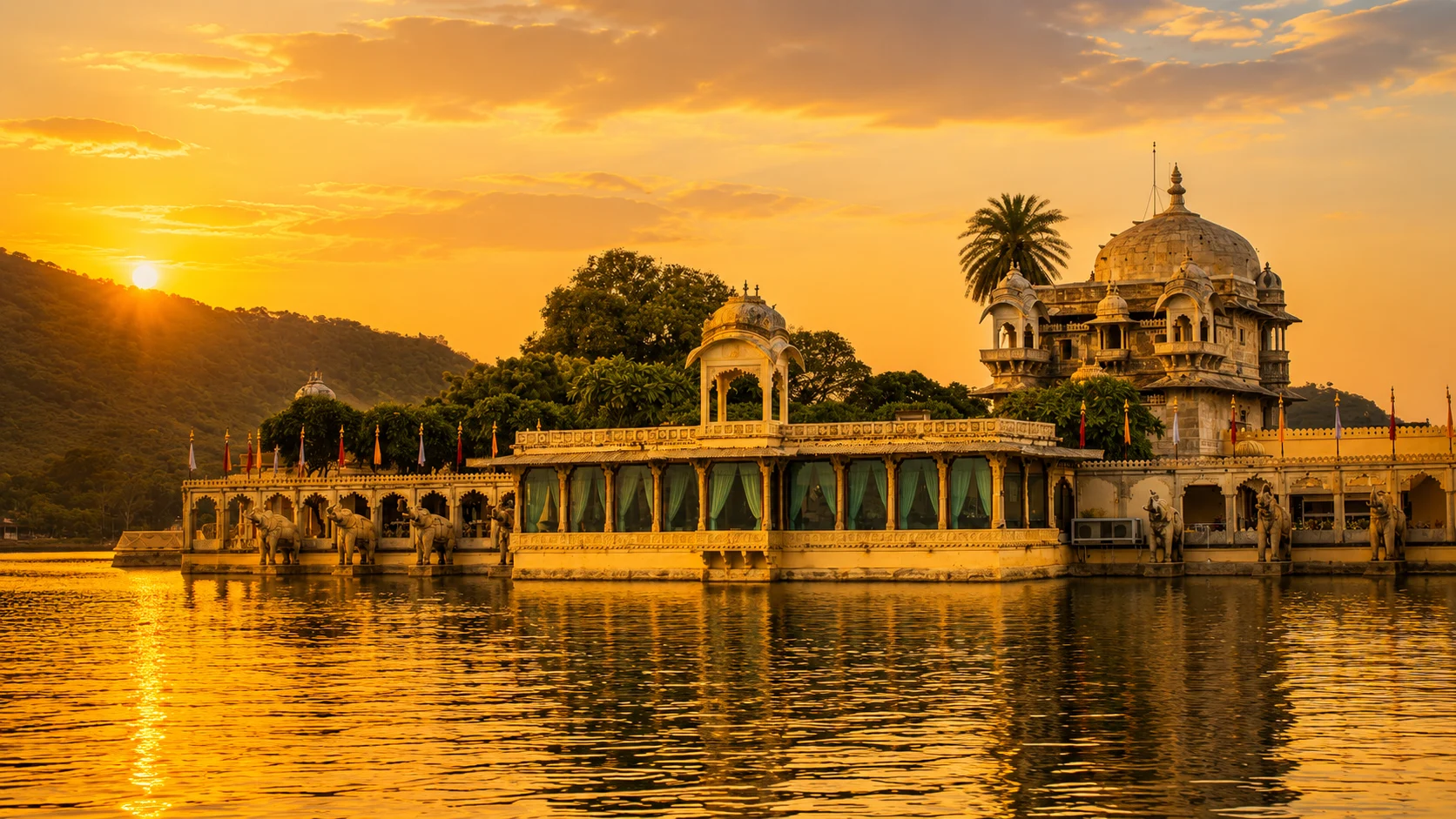
Jag Mandir is one of those Udaipur places where the journey is almost as memorable as the destination.
Set on an island in Lake Pichola, the palace appears to rise straight from the water. The lake views are beautiful, but what makes Jag Mandir interesting is the story behind the buildings, the Mewar royal connection and the centuries of history held within this small island complex.
Rajasthan Tourism describes Jag Mandir as the Lake Garden Palace. Construction began in 1620 and the complex was completed around 1652. It was used as a summer retreat and for royal celebrations.
Why the setting is part of the story
You do not simply arrive at Jag Mandir and start exploring. You cross the lake, watch the city move into the distance and then step onto an island that was once part of the royal world of Mewar. That combination of water, architecture and history is what makes the visit feel different from a typical palace tour.
What Is Jag Mandir?
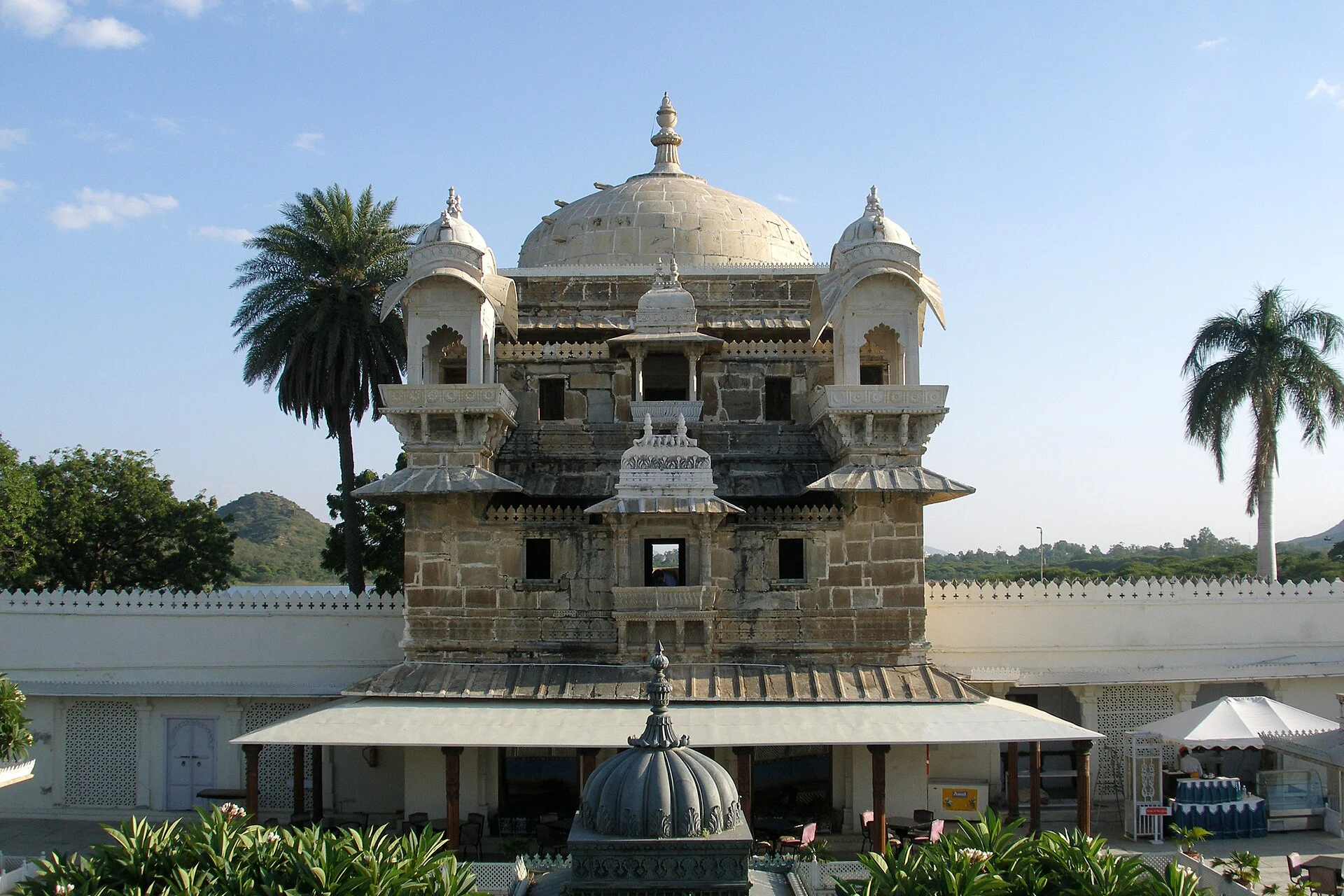
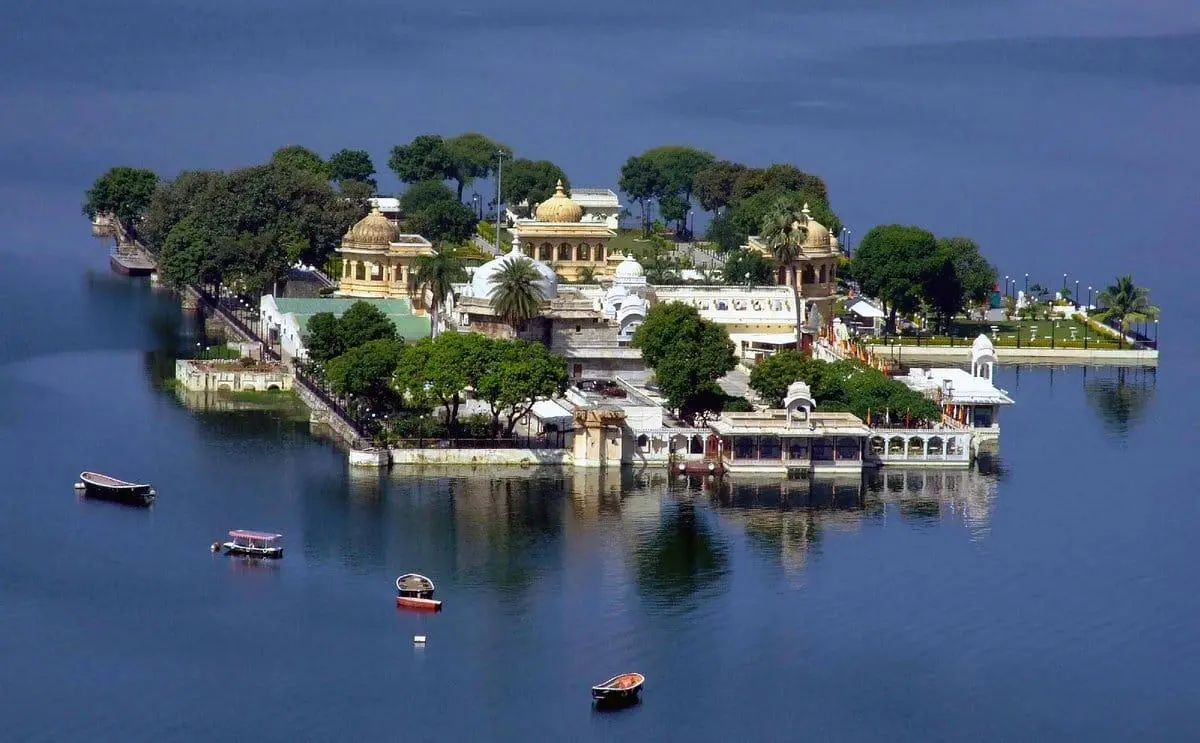
Jag Mandir is a historic island palace built in the middle of Lake Pichola, Udaipur. Often called the Lake Garden Palace, it is one of the city’s most distinctive places to experience the combination of royal architecture and the lake landscape.
Unlike the large palace complexes spread across the mainland, Jag Mandir feels different from the moment you approach it. The palace sits on its own island, surrounded by the waters of Lake Pichola, with Udaipur’s historic skyline visible across the lake.
The complex was developed by the Mewar rulers and was used as a summer retreat as well as a place for royal celebrations. Its gardens, courtyards, stonework and lakeside setting are all part of what makes the visit memorable.
Today, Jag Mandir is visited for its architecture, history, gardens and views across Lake Pichola. It is also known for its dining experience, which gives the island palace another reason to include it in a Udaipur itinerary.
The History of Jag Mandir
Jag Mandir’s story stretches across centuries of Mewar history, from its early development on Lake Pichola to its connection with Prince Khurram and the dramatic events of 1857.
There is a small complication when you look up the history of Jag Mandir: different historical sources give different dates for its construction. The reason is that the island complex developed over more than one phase rather than appearing as a single palace built in one go.
The Government of India’s Centre for Cultural Resources and Training traces the early development of Jag Mandir to 1551, while Rajasthan Tourism describes the major construction phase as beginning in 1620 and the complex being completed around 1652. Taken together, these accounts point to a palace complex that evolved under successive rulers of Mewar.
Maharana Karan Singh and the Early Development
The earliest phase of Jag Mandir is associated with Maharana Karan Singh, who ruled Mewar from 1620 to 1628. Historical accounts connect him with the development of the island and, most importantly, with Gul Mahal, the distinctive domed structure that became one of Jag Mandir’s best-known features.
The island’s location in Lake Pichola made it a natural royal retreat. Away from the main palace on the shore, it offered privacy, cooler surroundings and an impressive setting for the Mewar rulers and their guests.
Prince Khurram and the Gul Mahal Connection
One of the most fascinating chapters in Jag Mandir’s history came in 1623, when Mughal prince Khurram rebelled against his father, Emperor Jahangir. Khurram, who would later become Shah Jahan, sought refuge in Mewar along with his family.
Maharana Karan Singh offered the prince protection, and Khurram’s stay became closely associated with the island palace. The Gul Mahal is particularly important to this story and is regarded as the part of Jag Mandir connected with the Mughal prince’s stay.
This episode gave Jag Mandir an unusual place in the history of both Mewar and the Mughal Empire. What had been developed as a royal retreat on the lake was now also connected with one of the most important future rulers of the Mughal Empire.
Maharana Jagat Singh I and the Completion of the Palace
The development of Jag Mandir continued under Maharana Jagat Singh I, who ruled Mewar from 1628 to 1652. Historical accounts associate the completion of the palace complex with his reign.
Rajasthan Tourism gives the major construction timeline as 1620 to around 1652. By this period, Jag Mandir had developed into the grand island retreat that is recognisable today, with its gardens, courtyards, marble structures and distinctive domed architecture.
The palace was used as a summer retreat and as a setting for royal celebrations. Its position in the middle of Lake Pichola made it particularly suited to that purpose, giving the royal family a place away from the activity of the mainland palace.
Jag Mandir During the Events of 1857
Nearly two centuries later, Jag Mandir once again became a place of refuge during a period of political turmoil. In 1857, the uprising against British rule created unrest across northern and central India.
According to historical accounts, Maharana Swaroop Singh of Mewar provided protection to European families who fled from Neemuch during the unrest. Women and children among these families were sheltered at Jag Mandir, where the island’s isolated position offered a measure of safety.
It is a striking chapter in the palace’s history. The same island that had provided refuge to Prince Khurram in the seventeenth century once again served as a sanctuary during another period of upheaval more than two hundred years later.
From Royal Retreat to Udaipur Landmark
Over time, Jag Mandir moved beyond its original role as a private royal retreat and became one of the defining landmarks of Lake Pichola. Its architecture tells one part of the story, but the island itself is equally important to the experience.
Today, visitors arrive by boat to explore the palace grounds, gardens and historic structures while looking back towards the Udaipur skyline. The combination of water, architecture and royal history is what gives Jag Mandir its distinctive place among the city’s heritage attractions.
Historical sources do not all use the same starting date for Jag Mandir. The Government of India’s CCRT material traces early development to 1551, while Rajasthan Tourism places the major construction phase between 1620 and around 1652. For this guide, we have retained both dates rather than presenting one simplified timeline as the complete history.
Architecture and Things to See at Jag Mandir
Jag Mandir is best explored slowly. Its marble details, gardens, waterfront structures and island setting all add something different to the experience.
The Marble Elephants and Palace Facade
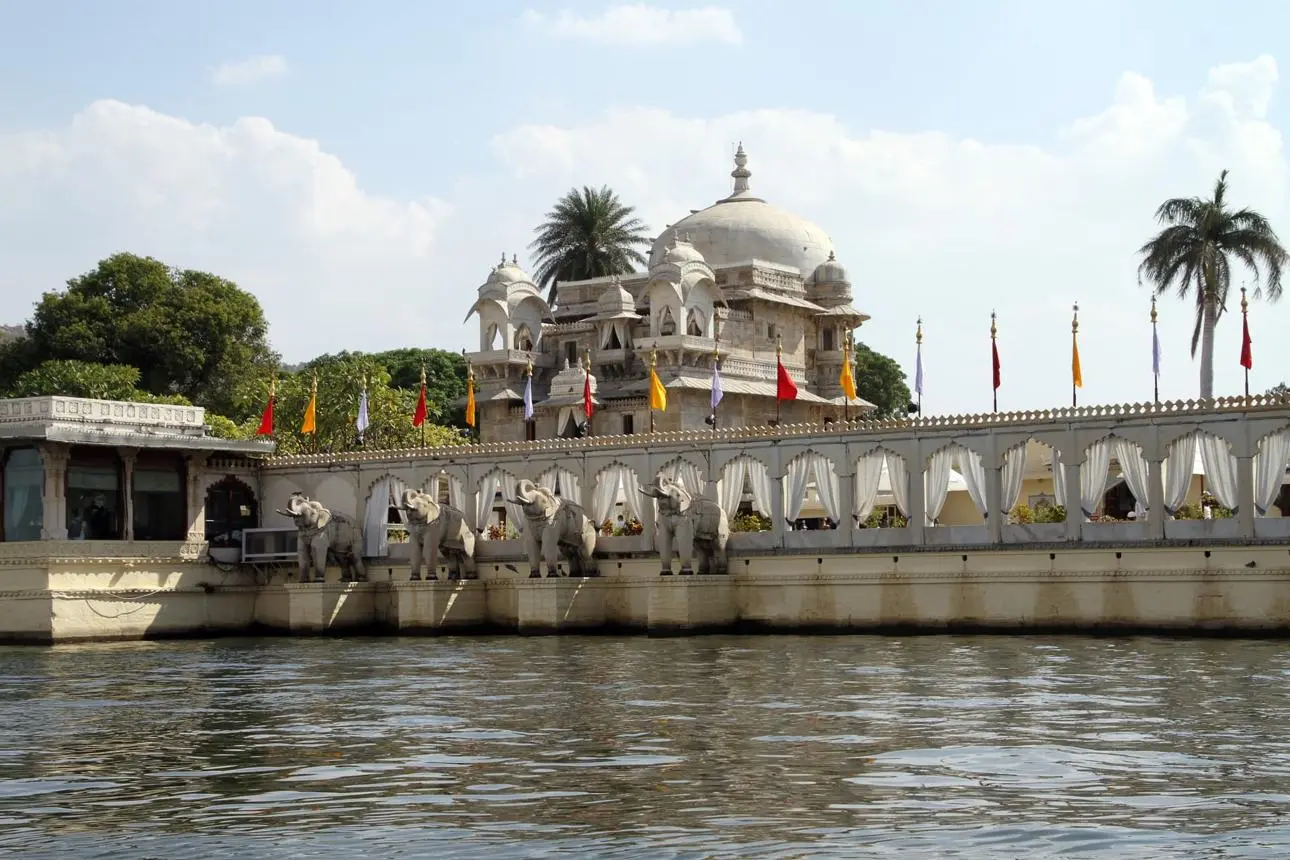
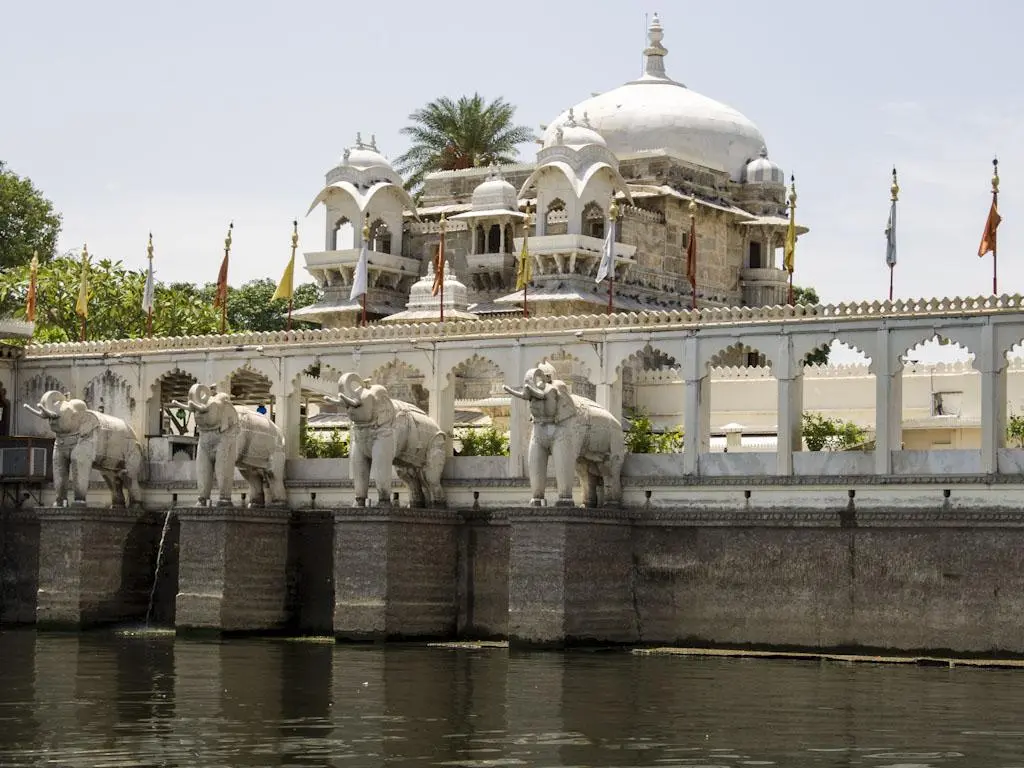
One of the first details visitors notice is the row of marble elephant figures along the waterfront. They stand facing the lake and create one of the most recognisable views of Jag Mandir.
Behind them, the palace architecture combines domes, chhatris, carved stonework, arches and delicate decorative details. The white marble gives the buildings a particularly striking appearance against the blue waters of Lake Pichola.
Gardens and Courtyards
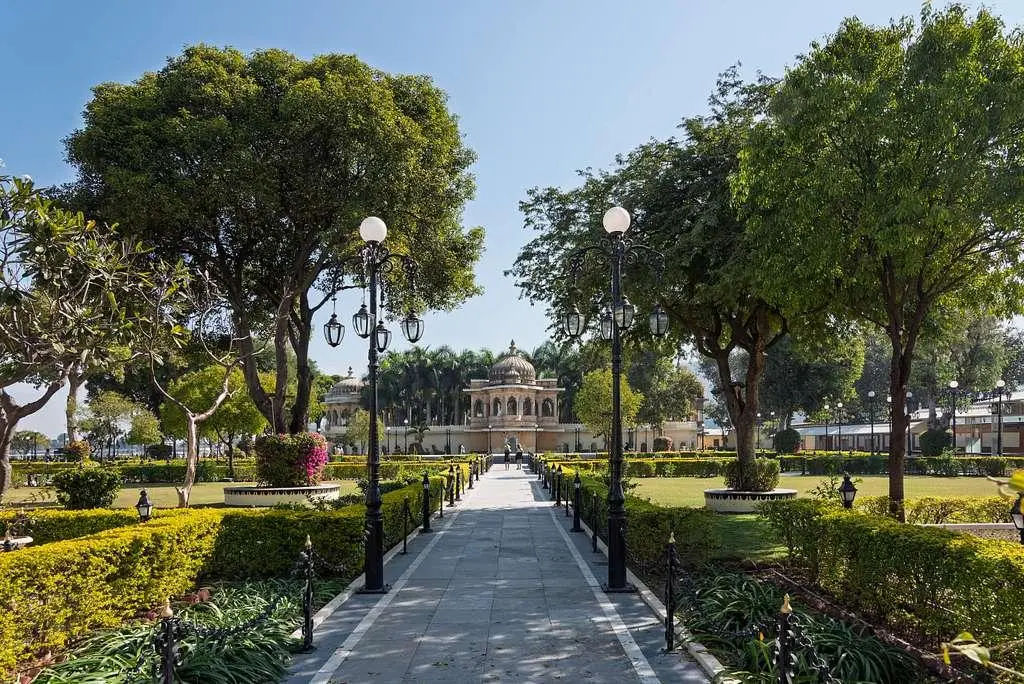
Beyond the palace buildings, the landscaped gardens are an important part of the Jag Mandir experience. Carefully maintained lawns, trimmed hedges, trees and pathways give the island a calm, open character.
The gardens also create a nice contrast with the detailed stone architecture. Instead of moving from one enclosed room to another, visitors get plenty of open space to walk around, sit for a while and take in the surroundings.
The Island Setting and Lake Pichola Views
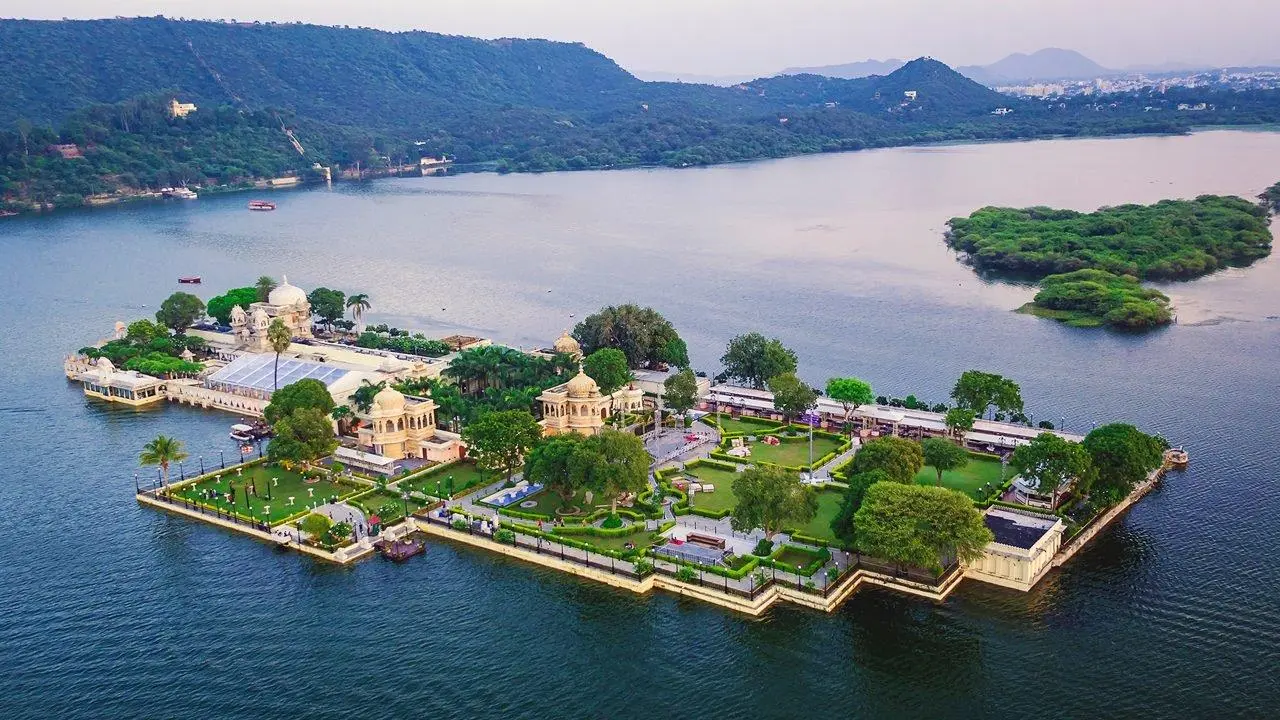
The architecture is only half of what makes Jag Mandir memorable. Because the palace sits on an island, Lake Pichola becomes part of the experience wherever you look.
From the island, you can see the surrounding Aravalli hills, the lake and parts of Udaipur’s historic skyline. The changing light through the day also gives the palace a very different appearance in the morning, afternoon and around sunset.
This is one of the reasons it is worth taking a little time after arriving rather than treating Jag Mandir as a quick photo stop.
What Should You Look Out for During the Visit?
Rather than focusing only on the main palace building, look for the smaller details around the complex as well. The marble elephants, domed pavilions, carved arches, garden pathways and lake-facing viewpoints each show a different side of Jag Mandir.
The combination of these details is what makes the island interesting. You get architecture, gardens, history and a completely different perspective of Lake Pichola within the same visit.
If you have come to Jag Mandir mainly for the photographs, keep some time aside to simply walk through the gardens and look back towards the lake. The island setting is one of the main reasons the experience feels different from visiting a palace on the mainland.
Dining at Jag Mandir: The Darikhana Restaurant
Dining at Jag Mandir is less about simply having a meal and more about enjoying one in one of Udaipur’s most memorable settings.
Set within the historic Jag Mandir Island Palace on Lake Pichola, The Darikhana Restaurant combines a heritage setting with lake views and an extensive menu. It is an option worth considering if you want to turn your visit to Jag Mandir into a longer and more relaxed experience.
From the palace surroundings to the boat journey across the lake, the setting is an important part of what makes dining here different from an ordinary restaurant in Udaipur.
More Than Just a Meal
The real appeal of The Darikhana is the combination of food, architecture, water and atmosphere. If you already plan to visit Jag Mandir, dining here can make the island visit feel much more complete.
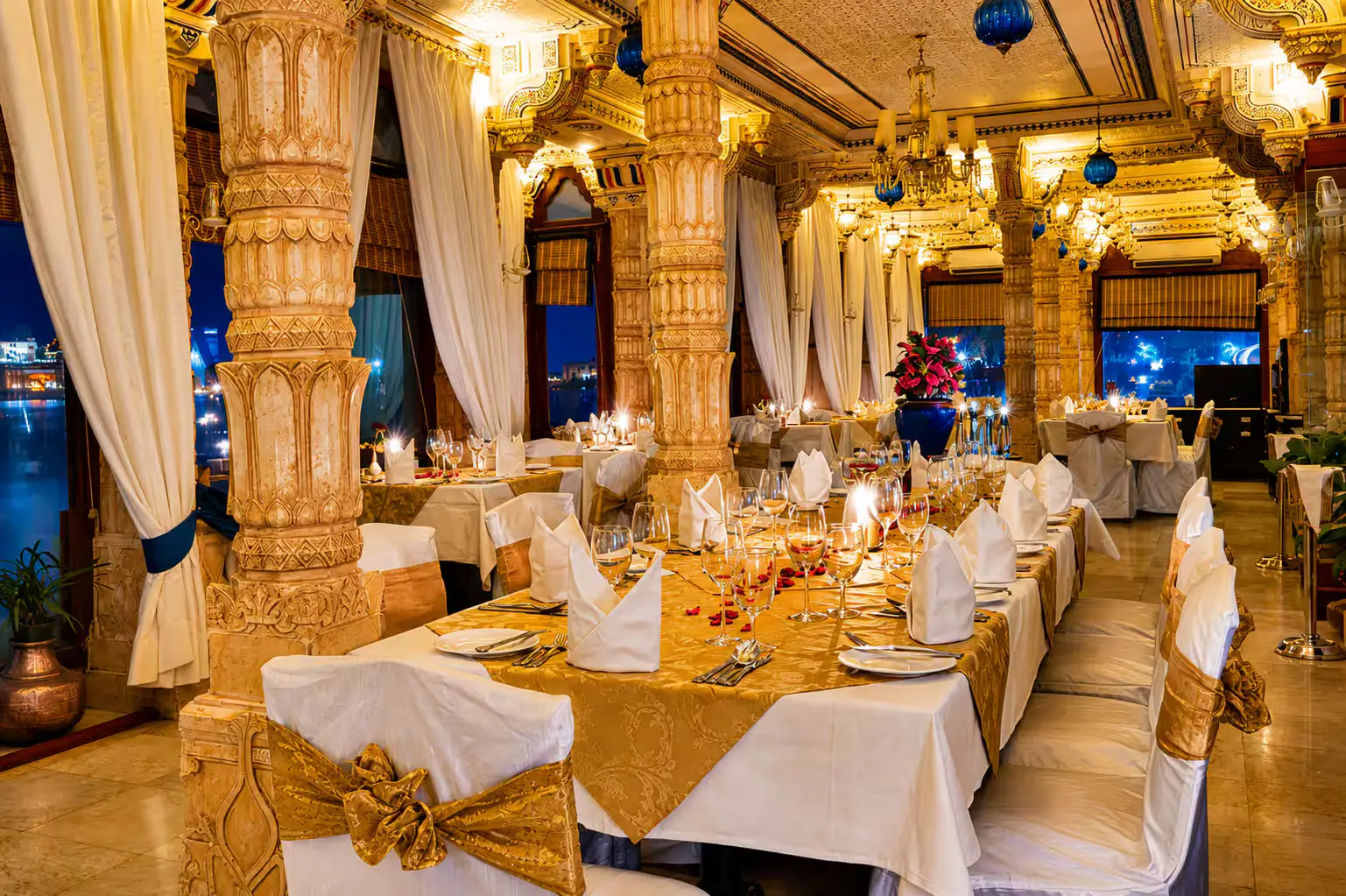
The Darikhana Restaurant inside the Jag Mandir Island Palace complex.
What Is The Darikhana Restaurant?
The Darikhana is the restaurant at Jag Mandir Island Palace, offering guests the opportunity to dine within the historic island-palace setting rather than simply visiting it for sightseeing.
The restaurant is described as a colonnaded, air-conditioned dining space with an à la carte menu featuring Indian and international selections.
Its location is a major part of the experience. Instead of being surrounded by the traffic and activity of the city, the restaurant sits on Jag Mandir in the middle of Lake Pichola.
The Dining Experience
The setting is what immediately separates The Darikhana from a conventional restaurant. You are dining inside a historic palace complex surrounded by Lake Pichola, with Udaipur’s landscape forming part of the backdrop.
The experience works particularly well when dining is treated as part of the Jag Mandir visit rather than as a separate stop. The boat ride, arrival on the island and time spent within the palace all add to the sense of occasion.
For visitors who prefer a slower itinerary, this can be a good way to spend more time around the lake instead of rushing through the island in a short sightseeing window.
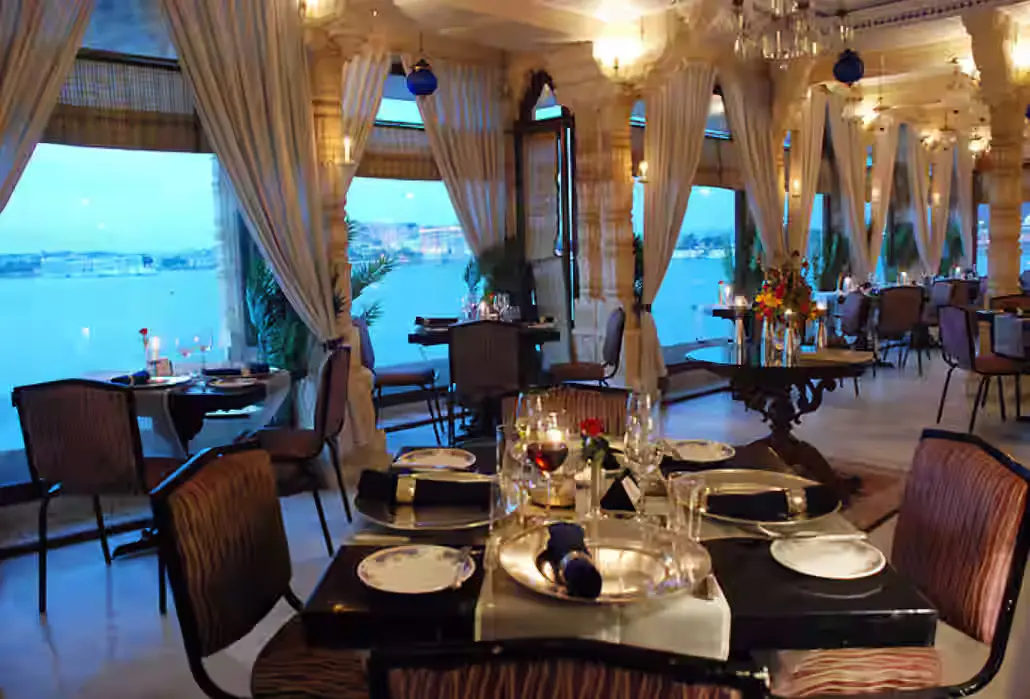
Lake Pichola forms an important part of the dining atmosphere at Jag Mandir.
Darikhana Restaurant Menu
The menu brings together Indian favourites, Rajasthani specialities and international dishes, along with desserts and other selections.
If you are visiting specifically for the food, the menu offers considerably more choice than a simple sightseeing restaurant. Regional preparations sit alongside Indian main courses, pasta and risotto, international dishes and desserts.
Some of the more distinctive regional options include Chakki Ki Subzi, Bhatti Ki Dal, Sangri Dakh Khada Masala and Laal Maas.
The supplied menu also includes vegetarian and non-vegetarian selections, so there is a reasonably broad choice depending on what you prefer to eat.
Below is a selected preview of the menu. Use the expandable menu to see the wider selection.
Explore the Darikhana Menu
From Rajasthani classics and Indian specialities to pastas, risottos, international dishes and desserts, The Darikhana offers a broad menu for a relaxed meal at Jag Mandir.
Rajasthani Flavours
The regional selection includes dishes such as Chakki Ki Subzi, Bhatti Ki Dal, Sangri Dakh Khada Masala and Laal Maas, giving diners the opportunity to try flavours associated with Rajasthan.
Traditional Rajasthani lamb preparation.
Beyond Indian Cuisine
The menu also moves beyond regional cuisine with pastas, risottos and international preparations, including salmon, lamb and vegetarian selections.
Salmon with fennel, asparagus and cherry tomatoes.
| Signature Dish | Description | Price |
|---|---|---|
|
Chakki Ki Subzi
Vegetarian |
Gluten dumplings with fried onion paste, condensed milk and yoghurt. | ₹1,350 |
|
Bhatti Ki Dal
Vegetarian |
Whole black lentils with tomatoes, chillies, cream and butter. | ₹1,350 |
|
Laal Maas
Rajasthani |
Traditional Rajasthani lamb preparation. | ₹1,800 |
|
Fettuccine Genovese
Vegetarian |
Plum tomato and toasted pine nuts. | ₹1,750 |
|
Carnaroli Rice Risotto
Vegetarian |
Roasted red beetroot, warm goat cheese and pine nuts. | ₹1,750 |
|
Grilled Norwegian Salmon
Seafood |
Salmon with fennel, asparagus and cherry tomatoes. | ₹2,750 |
|
Pista Gulab Jamun
Dessert |
Cottage cheese dumplings with rose-scented syrup. | ₹950 |
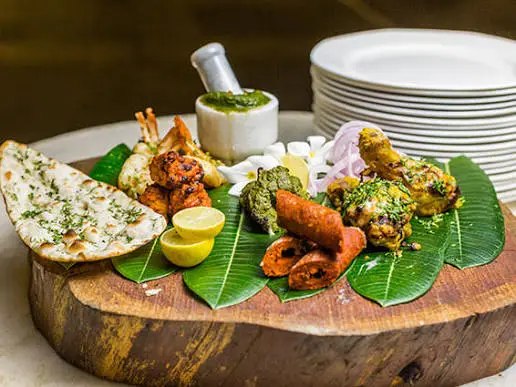
Dining at The Darikhana brings together the food, heritage setting and Lake Pichola atmosphere.
How to Reach The Darikhana Restaurant
Because The Darikhana is located on Jag Mandir Island, reaching the restaurant is different from visiting a restaurant in Udaipur’s old city.
Visitors need to reach the designated boat departure point and travel across Lake Pichola to Jag Mandir. The boat journey itself becomes part of the experience, with the lake and surrounding palaces visible along the way.
If dining is the main purpose of your visit, allow enough time for the boat transfer and the time needed to enjoy the island rather than planning the restaurant as a very short stop.
Reach the designated jetty → take the boat to Jag Mandir → continue to The Darikhana Restaurant.
Reservation, Timing & Location
Since The Darikhana is located on Jag Mandir Island, it is sensible to confirm the latest restaurant availability and boat arrangements before travelling.
The supplied information lists The Darikhana at Jag Mandir Island, Lake Pichola, with the restaurant listed as operating from 10:00 AM to 10:30 PM.
Timings, menu prices and availability may change, particularly around special events and private functions, so checking directly before your visit is recommended.
Central Reservations
+91 294 2528008
Jagmandir
+91 294 2424186-8
Email
reservations.jagmandir@hrhhotels.com
Official Reservation
Reserve / Contact HRH Hotels
Location
Jag Mandir Island, Lake Pichola, Udaipur
Dining at The Darikhana adds a culinary element to the Jag Mandir island experience.
Is Dining at The Darikhana Worth It?
If you are already planning to visit Jag Mandir and want more than a quick sightseeing stop, dining at The Darikhana can be a worthwhile addition to your Udaipur itinerary.
The strongest part of the experience is the combination of the historic palace setting, Lake Pichola and the atmosphere of dining on an island. The menu gives the experience enough variety to work for visitors looking for both Indian and international options.
It is best suited to travellers who value the setting and overall experience as much as the meal itself. If that is what you are looking for, The Darikhana is one of the more distinctive dining experiences to consider during a visit to Udaipur.
A Good Choice If You Want the Full Jag Mandir Experience
Visit the island, take in the lake views, explore the palace surroundings and give yourself enough time to enjoy the meal without rushing back into the city.
How to Reach Jag Mandir
Jag Mandir sits on an island in Lake Pichola, so reaching it is part of the experience. There is no road connection to the palace island; visitors arrive by boat and cross the lake before stepping onto the historic complex.
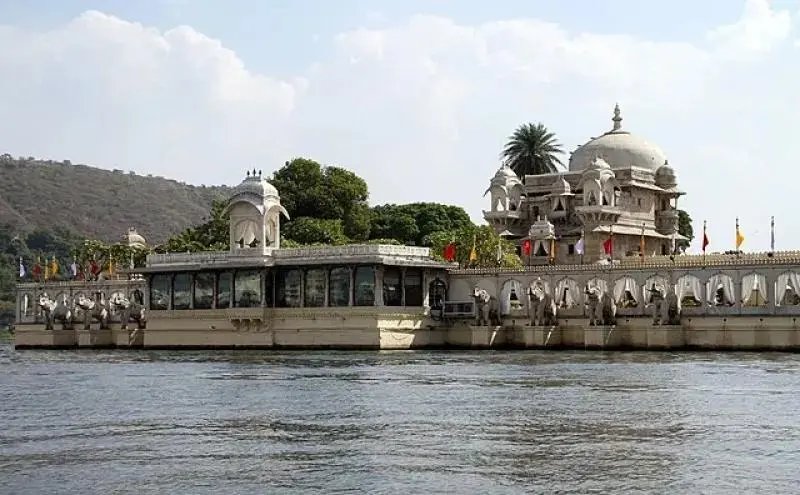
Jag Mandir stands across Lake Pichola, with the boat journey forming an essential part of the visit.
Getting to Jag Mandir by Boat
Jag Mandir is accessible by boat across Lake Pichola. The Government of India’s Incredible India guide currently describes the palace as accessible by boat from the Bansi Ghat pier.
The exact departure arrangement can depend on the type of visit and the current operating schedule. HRH Hotels, which manages Jagmandir Island Palace, also operates its own excursion and boat services.
For a straightforward sightseeing visit, check the current boat departure point and operating hours before leaving for the lake. If you are visiting for dinner at The Darikhana, confirm the boat transfer arrangements with the restaurant when making your reservation.
Reach the designated jetty → take the boat across Lake Pichola → arrive at Jag Mandir Island.
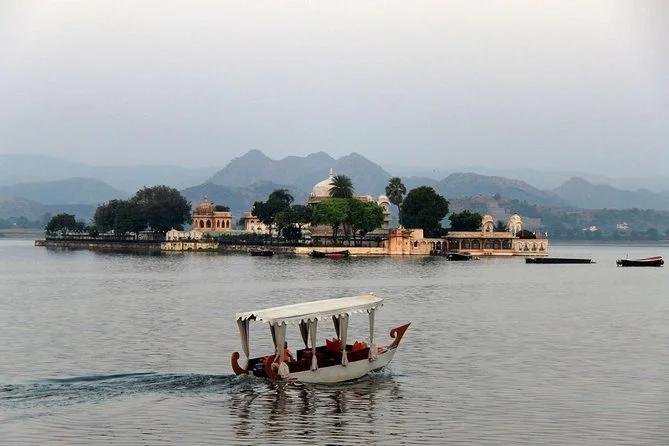
A boat crossing Lake Pichola towards Jag Mandir Island Palace.
Best Time to Visit Jag Mandir
For a comfortable sightseeing visit, the cooler months from October to March are generally the most pleasant time to explore Udaipur and spend time outdoors around Lake Pichola.
If you prefer softer light and a more atmospheric lake experience, an afternoon visit moving towards sunset can be particularly appealing. The palace, surrounding hills and water take on a very different character as the light changes.
Keep in mind that sunset excursions operate on a separate schedule from regular daytime excursions. HRH’s published boat timetable lists regular and sunset services separately, with seasonal timings.
Visit in the late afternoon if you want to combine sightseeing with the changing light over Lake Pichola. For a longer dinner experience, allow considerably more time than you would for a simple palace visit.
Tickets, Entry & Boat Information
Jag Mandir visits are tied to boat transportation, so the ticket arrangement is different from a monument where you simply walk through a gate. The current official HRH excursion page publishes separate regular and sunset excursion categories.
However, the fare table currently displayed by HRH is explicitly marked as effective from 1 April 2025 to 31 March 2026. Because this guide is being prepared after that validity period, we would not treat those figures as the current 2026 ticket price.
Confirm the current adult/child fare, departure point, regular or sunset service and return-boat arrangement directly with HRH Hotels before your visit.
| Visit Type | What It Means | What To Confirm |
|---|---|---|
| Regular Excursion | Daytime boat excursion to Jag Mandir Island Palace. | Current fare, departure time and return-boat schedule. |
| Sunset Excursion | Later excursion designed around the evening light over Lake Pichola. | Seasonal timing, current fare and availability. |
| Restaurant Reservation | A dining visit at The Darikhana on Jag Mandir Island. | Boat transfer, reservation terms, advance/cover arrangements and dining availability. |
If your main reason for travelling to the island is The Darikhana, do not assume that the sightseeing excursion and restaurant transfer work in exactly the same way. Restaurant guests should confirm their boat arrangements while making the reservation.
HRH currently lists The Darikhana as a dining venue at Jagmandir Island Palace and gives its restaurant hours as 10:00 AM to 10:30 PM. The restaurant’s official reservation contact can be used to confirm the latest arrangements before travelling.
Check Reservation & Contact Details
Central Reservations: +91 294 2528008
Jagmandir: +91 294 2424186-8
How Much Time Do You Need?
For a simple sightseeing visit, around 1 to 2 hours is a sensible planning window once you factor in the boat transfer, walking around the island and time to take in the palace surroundings.
If you are visiting specifically for sunset or combining the trip with a meal at The Darikhana, plan for a substantially longer stay. There is little benefit in treating Jag Mandir as a place to rush through, because the lake journey and the island setting are a large part of the experience.
Sightseeing only → allow roughly 1–2 hours
Sunset visit → allow extra time around the excursion schedule
Restaurant visit → plan around the full dining experience and boat arrangements
Boat timings, excursion fares and operating arrangements can change. Check the latest HRH information before travelling, especially if you are planning a sunset excursion or a restaurant reservation.
Places to Visit Near Jag Mandir
Jag Mandir sits on Lake Pichola, making it easy to combine your island visit with some of Udaipur’s best-known heritage sights, lakefront spots and city attractions.
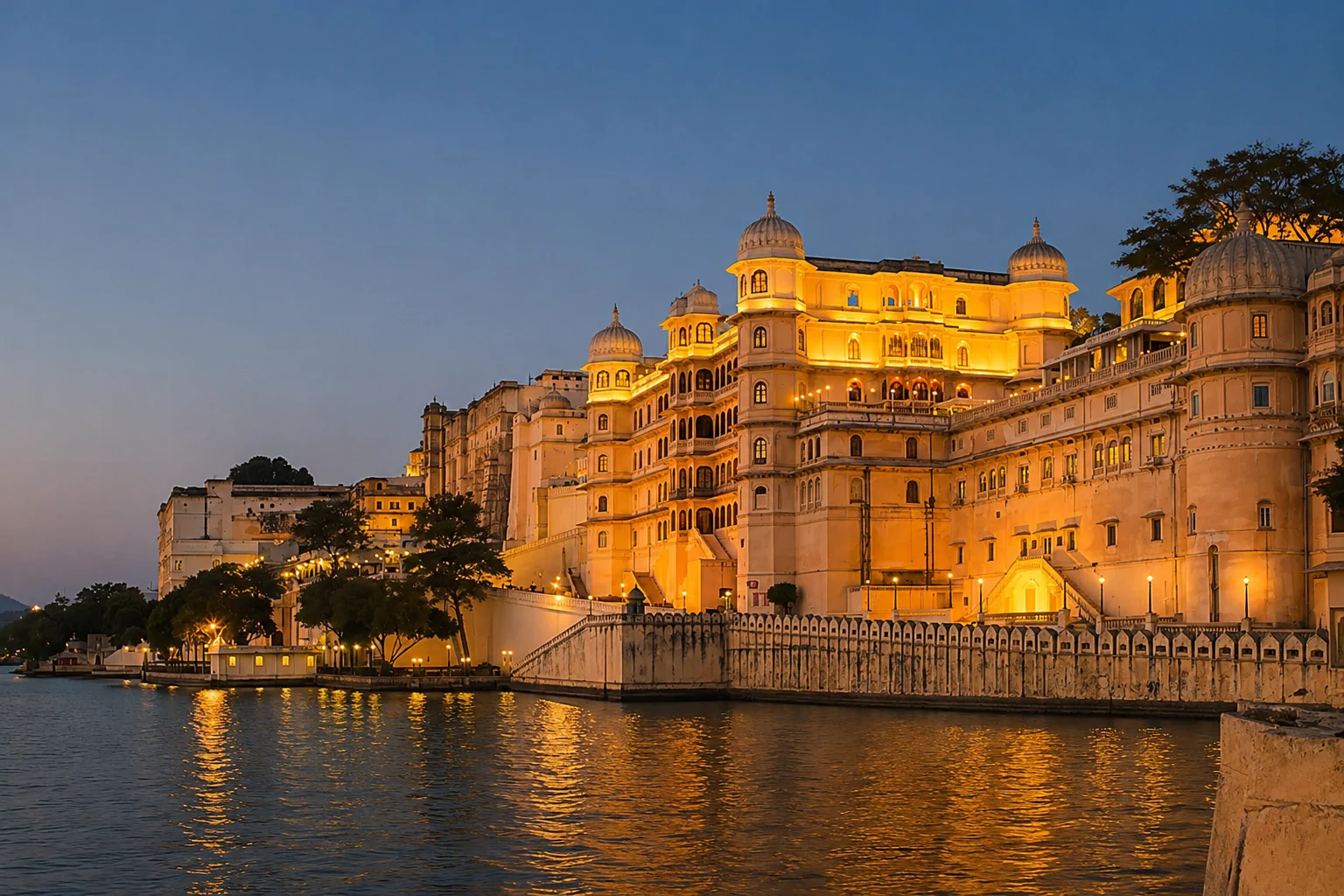
City Palace Udaipur
The City Palace is one of the most important heritage attractions to combine with a Jag Mandir visit. Its courtyards, royal rooms and elevated views give you a different perspective on Udaipur’s Mewar history.
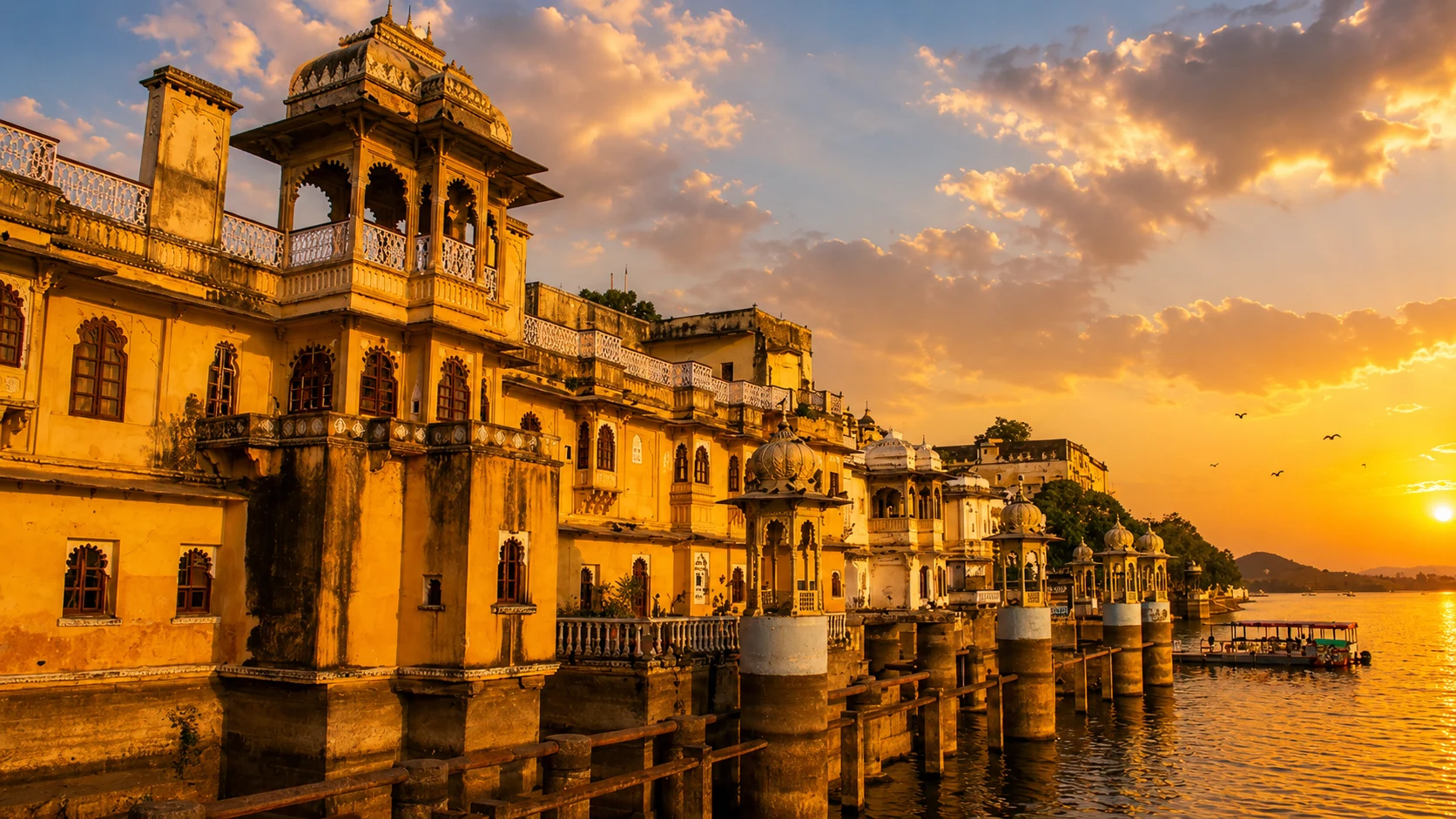
Bagore Ki Haveli
Set beside Gangaur Ghat, Bagore Ki Haveli is one of Udaipur’s most atmospheric heritage attractions. Its museum, traditional interiors and cultural performances make it a natural addition to a day spent exploring the lakefront.
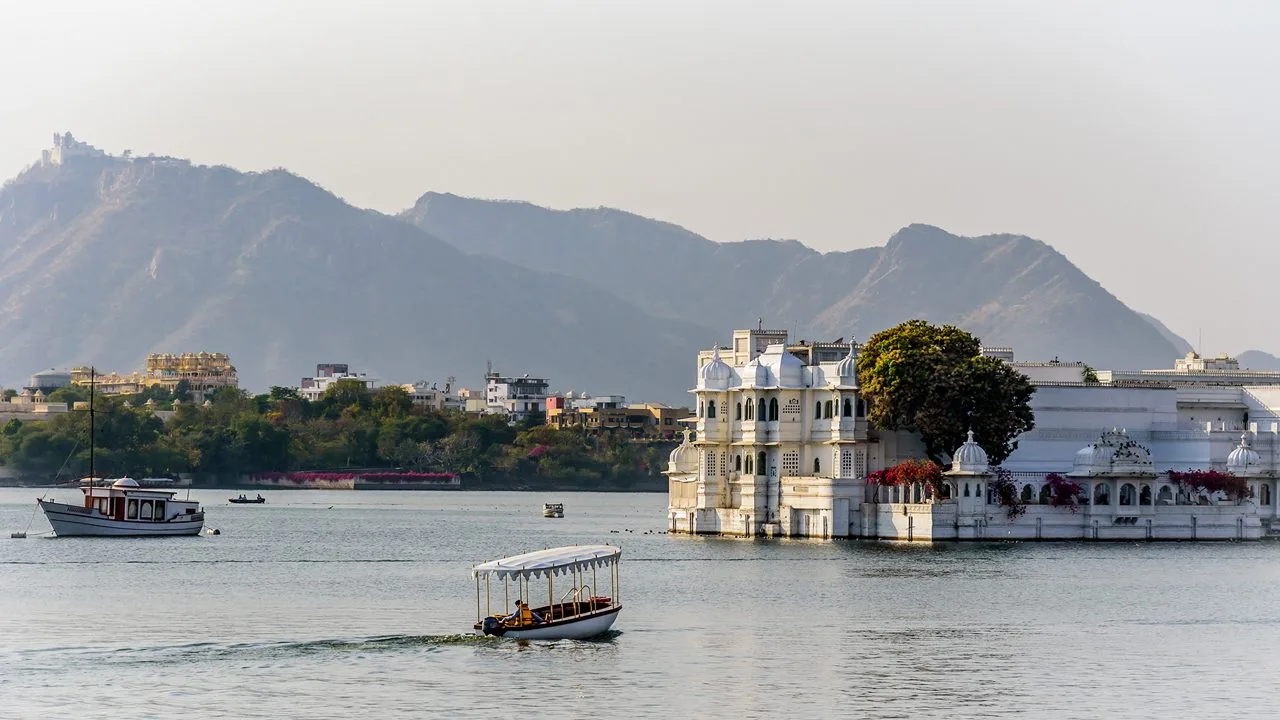
Lake Pichola
Jag Mandir itself sits on Lake Pichola, so the lake is inseparable from the experience. A boat ride across the water offers some of the best views of Udaipur’s palaces, ghats and surrounding hills.
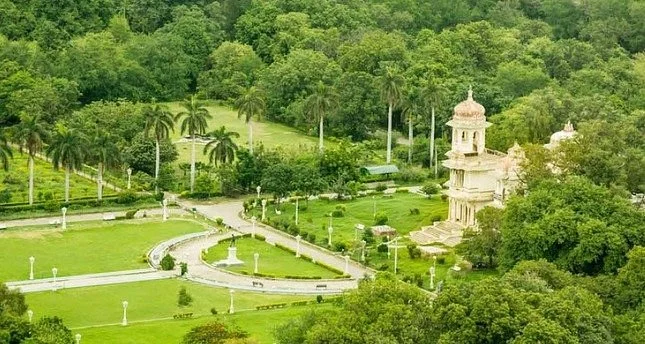
Gulab Bagh
Gulab Bagh is farther from the lake than the old city attractions, but it can still fit into a longer Udaipur sightseeing day. The historic garden offers a quieter change of pace from the palace and lakefront areas.
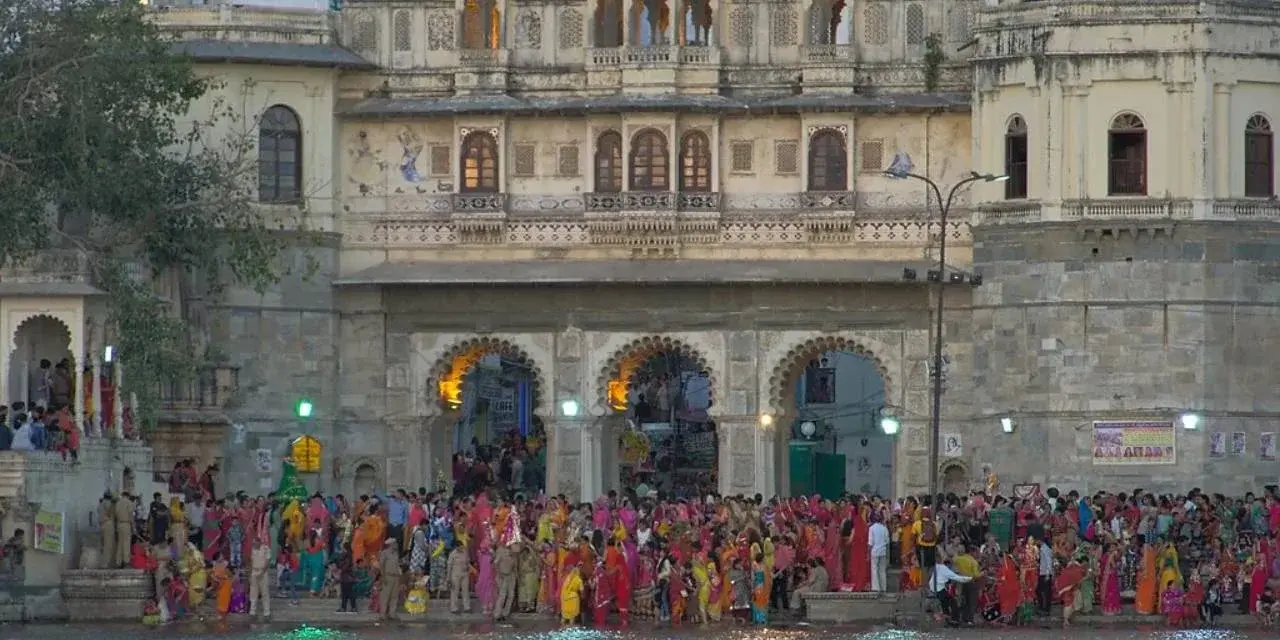
Gangaur Ghat
Gangaur Ghat is one of the best-known waterfront spots in Udaipur and a natural place to explore around Lake Pichola. It is especially atmospheric around the evening when the lakefront begins to come alive.
Jag Mandir Udaipur: Frequently Asked Questions
A few practical answers to help you plan your visit to Jag Mandir, from boat access and timings to dining and how long to spend on the island.
Jag Mandir is located on an island in Lake Pichola in Udaipur, Rajasthan. The palace complex is reached by boat rather than by road.
Jag Mandir is reached by boat across Lake Pichola. Regular visitors use the designated boat departure point, while guests visiting The Darikhana should confirm the boat arrangements included with their restaurant reservation.
Jag Mandir excursion fares depend on the type of boat visit and the current pricing published by HRH Hotels. The official HRH page lists separate regular and sunset excursions, but its displayed fare table has a stated validity period.
Because prices and timings can change, check the latest official information before travelling.
For sightseeing, around 1 to 2 hours is a practical amount of time to allow for the boat journey, exploring the island and enjoying the lake views.
If you are visiting for sunset or dining at The Darikhana, allow more time so the visit does not feel rushed.
Yes. The Darikhana Restaurant at Jag Mandir offers dining on the island. Restaurant guests should confirm the current reservation, advance or minimum-spend terms and boat arrangements directly with the restaurant.
The dining arrangement can differ from a regular sightseeing excursion, so it is worth confirming the details when making your booking.
The cooler months from October to March are generally comfortable for exploring Udaipur. For the atmosphere, late afternoon and sunset can be especially appealing because of the changing light over Lake Pichola.