
Bagore Ki Haveli
Udaipur
Step into an 18th-century haveli beside Lake Pichola, where royal rooms, intricate craftsmanship and Rajasthan’s living traditions come together at Gangaur Ghat.
Inside Bagore Ki Haveli
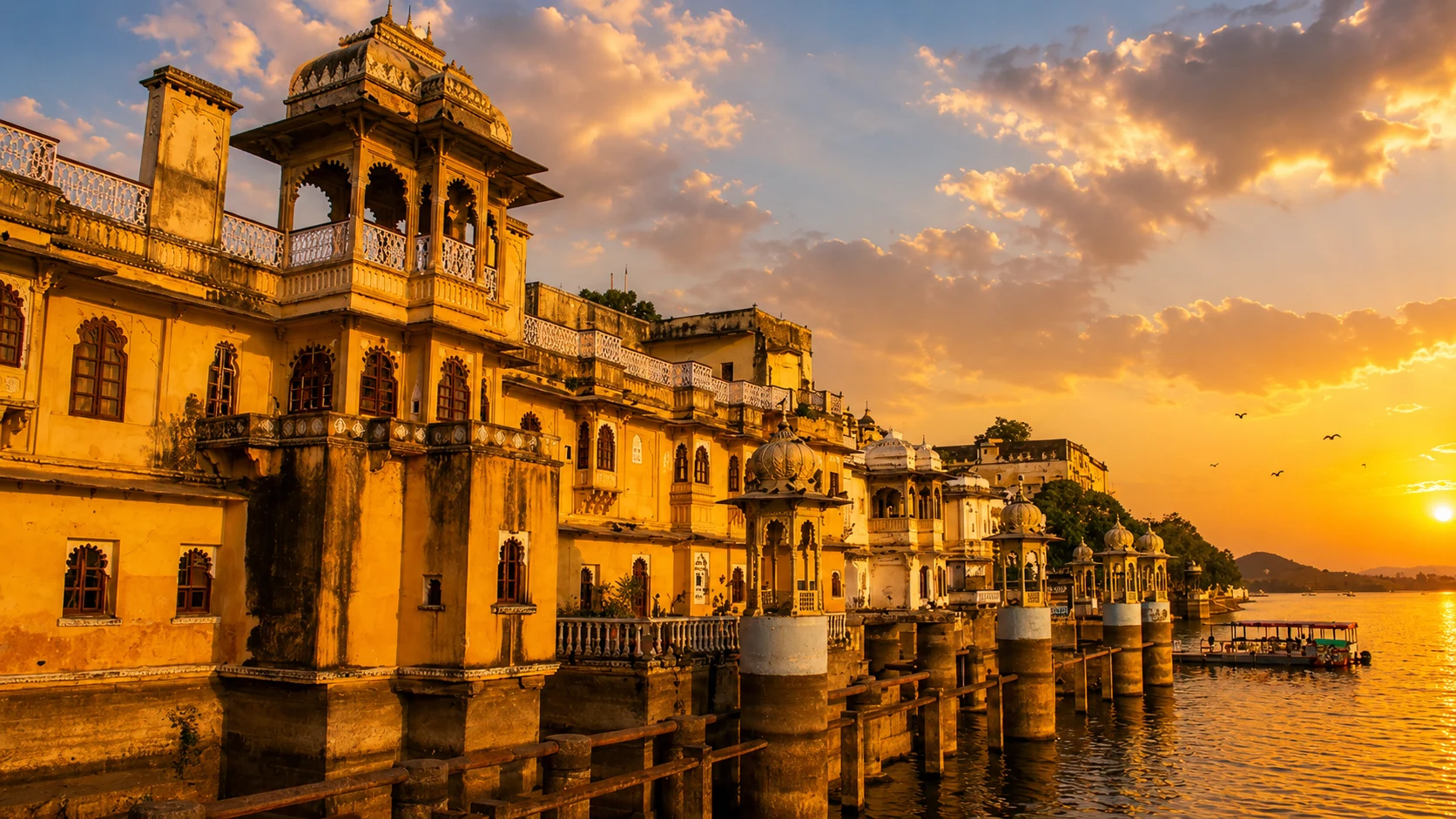
Sitting beside Gangaur Ghat, Bagore Ki Haveli is one of those places in Udaipur that can be easy to overlook if you are simply walking through the old city. From the outside, it feels like another historic building along the lake. Walk through the entrance, though, and the character of the haveli starts to come through.
Built in the 18th century and later expanded under the Bagore family, the haveli has a very different feel from the enormous City Palace nearby. Its courtyards, narrow passages, balconies and decorated rooms give you a closer look at the spaces and details associated with life around the Mewar court.
Inside, there is no single room that tells the whole story. Instead, the experience comes from moving through one space after another. Traditional costumes, jewellery, paintings, household objects, musical instruments and other pieces of Rajasthani culture are displayed across the museum.
The setting is a big part of what makes the visit special. Bagore Ki Haveli opens onto Gangaur Ghat, with Lake Pichola just beyond it. You can explore the museum during the day, step out towards the waterfront, and return in the evening for the Dharohar folk dance programme.
That combination makes Bagore Ki Haveli more than just another museum stop. You get the old building, its collections, the atmosphere of the lakefront and, if you stay into the evening, a chance to see traditional music and dance performed in the haveli itself.
In this guide, we will look at the story behind the building, understand how the haveli is laid out, see what is actually worth looking for inside, and cover the practical details you need before visiting.
History of Bagore Ki Haveli
Bagore Ki Haveli’s story begins in the 18th century, when Udaipur was still firmly shaped by the court of Mewar. Standing beside Lake Pichola at what is now Gangaur Ghat, the haveli was not originally built as a museum or a monument for visitors. It was a private residence connected with one of the important figures of the Mewar court.
Over the years, the building passed through different phases of use and development. Its rooms, courtyards and decorated interiors grew into a large residential complex, while its connection with the Bagore estate brought it closer to the political and social life of Mewar. Much of what you see today is therefore the result of several generations rather than a single construction project.
Built in the 18th Century
Rajasthan Tourism dates the construction of Bagore Ki Haveli to 1751–1781, under the supervision of Amar Chand Badwa, who served as Prime Minister of Mewar. Other official descriptions, including Incredible India, simply place its construction in the 18th century. Either way, the important point is that the haveli belongs to the period when Mewar’s court was shaping much of Udaipur’s architectural and cultural landscape.
Amar Chand Badwa was not building an isolated country house. The haveli stood right beside Lake Pichola, in a part of the city where the lake, ghats, royal residences and busy old-city streets came together. That setting still helps explain why Bagore Ki Haveli feels so closely tied to Udaipur itself.
From a Minister’s Residence to the Bagore Estate
The story of the haveli did not end with its original builder. It became associated with the Bagore Thikana, linking the residence with the wider Mewar royal establishment. This period is important because the haveli was not simply a wealthy family’s home; it became part of a much larger political and social world around the Mewar court.
One particularly interesting detail comes from the Ministry of Culture’s account of the Bagore Thikana. Between 1828 and 1884, four rulers of Mewar — Sardar Singh, Swaroop Singh, Shambhu Singh and Sajjan Singh — were adopted from the Bagore Thikana. The source notes that their childhood and youth were spent around the courtyards and corridors of Bagore Ki Haveli.
That gives the building a more personal connection to Mewar’s royal history. These were not just names appearing later in the dynasty’s records; the haveli itself was part of the environment in which several future Maharanas grew up.
The 1878 Expansion Under Shakti Singh
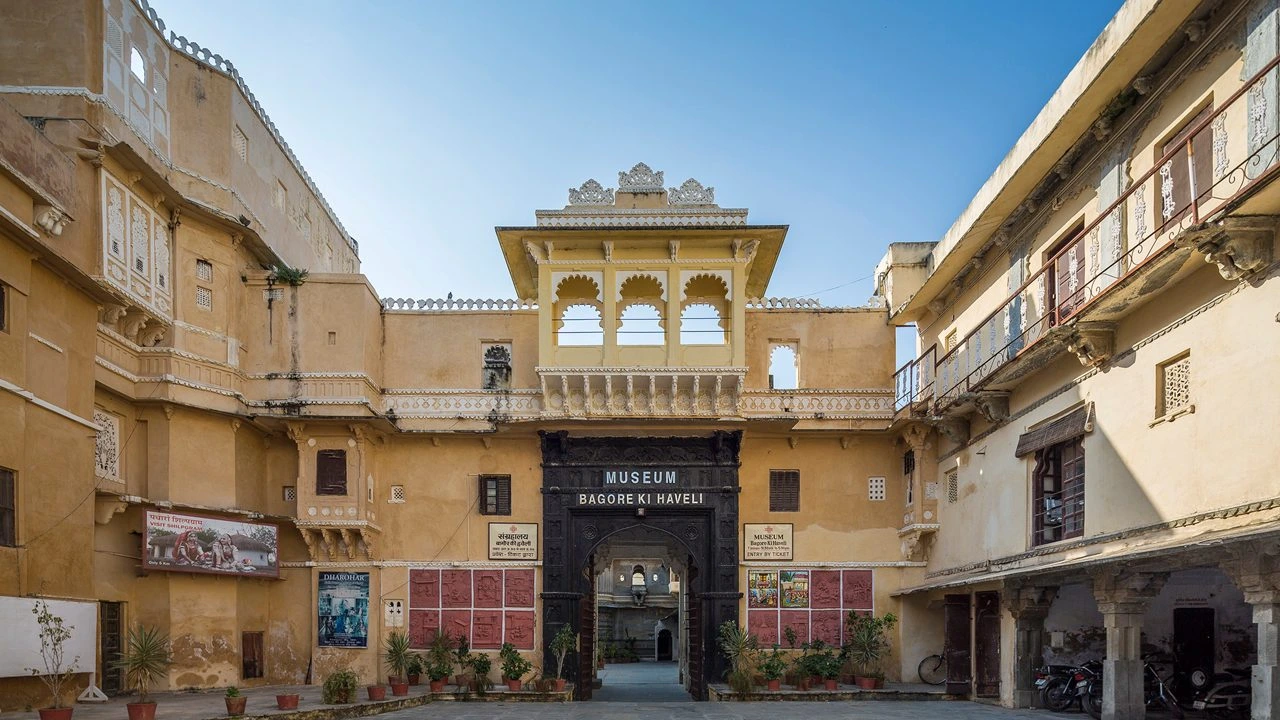
A major chapter came in 1878, when Maharaj Shakti Singh of Bagore further developed the haveli. One of the most recognisable additions from this period was the impressive triple-arched gateway.
This later work is part of the reason Bagore Ki Haveli feels like a layered building rather than a structure from one particular date. The original 18th-century residence had continued to evolve, adding new architectural details while retaining the character of the older haveli.
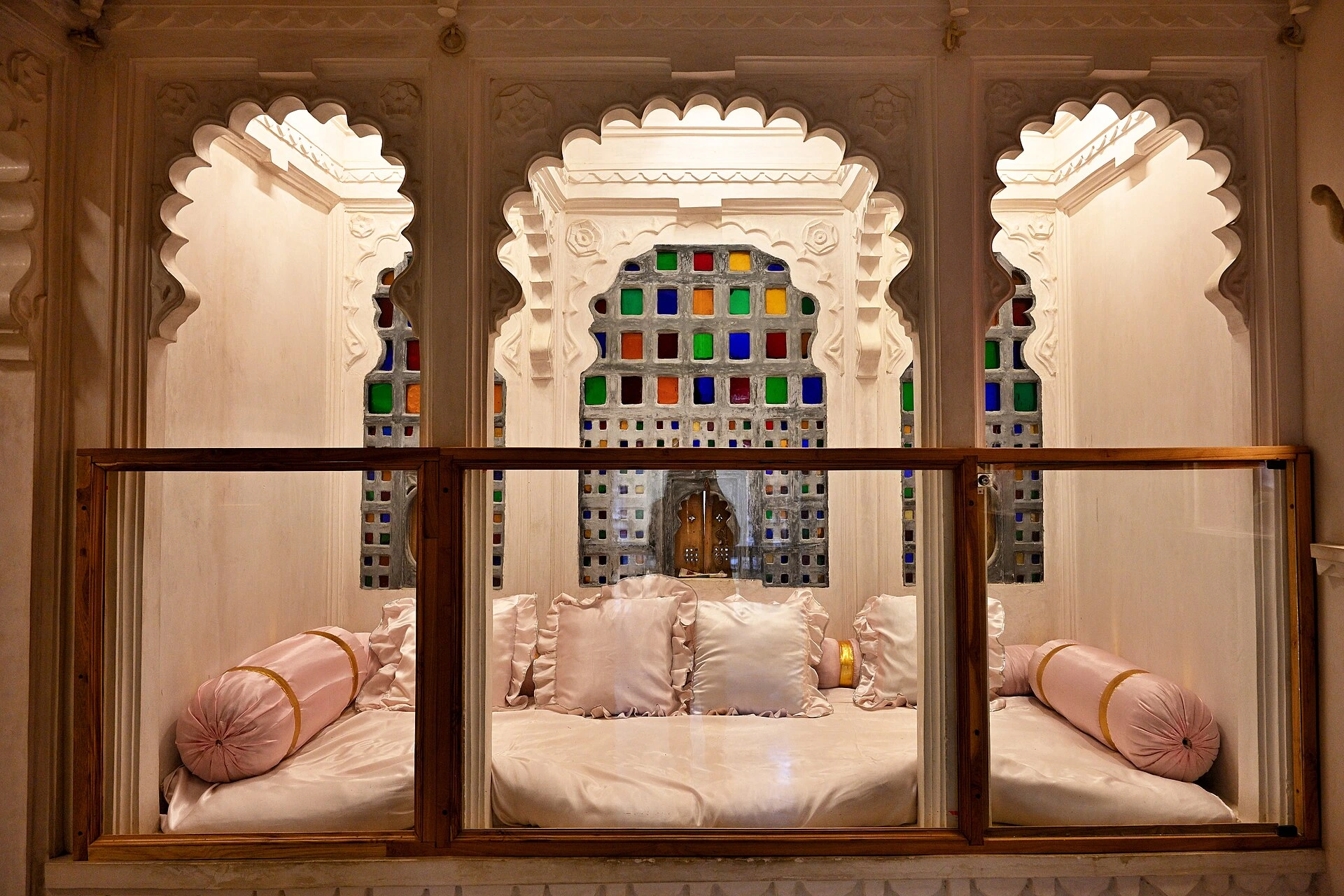
The glass and mirror decoration associated with the haveli is another part of this visual character. Rajasthan’s traditional craftsmanship appears throughout the interiors in different forms, from decorative surfaces to carved architectural details.
The Haveli and Gangaur Ghat
Bagore Ki Haveli’s history is also inseparable from its waterfront setting. The haveli stands directly at Gangaur Ghat, looking out towards Lake Pichola. The ghat itself became an important place for the annual Gangaur celebrations.
A Ministry of Culture account records that Maharaja Bhim Singh constructed Gangaur Ghat, which became the setting for the annual Gangaur festival held during Chaitra, around March and April. That connection between the haveli, the ghat and the lake is still visible today: step outside Bagore Ki Haveli and the historic waterfront is immediately part of the experience.
After Independence: A Long Period of Decline
The haveli’s fortunes changed after India’s independence. Its earlier role as a private residence came to an end, and the building went through a much less glamorous period of its history.
Over time, changes in use and years of inadequate maintenance affected the condition of the building. Some of its decorative work suffered from weathering and neglect. The haveli that visitors see today therefore owes as much to its restoration as it does to the original builders and craftsmen.
Restoration and the Beginning of a New Chapter
The building eventually entered a new phase under the West Zone Cultural Centre (WZCC). The Ministry of Culture records Bagore Ki Haveli as the historic headquarters of the WZCC, with the complex developing into a centre for cultural activities as well as housing the Bagore Ki Haveli Museum.
Restoration was not simply about making the building look attractive again. Traditional decorative work had to be repaired, preserved and, where necessary, carefully brought back to life. Ministry of Culture records also describe work involving traditional frescoes and murals, including efforts to restore parts of the haveli’s earlier appearance.
This restoration changed the role of Bagore Ki Haveli completely. A building that had once been part of the everyday world of Mewar’s aristocracy became a place where visitors could actually walk through that history, see its objects and experience aspects of Rajasthan’s performing traditions.
Bagore Ki Haveli Today
Today, Bagore Ki Haveli functions as a museum and cultural centre. Official tourism sources describe a complex with more than a hundred rooms containing collections connected with costumes, paintings, glasswork, jewellery and other aspects of Rajasthani culture.
The transformation is what makes the haveli particularly interesting. Its history is not locked away behind a glass case; the building itself is part of the story. Courtyards, balconies, rooms and decorative surfaces remain in place while the museum collections help explain the people and traditions that shaped this part of Udaipur.
And once evening arrives, the haveli takes on another role. The WZCC’s cultural activities include the Dharohar evening programme, bringing traditional music, dance and other folk performances into the historic setting. It is a fitting continuation of the building’s transformation—from a residence connected to the Mewar court into a place where Rajasthan’s living culture is still presented to visitors.
Bagore Ki Haveli is interesting not simply because it is old. Its story moves through Mewar’s court, the Bagore Thikana, royal adoption, 19th-century expansion, years of decline and careful cultural restoration. Walking through the haveli today means moving through all of those layers in the same building.
Understanding Bagore Ki Haveli
Bagore Ki Haveli makes more sense once you stop looking at it as one large building. It is a collection of courtyards, rooms, balconies, passages and small architectural details brought together over time. You move from one space to another, and the view keeps changing as the haveli opens up around you.
Its position beside Gangaur Ghat also shapes the way the place feels. The building sits right against the old waterfront, while the lake and the ghats remain visible as you move through parts of the complex. That connection between the residence and the lake is one of the things that makes Bagore Ki Haveli different from a standalone palace or museum.

The Main Entrance and Gangaur Ghat
The entrance is your first real introduction to the scale and character of the haveli. From here, the building quickly changes from a quiet lakeside façade into a series of connected spaces. The historic setting of Gangaur Ghat is never far away, which is why it is worth taking a moment to look back towards the lake before heading deeper inside.
The ghat also gives the haveli much of its atmosphere. During the day, the waterfront is part of the everyday life of the old city; later in the evening, the same surroundings become part of the cultural experience associated with the haveli.
Courtyards and Chowks
Courtyards are at the heart of traditional haveli architecture, and Bagore Ki Haveli is best understood by moving through these open spaces rather than rushing from room to room. They bring light and air into the complex and create a natural break between the more enclosed rooms.
Look upwards as you walk. The surrounding balconies, arches and decorated façades are often as interesting as the objects displayed inside the museum. These spaces also help explain how a large residence could remain connected internally while still giving different rooms their own sense of privacy.
Jharokhas, Balconies and Windows
The jharokhas and projecting balconies are among the details that immediately give the haveli its Rajasthani character. Their carved frames, arches and patterned screens were not simply decorative additions. They created openings towards the courtyards and outside views while maintaining shade and privacy.
This is one of those places where slowing down actually makes the visit better. Instead of trying to cover every room quickly, look at the repeated patterns, the different shapes of the openings and the craftsmanship around the edges of doors and windows.
Rooms, Passages and Changing Views
Inside, the route is not about one straight corridor leading to a grand hall. The experience comes from the way the rooms and passages connect with the courtyards. Some spaces feel intimate, while others suddenly open up and give you a much wider view of the surrounding architecture.
The museum displays add another layer to these rooms. Costumes, jewellery, paintings, household objects and other traditional pieces help turn what could otherwise feel like an empty old residence into a place with traces of everyday life and courtly culture.
The Lakefront Setting
Finally, do not treat the lake as something you only notice after leaving the museum. Lake Pichola is part of Bagore Ki Haveli’s identity. From the waterfront, the relationship between the old building, Gangaur Ghat and the lake becomes much easier to appreciate.
This is also why combining the haveli with a walk around the nearby ghats works so well. You get to see the building from different angles instead of experiencing it only as an indoor museum.
Take your time through the courtyards and museum rooms first, then step out towards Gangaur Ghat before leaving. If you are staying for the evening, return for the Dharohar performance. It gives you three different sides of the same place — the historic building, the lakefront and Rajasthan’s living cultural traditions.
What to See Inside Bagore Ki Haveli
The best part of Bagore Ki Haveli is that there is no single room you walk into and immediately feel that you have seen everything. The museum is spread through the old haveli, so the interesting things appear as you move from one room and courtyard to the next.
Some displays give you an idea of how people lived in the Mewar period, while others focus more on Rajasthan’s crafts, costumes, performances and everyday traditions. A few rooms are worth slowing down for, especially if you enjoy old architecture and small decorative details.
Museum Collections
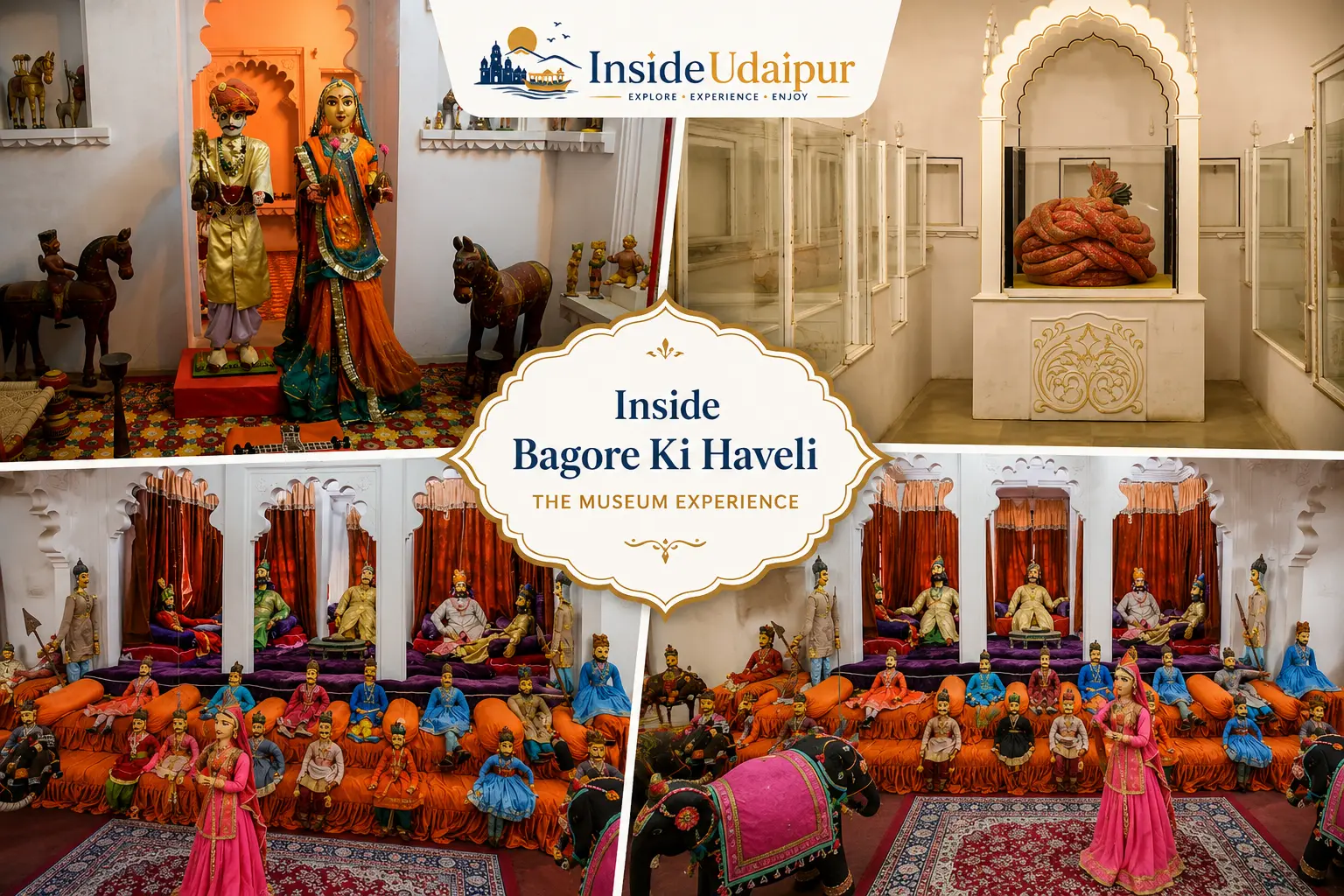
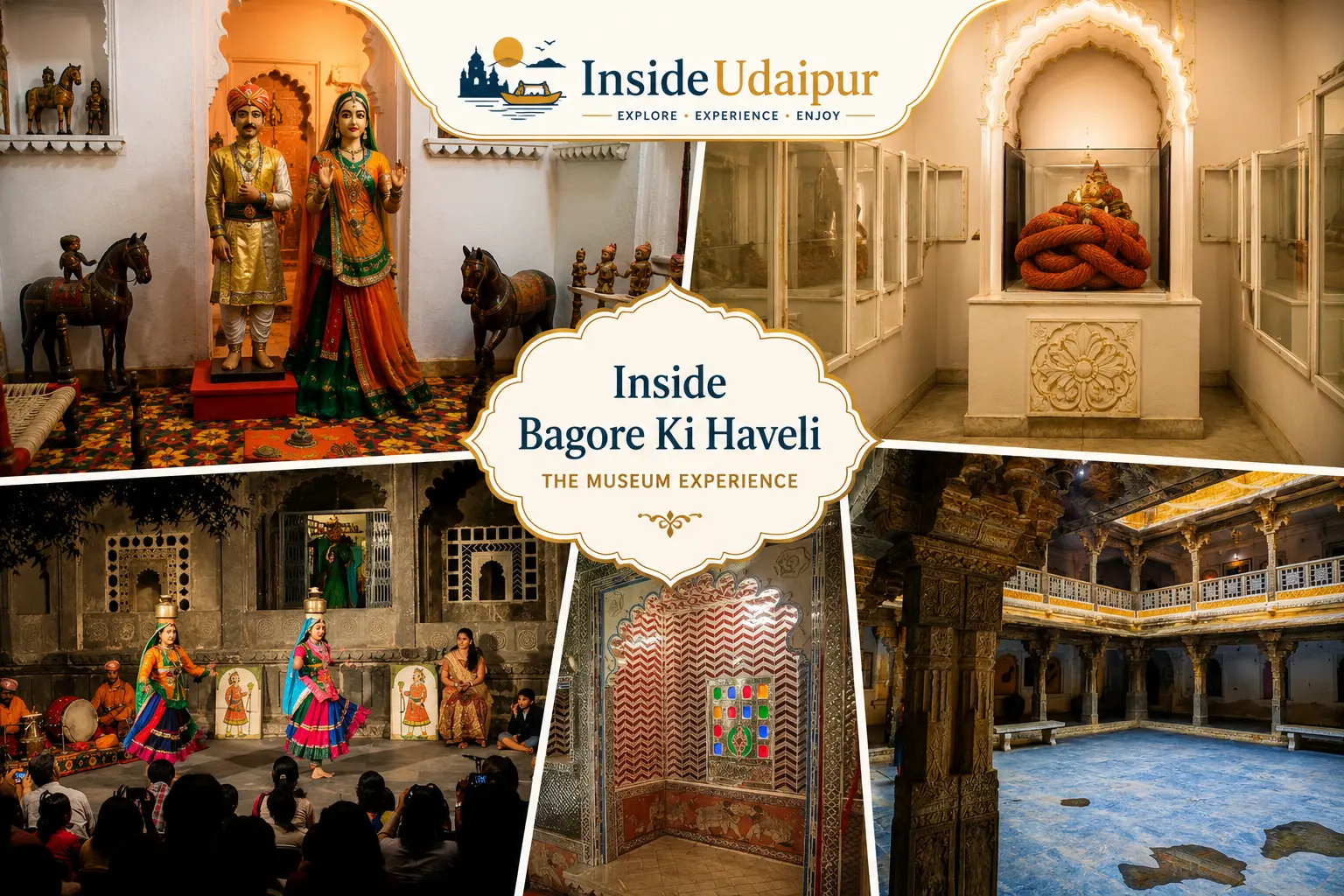
The museum has a wide mix of objects rather than one specialised collection. You will come across traditional costumes, jewellery, paintings, household items, musical instruments and other objects connected with Rajasthan’s culture.
The displays are useful because they put some context around the rooms you are walking through. Instead of seeing the haveli only as an old building, you start getting an idea of the clothes people wore, the objects they used and the kind of decorative work that was valued in these households.
Puppets and Traditional Figures
The puppet displays are among the more colourful parts of the museum. Rajasthan has a long tradition of kathputli performance, and these figures give visitors a quick look at the characters, costumes and visual style associated with that tradition.
Even if you are not particularly interested in museums, these displays are easy to spend a few minutes around because the colours and small details stand out against the quieter rooms of the haveli.
Costumes, Jewellery and Everyday Objects
Another part worth paying attention to is the collection of traditional clothing and jewellery. These displays give a better sense of the difference between everyday belongings and the more elaborate items associated with courtly and ceremonial life.
You will also find household and personal objects displayed through the museum. They may not look as dramatic as the decorated architecture, but they are often the things that make the history of the haveli easier to picture.
Glass, Mirror Work and Decorative Details
Do not rush past the walls and ceilings while looking at the museum displays. Bagore Ki Haveli is known for its decorative work, and the glass, mirror details, painted surfaces and carved elements are a big part of what gives the interiors their character.
This is where the building itself becomes the exhibit. Look around the display cases, doorways and arches rather than keeping your attention only on the objects inside them. Different rooms have their own patterns and details, and the changes become more noticeable when you take your time.
Royal Rooms and Historic Interiors
The old rooms are another reason not to treat the visit like a quick museum walk-through. Their arrangement gives you an idea of how a large aristocratic residence was organised, with private spaces, open courtyards and decorated rooms connected through narrow passages.
Some of the rooms are relatively simple, while others have much richer decoration. Together they show how the haveli changed and developed over different periods rather than looking like a building completed all at once.
The Dharohar Folk Performance
If you are visiting later in the day, there is another side of Bagore Ki Haveli worth knowing about. The Dharohar programme brings traditional Rajasthani music and folk performances into the haveli’s historic setting.
We will cover the show timings, tickets and other practical details separately in the visitor information section, so there is no need to repeat all of that here. For now, just keep it in mind when planning your visit because the atmosphere of the haveli changes considerably once the evening performance begins.
Give yourself enough time to look at the building as well as the museum displays. The puppets and collections catch your eye first, but the courtyards, mirror work, arches and old rooms are what make the visit feel like you are actually walking through a historic haveli rather than simply visiting another museum.
Plan Your Visit to Bagore Ki Haveli
Bagore Ki Haveli is easy to fit into a day of exploring Udaipur’s old city, but a little planning helps if you want to see the museum properly and stay for the evening cultural programme.
Museum Timings
The museum is currently listed as open from 9:30 AM to 5:30 PM. Give yourself enough time to walk through the rooms, courtyards and collections rather than trying to rush through the building.
How Much Time to Keep
Around 1 to 1.5 hours is a comfortable amount of time for the museum. If you are also planning to watch Dharohar in the evening, keep the rest of your schedule flexible.
Museum Entry
Current online listings show the museum entry at ₹55 for Indian adults, ₹30 for children aged 5–12 and ₹120 for foreign visitors. A separate camera charge of ₹55 is also listed.
Dharohar Tickets
The evening Dharohar folk programme is a separate experience. Its current booking page lists ₹125 for adults and ₹75 for children aged 5–10.
Check Dharohar Tickets| Visit | Current Listing | Details |
|---|---|---|
| Museum | ₹55 — Indian Adult | 9:30 AM – 5:30 PM |
| Museum | ₹30 — Child (5–12) | Current online listing |
| Museum | ₹120 — Foreign Visitor | Current online listing |
| Camera | ₹55 | Listed separately |
| Dharohar | ₹125 — Adult | Current booking listing |
| Dharohar | ₹75 — Child (5–10) | Current booking listing |
Check Before You Visit
Ticket prices and show charges can change. The figures above are the current listings checked while preparing this guide, so it is worth confirming the latest rate before your visit, especially if you are travelling on a fixed schedule.
If you want to experience both sides of Bagore Ki Haveli, visit the museum during the afternoon, spend some time around Gangaur Ghat afterwards, and then return for the evening Dharohar programme. It makes the visit feel less rushed and gives you time to enjoy the old-city surroundings as well.
How to Reach Bagore Ki Haveli
Bagore Ki Haveli is right on Gangaur Ghat beside Lake Pichola, so reaching it is fairly straightforward once you get into Udaipur’s old city. The easiest route depends on where you are starting from, but the main roads and landmarks are easy to follow.
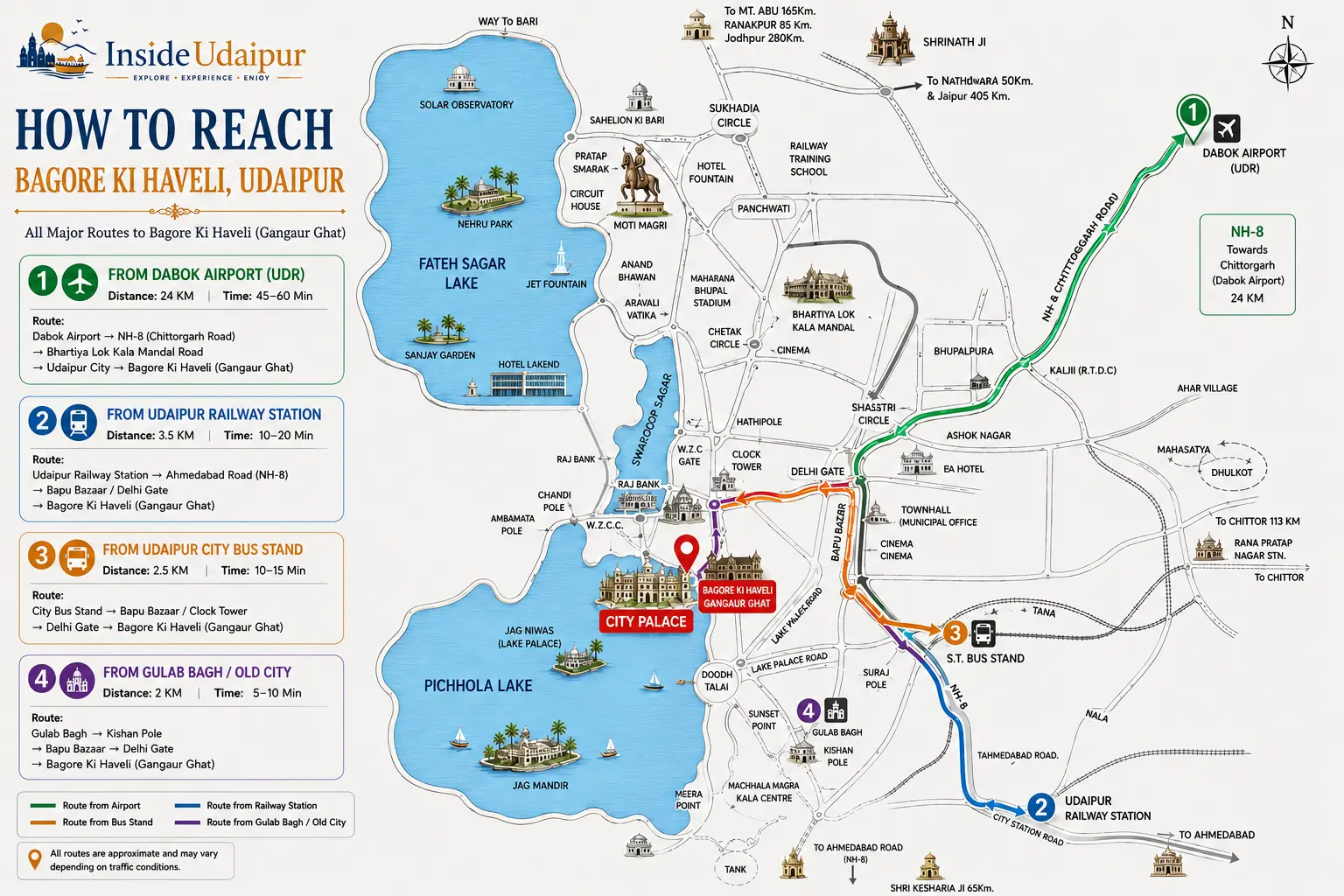
We have marked the main approaches on the map below so you can get a quick idea of the route before setting out. Distances and travel times are approximate and can change with traffic.
From Dabok Airport
Maharana Pratap Airport at Dabok is around 24 km from the city palace area. The route shown on the map follows NH-8 towards Udaipur, then continues through the city towards Bagore Ki Haveli at Gangaur Ghat. Depending on traffic, the drive takes roughly 45–60 minutes.
From Udaipur Railway Station
The railway station is much closer, at around 3.5 km. The mapped route follows City Station Road towards Ahmedabad Road and then through the Bapu Bazaar and Delhi Gate side before continuing towards the old city and Bagore Ki Haveli. In normal traffic, it is roughly a 10–20 minute ride.
From Udaipur City Bus Stand
From the city bus stand, Bagore Ki Haveli is about 2.5 km away. The route heads towards Bapu Bazaar and the Clock Tower area, then continues through Delhi Gate towards the old city and Gangaur Ghat. The map estimates around 10–15 minutes, depending on traffic.
From Gulab Bagh and the Old City
If you are already sightseeing around Gulab Bagh or the old city, you are quite close. The mapped route is around 2 km and takes roughly 5–10 minutes by road. From Gulab Bagh, the route moves towards Kishan Pole and Bapu Bazaar before continuing through the old city towards Gangaur Ghat.
Bagore Ki Haveli is in the old-city area, where roads can get busy and some stretches are narrower than the main roads. If you are staying nearby, checking the walking route can sometimes make more sense than taking a cab for the entire distance.
Places to Visit Near Bagore Ki Haveli
Bagore Ki Haveli is in one of the best parts of Udaipur for walking between major sights. If you are already in the old city, a few of the city’s most popular places can easily be combined with your visit to the haveli.
City Palace Udaipur
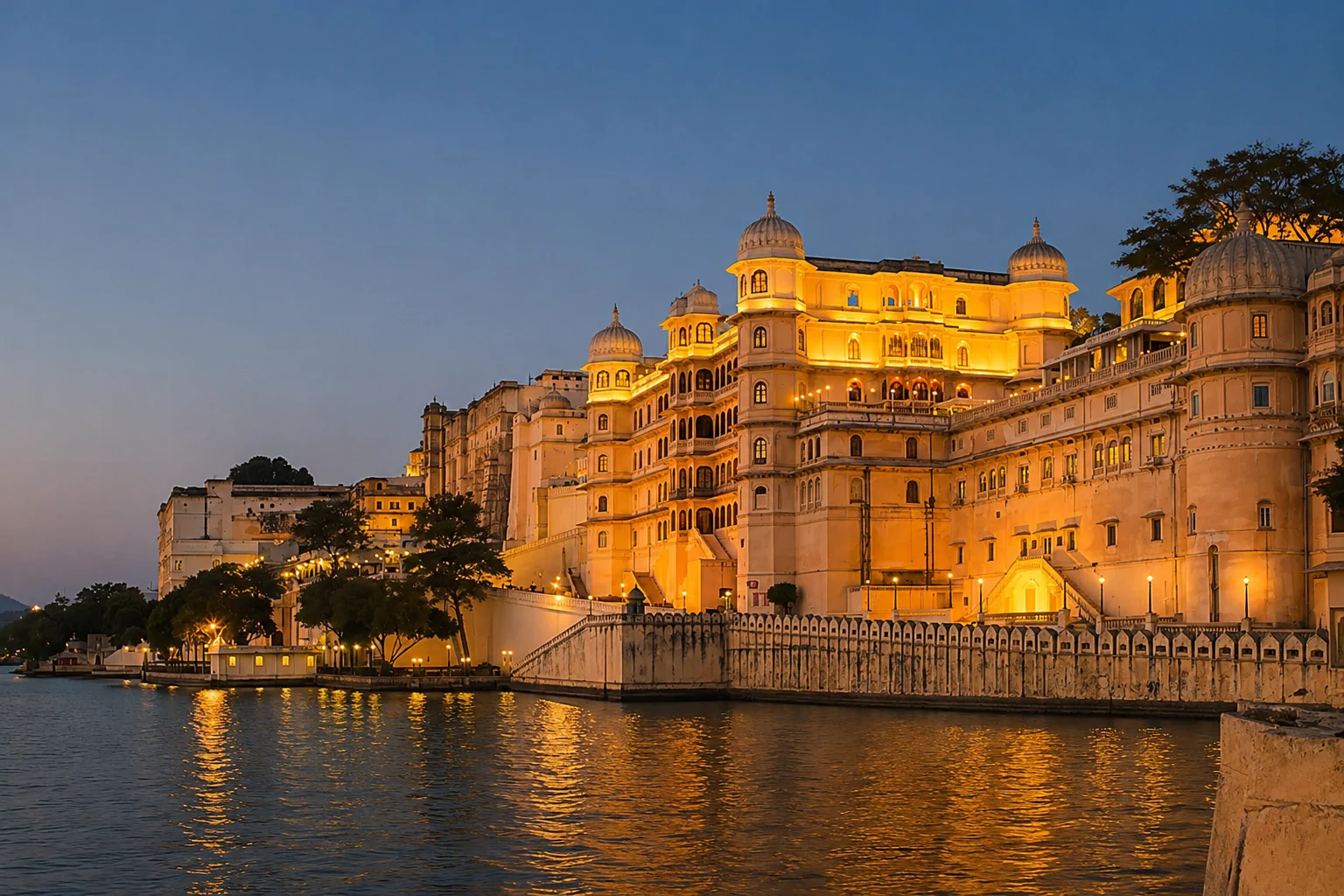
One of the easiest places to combine with Bagore Ki Haveli. The City Palace complex sits nearby and gives you a much larger look at Mewar’s palace architecture, courtyards and royal interiors.
Jag Mandir
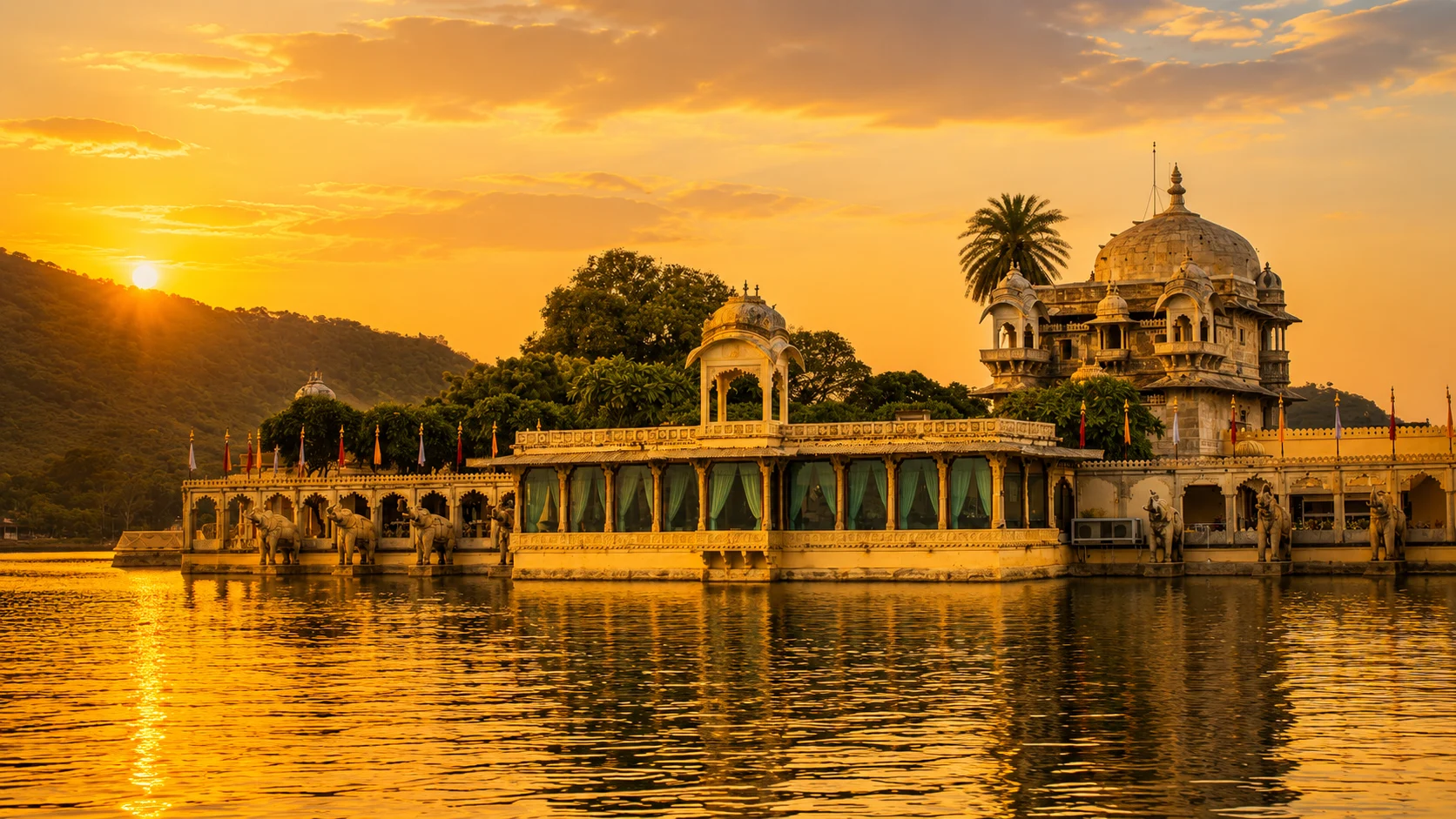
The island palace of Jag Mandir sits on Lake Pichola and makes a good addition if you want to continue your sightseeing around the lake after exploring the old city.
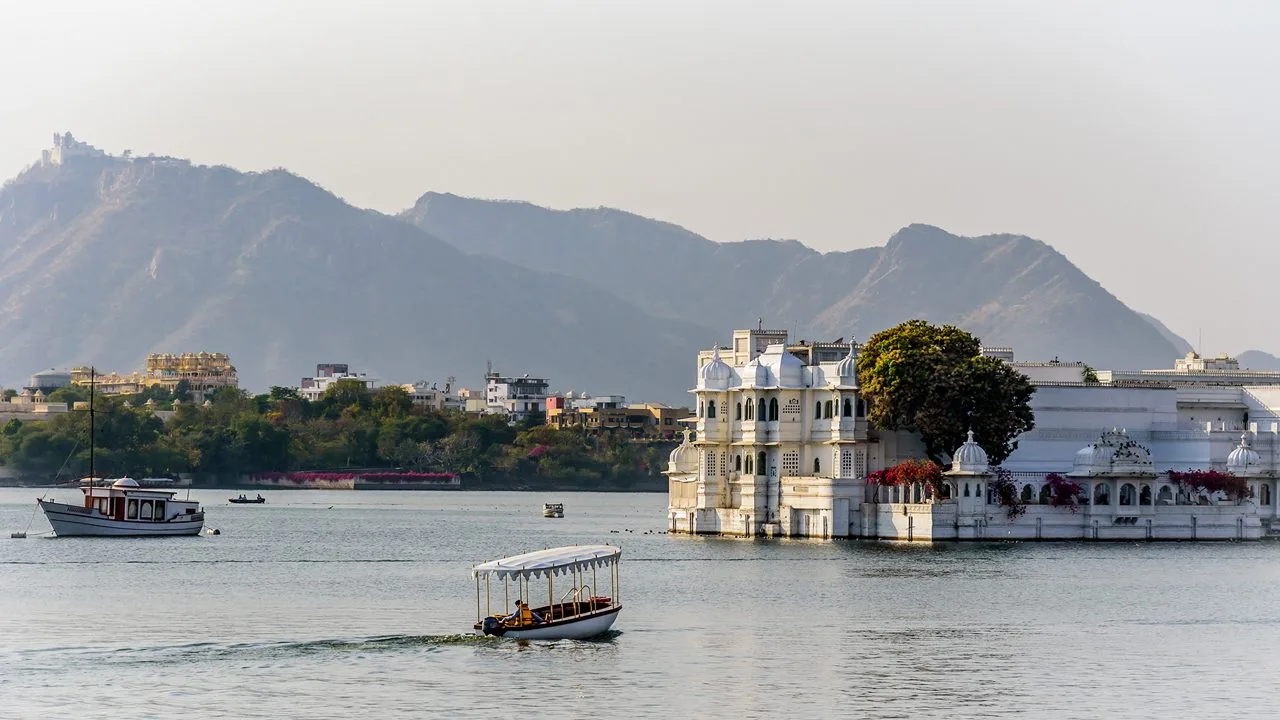
Lake Pichola
Since Bagore Ki Haveli stands directly beside the lake, Lake Pichola is almost impossible to separate from the experience. A walk along the waterfront is an easy way to continue exploring the area.
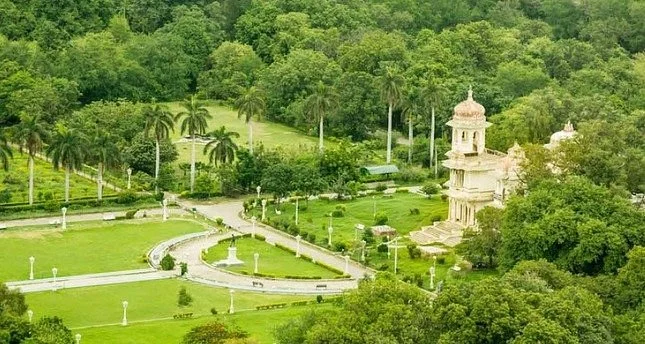
Gulab Bagh
Gulab Bagh is a little farther away than the old-city sights, but it can be added to the same sightseeing day if you are exploring the area around Gulab Bagh and the city centre.
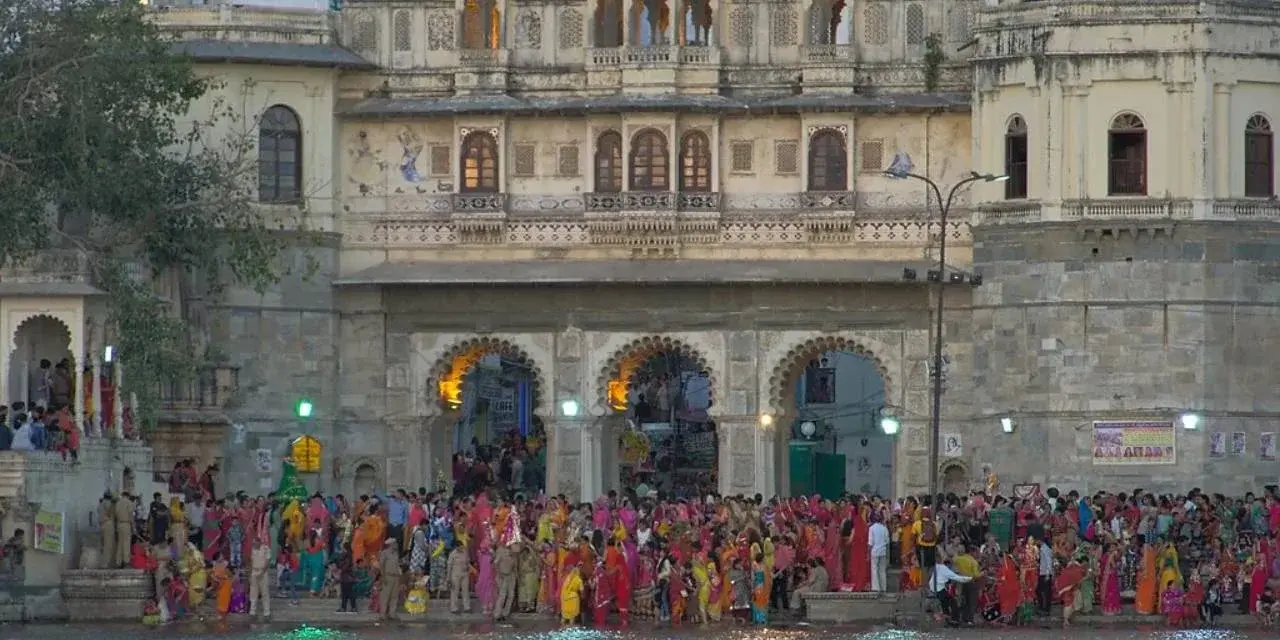
Gangaur Ghat
You do not really need a separate journey for Gangaur Ghat because Bagore Ki Haveli is right here. Walk down to the waterfront after your museum visit and enjoy the views across Lake Pichola.
Bagore Ki Haveli FAQ
A few useful answers before you plan your visit to Bagore Ki Haveli.
Bagore Ki Haveli is at Gangaur Ghat on the waterfront of Lake Pichola in Udaipur’s old city. It is close to City Palace and Jagdish Temple, making it easy to include in the same sightseeing route.
Around 1 to 1.5 hours is comfortable for exploring the museum and the haveli. If you are also staying for the Dharohar folk performance, keep additional time for the evening programme.
Yes, particularly if you enjoy Rajasthan’s history, traditional crafts and old architecture. The museum collections are only part of the experience; the courtyards, decorated interiors, jharokhas and lakeside setting are equally interesting.
Yes. Both are in the old city and can easily be combined in one sightseeing day. You can visit City Palace Udaipur and then continue towards Gangaur Ghat and Bagore Ki Haveli.
Yes. The Dharohar folk performance is a separate evening experience held at the haveli. If you want to attend it, check the latest show timing and ticket availability before your visit.
The museum has traditional costumes, jewellery, puppets, paintings, household objects and other cultural displays. You can also explore the haveli’s courtyards, jharokhas, mirror work, balconies and historic rooms.
Yes. Bagore Ki Haveli is located directly at Gangaur Ghat, so you can walk down to the waterfront as part of the same visit. It is a particularly nice area to explore around sunset.
Why Bagore Ki Haveli Deserves a Place on Your Udaipur Itinerary
Bagore Ki Haveli is one of those Udaipur sights that works best when you don’t rush through it.
The museum collections are interesting, but the real charm comes from seeing them inside the old haveli itself. Its courtyards, balconies, jharokhas, decorated rooms and lakeside setting give the visit a character that you do not get from a conventional museum.
Its location at Gangaur Ghat also makes it easy to combine with other parts of the old city. You can explore the haveli, walk along the Lake Pichola waterfront and continue towards other nearby sights without spending the whole day travelling between attractions.
And if you have time in the evening, the Dharohar folk performance adds another dimension to the visit. It brings music, dance and traditional performance into the same historic setting you explored during the day.
So, if your idea of Udaipur is more than just ticking off famous places, Bagore Ki Haveli is well worth including. Give yourself enough time to look beyond the obvious exhibits, notice the architecture and enjoy the waterfront around Gangaur Ghat.